


Snore Guard Review
Snore Guard is a boil-and-bite mouthpiece that holds your lower jaw forward while you sleep, and it has become very hard to buy.
The dental supplier Benco lists the Ranir (Perrigo) version as "No Longer Available," and the Canadian retailer Well.ca shows it sold out as of October 2026.
If a partner is elbowing you at 2 a.m., skip the hunt and start with our list of the best anti-snoring mouthpieces.
Is Snore Guard Still Available?
Barely. Benco, a dental supply company, lists the Snore Guard case of 12 (made by Ranir, now part of Perrigo) as "No Longer Available".
Well.ca sells a Snore Guard for about $52.49 CAD, but the page shows it sold out and on backorder, and it ships only inside Canada. Prices change, so check the page before you plan around it.
We used to note that Snore Guard had gone out of business. The better description is that the product has been pulled from most shelves and its US dental listing is closed.
What Is Snore Guard?
Snore Guard is a mandibular advancement device (MAD). It holds your lower jaw slightly forward so the soft tissues at the back of your throat have more room to stay open.
According to the FDA 510(k) record K103004, Ranir LLC got FDA clearance for it on February 25, 2011, for nighttime snoring and mild to moderate obstructive sleep apnea in adults 18 and older.
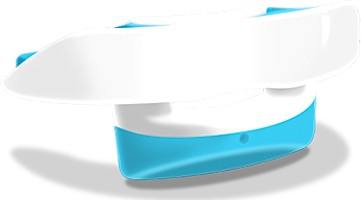
The design is a mouthguard that fits over your upper teeth and connects to a ramp that rests against your lower front teeth. You fit both parts yourself with a boil-and-bite process, and Benco says it holds the jaw forward 1 to 3 mm.
That is a very different look from most mouthpieces. It has a lot of extra material and a large airflow port in the front, which lets you breathe through your mouth.
Do Mouthpieces Like Snore Guard Actually Work?
Jaw-advancing mouthpieces as a group have decent support. A 2020 systematic review in Sleep Medicine Reviews of 18 studies found the evidence supports them for primary snoring, though few studies looked at snoring alone.

A randomized trial of severe snorers backs that up. Twenty-five adults wore a custom-made device or a placebo, and the real device cut snoring loudness and frequency, with 84 percent of partners reporting quieter snoring.
Design matters, though. A 2016 systematic review in The Laryngoscope found adjustable and custom-made devices gave better results than fixed, prefabricated ones.
Snore Guard is a fixed, prefabricated boil-and-bite device, so it sits in the less favorable group. We did not find a published trial of Snore Guard itself, and the Well.ca page says it is "clinically proven" without naming a study.
One more caution: loud snoring can be a sign of sleep apnea. If you also stop breathing, gasp, or feel exhausted in the daytime, talk to your doctor before you try any mouthpiece.
Snore Guard Advantages and Complaints
Advantages
- FDA clearance on file for snoring and mild to moderate sleep apnea in adults (K103004).
- Boil-and-bite fitting gives you a custom feel without a dental lab.
- The front airflow port lets you breathe through your mouth, which helps if your nose is often blocked.
- Soft, smooth material that did not irritate my gums.
- Easy to care for with warm water and a little dish soap.
Complaints
- Hard to find, and listed as no longer available at the dental supplier.
- The bulky design props your mouth open and stretched my upper lip.
- No way to adjust the jaw position after fitting, so your first fit has to be good.
- Jaw soreness and drooling are common with this kind of device, and reviews of the research list jaw joint pain and extra saliva as the usual side effects.
- Check with your dentist first if you wear dentures or have crowns, bridgework or braces.
My Experience With Snore Guard
I rarely test devices that need a dentist’s help, but I wanted to see if that big ramp was as uncomfortable as it looked. Sometimes you can judge a book by its cover.
My dentist ordered one for me. My wife sat this trial out, and I’m glad, because she would never have worn it.
I did the boil-and-bite fitting at home since I have plenty of practice. I rinsed it with warm water and a little dish soap first, because I don’t like the idea of bacteria building up on anything that lives in my mouth.
Snore Guard suggests wearing it a couple of hours a day for a few days. I mostly skipped that, apart from a half hour after fitting.
My jaw was already sore from the way it forces your mouth open. The skin between my nose and lip felt stretched by the thickness of the device.
The first night, my wife said I was quiet. The morning was another story, because my mouth felt stuck in an open position, and I asked for a green smoothie instead of breakfast.
On the second night I took it out around midnight and forgot to put it back. I lasted three nights in total before I retired it.
Soreness that fades by day three is normal with a new mouthpiece. Soreness that gets worse is a sign the device is not right for you.
What Should You Use Instead?
Start with a device you can adjust or have made to fit. The research above points toward custom and adjustable designs, and our guide to the best anti-snoring mouthpieces sort them by comfort, fit and price.
Zyppah is a good example of a mouthpiece that is easier to get used to than Snore Guard.
If you plan to wear any jaw-advancing device for years, see a dentist for regular checkups. A 2023 systematic review in Cureus of studies with at least four years of follow-up found long-term use can shift your front teeth and change how your bite fits together.
Where to Go From Here
Snore Guard had a clear idea and a real FDA clearance, but a bulky fit and poor availability make it hard to recommend today.
Pick a device you can actually buy, choose one that fits well, and give it a fair two weeks. If the snoring or your tiredness doesn’t improve, ask your doctor about a sleep test.
Frequently Asked Questions
More On the Topic
- Mandibular advancement devices for primary snoring: a systematic review (De Meyer et al., 2020)
- Oral appliances for severe snoring: a randomized controlled trial (Johnston, 2001)
- Effectiveness of mandibular advancement appliances: a systematic review (Serra-Torres et al., 2016)
- Occlusal side effects of mandibular advancement device therapy (Rana et al., 2023)
- FDA 510(k) record K103004 for Snore Guard