


Is There a Pillow that Helps with Snoring?
You love your partner. You also know the sound of their snoring better than you know their voice.
A pillow looks like the easiest fix on the shelf, so let’s check what pillows can and can’t do before you spend money.
Can a pillow really stop snoring?

Snoring is worse for many people when they sleep on their back. That is why pillows that keep your head and neck in a better position, or nudge you onto your side, get so much attention.
A review of positional therapy reports that it can meaningfully lower the apnea-hypopnea index, and that about 56% of people with obstructive sleep apnea have position-dependent disease. Most of those studies are small, and the authors say long-term adherence is still a problem.
That’s a fair reason to try a position-based fix. It isn’t proof that any one pillow will work, and the percentage claims on product pages are the manufacturers’ own numbers, so don’t treat them as guarantees.
If you snore loudly every night, gasp, or feel exhausted after a full night, ask a doctor about sleep apnea before you rely on a pillow.
How to choose a snoring pillow
Different pillows go after different causes of snoring, so start with yours. Is it your back-sleeping, a stuffy nose, or something your doctor should look at?
- Your likely cause: Back-sleepers may do better with a contour or positional design, while allergy-driven stuffiness points to hypoallergenic bedding.
- Your sleep position: A pillow that suits a side sleeper can feel wrong on your back, so check the height and shape against how you actually sleep.
- Material and firmness: Memory foam, latex and fiber fills feel different and hold their shape differently. Pick one that supports your neck without tipping your chin toward your chest.
- Price and return policy: Compare a few options and look for a trial period or money-back guarantee, because comfort is personal.
Types of snoring pillows
- Contour and orthopedic pillows: These lift and align your head and neck, which can help if you sleep on your back and want an open airway.
- Wedge pillows: They raise your upper body. Elevation is a common comfort tip for congestion and nighttime reflux.
- Smart pillows: These use sensors to detect snoring and adjust your head position with air chambers or similar parts.
- Anti-allergy pillows: Hypoallergenic fills and covers cut down on the dust that can clog your nose.
- Magnetic pillows: Makers claim magnet therapy helps breathing. We haven’t found evidence for that, so don’t pay extra for it.
Loft, firmness and sleep position
Healthline says the right loft depends on your body type and sleep position. Stomach sleepers usually need softer pillows, while back and side sleepers tend to do better with firmer ones.
If allergies add to your congestion, a hypoallergenic filling may help. Pick a pillow that keeps your spine in line in the position you actually sleep in.
Wedges and elevation
A wedge pillow raises your upper body so the airway can stay more open. Healthline notes wedges suit back sleepers and are a poorer fit if you roll around or sleep on your side or stomach.
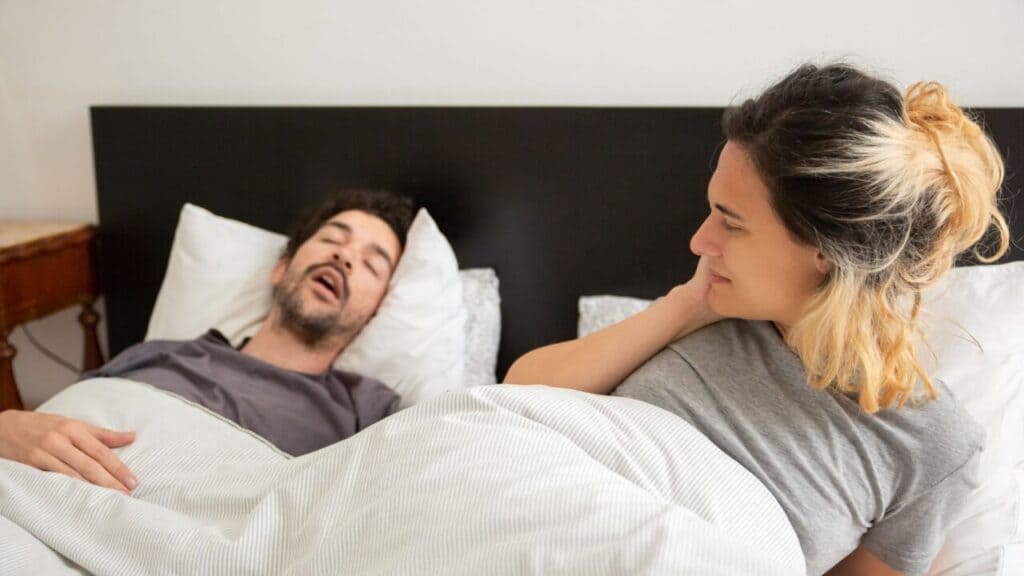
Position matters beyond the pillow itself. A review by Ravesloot and colleagues found that an average of 56% of people with obstructive sleep apnea have position-dependent apnea, though long-term use of positional devices remains an issue.
Habits that help a pillow work
Healthline also suggests avoiding food and drink close to bedtime, treating allergies to cut congestion and trying a hot shower to ease the nasal passages. Quitting smoking, limiting alcohol and sleeping on your side are on its list too.
Our post on what keeps you awake covers alcohol and caffeine timing in more detail.
When a pillow is not enough
Healthline warns that snoring can signal sleep apnea, which is linked to high blood pressure, heart problems and neurologic disorders. See a doctor if you wake often, feel unrested or groggy, or a pillow does not help.
Neck stiffness or aches are also a reason to check in before you buy another pillow.
A smart pillow worth knowing: Nora
Nora is a bedside system that listens for snoring and gently inflates or deflates an insert under your pillow to shift your head. The maker, Smart Nora, now sells it as Nora Gen 2 and lists a 30-night risk-free trial, free shipping and returns, and a 1-year warranty that can be extended to 3 years, as of October 2026. The page lists no price, so check the current price at checkout.
Read our Smart Nora review for the background. It is a good fit for back-sleepers who like a pillow that reacts and don’t mind a bedside unit.
More pillow reviews on SnoringHQ
We are re-checking current names, prices and availability for these older reviews. Confirm details on each maker’s website before you buy.
- Sharper Image anti-snoring pillow
- Nitetronic goodnite anti-snoring pillow
- Celliant Sleep orthopedic wellness pillow
Our full snoring pillow guide has more, and our anti-snoring aids page covers options beyond pillows.
Your next step
Work out how you sleep, then pick one pillow with a trial period and give it a fair two weeks. Pair it with a side-sleeping habit if your snoring is worse on your back.
If nothing changes, the pillow isn’t your problem. A doctor, or a different anti-snoring aid, is your next stop.