


Why Does My Nose Whistle or Squeak? Causes, Diagnosis, and How to Stop It
Your nose makes a sound. A thin, reedy little sound, like air escaping through a crack in a window on a cold January morning. You breathe in and there it is again. A whistle. A squeak. A noise that belongs to a cartoon, not to your face.
Most whistling noses are caused by something blocking or narrowing the nasal passages, and the fix ranges from a simple saline rinse to a minor surgical procedure, depending on the root cause. The sound itself is just physics. Air moving through a tight space vibrates whatever tissue is in the way. Your nose is not broken. It is just talking.
Sometimes the whistle shows up during allergy season and disappears when the pollen count drops. Sometimes it arrives after a cold and overstays its welcome by weeks. And sometimes it has been there so long you have stopped noticing it until your partner mentions it at breakfast.
Key Takeaways
- A narrowed or obstructed nasal passage causes the whistling sound, and the underlying reason shapes the right solution.
- Temporary causes like congestion clear up with home remedies, while structural issues may need a doctor’s help.
- Nighttime whistling often intensifies due to muscle relaxation and sleep position, and it shares some overlap with snoring triggers.
What Is Nose Whistling And What Is It Not?
Think of your nasal passage as a hallway. Wide hallways let people walk through without touching the walls. Narrow hallways create jostling, friction, noise. Your airway works the same way.
When something squeezes that hallway tight, air stops flowing smoothly and starts tumbling over itself, vibrating the soft tissue lining your nasal passages. That vibration is the whistle you hear.
How A Narrow Airway Creates A Whistle

Air moves quietly when the passage is open and wide. The moment something narrows that space, a swollen turbinate, a thick knot of mucus, a crooked septum, the flow turns turbulent.
Turbulent air pushes against tissue. Tissue vibrates. Your nose whistles. It is the same physics that makes a blade of grass scream when you stretch it between your thumbs and blow.
How Nasal Sounds Differ From Snoring
People often mistake a whistling nose for the early stages of snoring, but the two sounds live in different zip codes. Snoring happens in the throat, at the back of the mouth, when soft palate tissue vibrates as relaxed muscles collapse inward during sleep.
Nose whistling happens upstream, inside the nasal passages themselves, and it tends to be higher-pitched and thinner than the low rattle of a snore.
Why It May Happen By Day Or Mostly During Sleep
Some people whistle all day long. Their narrowing is structural or their congestion is constant. Others only whistle at night, and that timing is a clue worth paying attention to.
When you lie down, the nasal lining can swell slightly due to gravity shifting blood flow. Muscles relax. Mucus pools rather than draining. All of that conspires to tighten the passage just enough to turn quiet breathing into a bedtime serenade.
The Anatomy Behind Nose Sounds
Your nose is more architecturally complicated than it looks from the outside. The structures inside determine whether air flows silently or announces itself with every breath.
The Septum Turbinates And Nasal Passages
The septum is the wall running down the center of your nose, dividing it into a left channel and a right channel. The turbinates are curved, shelf-like bones along the walls of those channels, covered in soft mucous membrane.
Their job is to warm and humidify incoming air. When everything sits where it should, air moves in a smooth, almost laminar flow, quiet and efficient.
How Swelling And Narrowing Disrupt Smooth Airflow
A deviated septum pushes into one channel, narrowing it. Inflamed turbinates swell outward and shrink the remaining space further. Mucus adds bulk.
Each change reduces the cross-sectional area of the passage, and the smaller that area gets, the faster air must move through it. Faster air through a smaller space equals turbulence, and turbulence equals noise.
Why Small Changes In Airway Shape Change The Sound
The pitch and intensity of nasal whistling shift depending on where exactly the narrowing occurs and how tight it is. A small perforation in the septum, a hole where there should be solid tissue, lets air leak sideways from one side to the other and produces a very specific, persistent whistle.
Swollen turbinates create a more variable sound that changes as congestion waxes and wanes. Location and geometry write the tune.
The Most Common Triggers Behind The Noise
Six triggers account for the vast majority of whistling noses. Most are temporary. A few require a doctor’s attention. Knowing which one is running the show in your nose changes what you do next.
Nasal Congestion From Allergies Or Infections
This is the most common reason your nose whistles, and it is also the most forgiving. Allergies flood the nasal lining with inflammation. A common cold layers mucus on top of that.
The resulting swelling narrows the passage enough to produce a whistle that comes and goes with the severity of the congestion. Treat the allergy or let the cold run its course and the whistle tends to follow it out the door.
Deviated Septum And Uneven Airflow
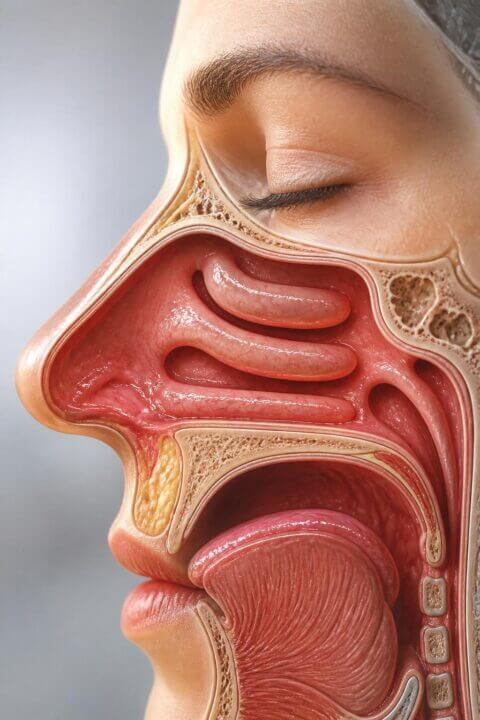
A deviated septum is simply a septum that leans more to one side than the other. Many people have a slight deviation without ever noticing it.
For others, the lean is sharp enough to significantly narrow one nasal channel, creating the conditions for a persistent whistle, especially during physical activity or at night when lying on one side. This is structural, and no amount of saline spray will straighten it.
Nasal Polyps And Other Internal Blockages
Nasal polyps are soft, non-cancerous growths that develop along the nasal lining, usually as a result of chronic inflammation from allergies or sinus infections. They take up space.
That lost space narrows the airway and can produce a whistle that is remarkably consistent, because the blockage is physically there regardless of the time of day or the season.
Chronic Sinus Inflammation And Thick Mucus
Chronic sinusitis means the sinus lining stays inflamed for twelve weeks or longer. The mucus that comes with it is thick and sticky, not the watery kind that drains easily.
This dense mucus collects in the passages, partially obstructing airflow and vibrating as air pushes past it. The whistle from chronic sinusitis tends to sound wet and variable, shifting as the mucus shifts.
Dry Air Dehydration And Crusting
Dry air, common in heated homes during winter or in arid climates, pulls moisture from the nasal lining. The mucus thickens. Crusty deposits form along the passage walls.
Air catches on those crusts and vibrates them just enough to produce a dry, crinkly whistle. Drinking more water and running a humidifier often quiets this version within a day or two.
Sleep Position And Nighttime Breathing Changes
When you sleep on your back, gravity pulls the soft tissues of the palate and the base of the tongue slightly downward. Blood pools more easily in the nasal lining, causing mild swelling.
Mouth breathing dries the nasal passages further. All of these factors conspire at night, which explains why some people wake themselves up with a whistle they never hear during the day.
Clues That Point To The Underlying Cause
The whistle is just the headline. The rest of your symptoms are the story beneath it, and they point clearly toward whether your problem is temporary congestion, a structural issue, or something that needs a closer look from a specialist.
Symptoms Linked To Congestion And Infection
If your whistling nose comes with a runny nose, sneezing, watery eyes, or a scratchy throat, congestion is almost certainly the cause. When those symptoms spike seasonally, allergies are the likely driver. When they appear suddenly alongside a fever or facial pressure, a sinus infection is more plausible. In both cases, the whistle tends to fluctuate as symptoms worsen and improve.
Signs Of Structural Problems Inside The Nose
Structural issues announce themselves differently. The whistle is consistent rather than fluctuating. It may be present on only one side.
You might notice that one nostril feels permanently more blocked than the other, even when you have no cold or allergy symptoms. Nosebleeds that come without obvious cause, combined with a persistent whistle, can suggest a perforated septum, where a small hole in the septum lets air cross from one channel to the other.
When Changes In Smell Pressure Or Bleeding Matter
A loss of smell, a feeling of pressure or fullness behind the cheekbones or forehead, and recurring nosebleeds are worth reporting to a doctor. Nasal polyps can reduce your sense of smell. Chronic sinusitis creates facial pressure that does not resolve with over-the-counter treatments. These symptoms, paired with a whistling nose, suggest something more than seasonal congestion is at work.
How Doctors Figure Out What Is Going On
Diagnosing a whistling nose is usually straightforward for an ear, nose, and throat specialist, and the process rarely requires anything more invasive than a careful look inside your nasal passages.
What An ENT Exam Usually Checks
A board-certified otolaryngologist, an ENT doctor, will begin with a physical exam. They look at the external structure of the nose, then use a small light and speculum to examine the interior of each nostril.
They check the septum for deviation or perforation, assess the turbinates for enlargement, and look for any visible polyps or significant mucus buildup. This exam alone answers many questions.

When Nasal Endoscopy Or Imaging Is Used
For a clearer picture further back in the nasal cavity and sinuses, the doctor may use a nasal endoscope, a thin, flexible tube with a tiny camera. This lets them see the full length of the nasal passage, the area where polyps often hide, and the openings to the sinuses.
If chronic sinusitis or a more complex structural problem is suspected, a CT scan of the sinuses provides a three-dimensional view of everything inside.
When Persistent Symptoms Should Be Evaluated
If your whistling nose persists beyond two or three weeks without a clear temporary cause like a cold, if it comes with nosebleeds, a reduced sense of smell, or one-sided obstruction, see a doctor. A perforated septum will not heal on its own in most cases.
Nasal polyps require prescription treatment or procedures like balloon sinuplasty to address effectively. Waiting rarely improves a structural problem.
Ways To Quiet The Sound And Breathe Easier
The right treatment depends entirely on the cause, and that cause determines how quickly you can expect relief. Home care resolves a large share of whistling noses. Persistent or structural cases need more targeted help.
Quick Home Relief For Temporary Congestion
Rinse your nasal passages with a saline spray or a neti pot. The salt water loosens mucus, reduces inflammation, and clears the narrow spots that air is catching on. Run a humidifier in your bedroom, particularly during winter.
Drink enough water so your mucus stays thin and mobile. These three steps together often quiet congestion-driven whistling within twenty-four to forty-eight hours.
Over The Counter Options For Allergy Related Whistling
Antihistamines reduce the histamine response that swells nasal tissue during allergy season. They are available without a prescription in both sedating and non-sedating formulations.
Nasal strips placed across the bridge of the nose gently widen the nasal valve, the narrowest part of the airway near the nostrils, and can provide immediate if modest relief for nighttime whistling. Decongestant sprays work quickly but should not be used for more than three consecutive days to avoid rebound congestion.
Prescription And Office Based Care For Ongoing Symptoms
Corticosteroid nasal sprays, available by prescription, reduce chronic inflammation in the nasal lining and shrink enlarged turbinates over several weeks of consistent use.
For allergy-driven nasal polyps that do not respond to sprays alone, a newer class of biologic injections targets the inflammatory pathway directly. These are prescribed by allergists or ENT specialists and represent a significant step forward for people with recurrent polyps.
Procedures For Structural Or Chronic Sinus Problems
Septoplasty straightens a deviated septum through a surgical procedure performed under anesthesia, typically as an outpatient. Balloon sinuplasty uses a small balloon catheter to open blocked sinus passages without removing tissue. For a perforated septum, a prosthetic button can seal the hole without surgery, though severe perforations may require surgical repair.
Nasal polyps can be removed through a minimally invasive procedure. Recovery times vary, but most people notice meaningful improvement in breathing shortly after the procedure.
Daily Habits That Help Prevent Recurrence
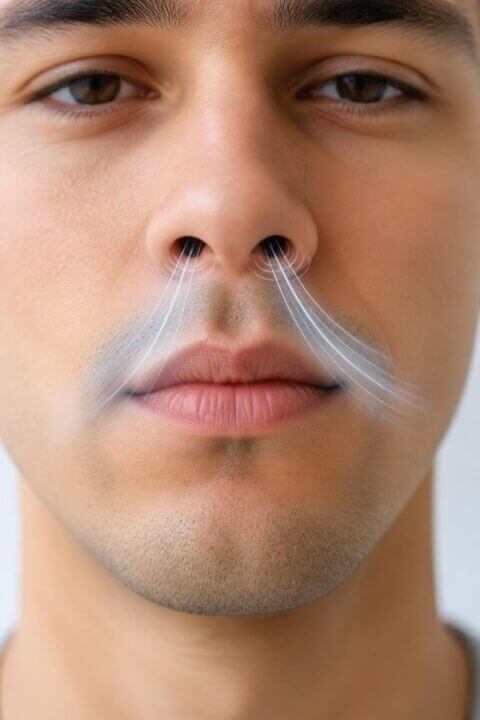
Keep indoor humidity between forty and fifty percent. Rinse your nasal passages after spending time in high-pollen environments. Stay well-hydrated. Sleep on your side rather than your back, which reduces nighttime nasal swelling.
If you are a snorer, resources like SnoringHQ cover many of the same airway dynamics in detail, and the strategies that help snoring often help nasal whistling too. Small consistent habits prevent nose whistling from becoming a recurring houseguest.