

Mouth Breathing During Sleep: 7 Health Risks and How to Fix It
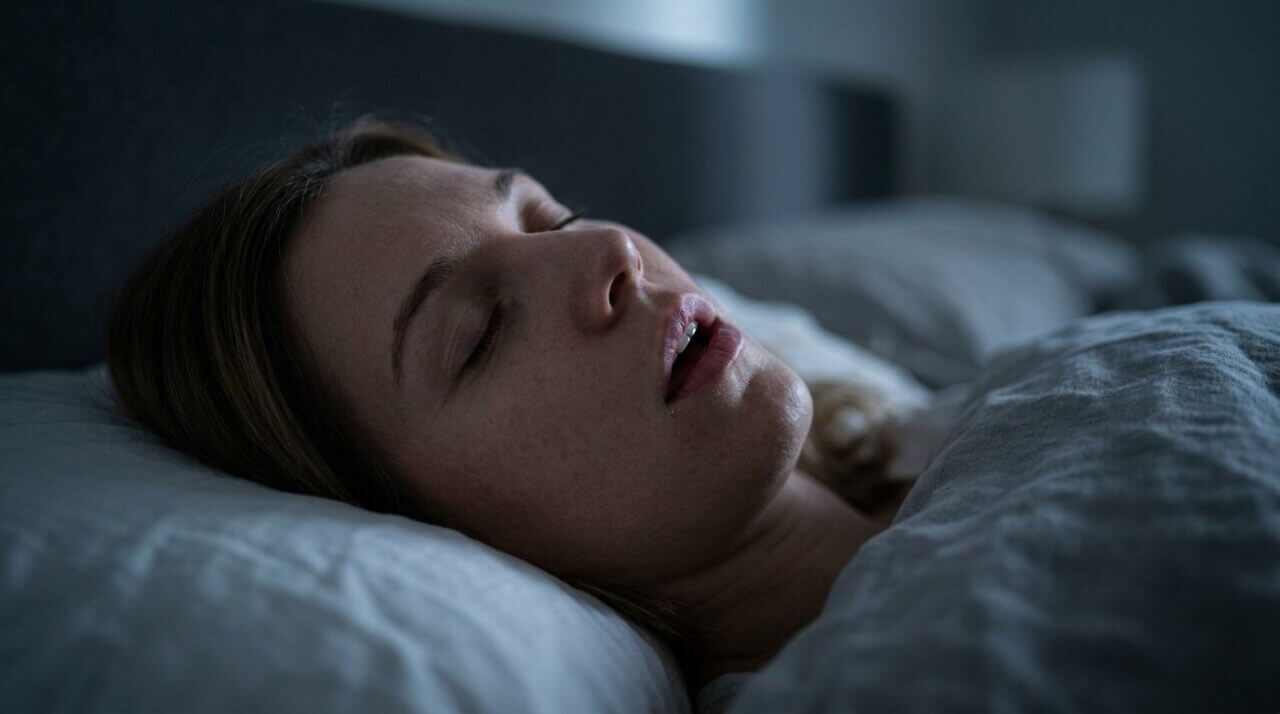
Your mouth hangs open in the dark. You don’t know it. You’re asleep. But your body knows, and it’s been keeping score all night.
Mouth breathing during sleep is one of those quiet problems that compounds slowly, the way a small crack in a foundation spreads through a wall over years until the whole structure shifts.
You wake up with a dry mouth and sore throat. You think it’s the weather, or the heat, or something you ate. You brush your teeth, drink your coffee, and go about your day tired in a way you can’t quite name. That tiredness is information. So is that dry mouth. Your body is telling you something your sleeping self never gets to say out loud.
Nighttime mouth breathing is not just a snoring problem. It touches your teeth, your gums, your oxygen levels, your posture, your immune system, and the quality of every hour of sleep you get. Most people don’t connect the dots until a dentist mentions unusual decay, or a partner says the snoring has gotten worse, or a doctor starts asking questions about daytime fatigue.
This guide lays out what’s actually happening when you sleep with your mouth open, why it starts, what it costs your body over time, and what you can actually do about it in a practical, ranked order that starts at home and only escalates when it needs to.
Key Takeaways
- Mouth breathing at night is rarely just a habit; it almost always signals a nasal obstruction or structural issue that can be identified and treated.
- The health consequences reach far beyond snoring, affecting your teeth, gums, oxygen delivery, posture, and sleep quality in ways that compound over years.
- Most people can meaningfully reduce or eliminate nighttime mouth breathing by working through a simple hierarchy of interventions, starting at home.
Why Mouth Breathing Is More Than Just a Snoring Problem
Breathing through your mouth during sleep is common. Common does not mean neutral. The nose is designed to be the primary breathing organ, and it works hard at that job. It filters incoming air, humidifies it, warms it, and produces nitric oxide, a compound that helps your blood vessels dilate and your lungs pull in oxygen more efficiently.
The mouth does none of that. The mouth is a backup system, built for eating and talking, pressed into breathing duty when the nose can’t keep up.
Every night of habitual mouth breathing exposes your body to a cascade of consequences. Your teeth dry out. Your gums inflame. Your oxygen transfer becomes less efficient. Your posture shifts to keep the airway open, pulling your head forward on your neck. Your cognitive performance erodes from the compounded effect of shallow, disrupted sleep.
These things don’t happen all at once. They happen slowly, the way a river cuts a canyon, and by the time you notice, the canyon is already deep.
Breathing through your mouth during a run or a bad cold is not a problem. Your body is adaptable. It finds a way. But habitual mouth breathing during sleep, every night, for months and years, is a genuine health issue. It compounds. It accelerates. And it’s almost always caused by something specific and addressable, if you know where to look.
What Causes Mouth Breathing During Sleep

The mouth doesn’t open on its own. Something pushes it there, usually a nasal passage that isn’t moving enough air. The body is pragmatic about this. It needs oxygen, so it finds another route. The causes range from temporary inflammation to permanent structural issues, and knowing which one applies to you changes everything about how you fix it.
Nasal Obstruction (Most Common Cause)
When the nasal passage is blocked or restricted, mouth breathing isn’t a choice. It’s a reflex. Your body defaults there without asking permission.
Chronic allergies and allergic rhinitis lead the list. Mucosal swelling narrows the nasal passage, sometimes to the point where breathing through the nose feels like breathing through a coffee straw. Sinus infections, both acute and chronic, add inflammation and mucus on top of that already-narrowed passage.
Structural causes are harder to resolve at home. A deviated septum means the wall dividing your two nostrils tilts to one side, making one passage significantly narrower than the other.
Nasal polyps are noncancerous growths inside the nasal cavity that can block airflow substantially. Enlarged turbinates, the bony structures inside the nose that help filter and warm air, can swell from allergies or infection and reduce airway space to the point where nasal breathing becomes genuinely difficult at night.
Enlarged Tonsils or Adenoids
In children, enlarged adenoids are one of the most common reasons for nighttime mouth breathing. The adenoids sit in the back of the nose and throat, and when they swell, they obstruct the nasopharynx, the passage where nasal airflow transitions toward the lungs.
Children who breathe through their mouths because of tonsil or adenoid obstruction can develop structural facial changes over time if the problem isn’t addressed. The jaw narrows. The palate rises. The face elongates.
These changes are not cosmetic; they affect how teeth come in, how the bite functions, and how the airway develops long-term. In adults, tonsil hypertrophy is less common, but it does persist from childhood in some people, and it’s worth asking about if you’ve always been a mouth breather.
Habitual or Learned Mouth Breathing
Some people develop mouth breathing as a learned pattern even after the original obstruction is long gone. The body got used to a certain way of breathing, and it kept doing it. Prolonged pacifier or bottle use in infancy can establish an open-mouth oral posture early. That posture can become a habit independent of any nasal problem.
This is frustrating because fixing the nasal issue doesn’t automatically fix the mouth breathing. The behavioral pattern needs to be addressed separately, usually through breathing exercises or myofunctional therapy.
Medications and Substances
Sedative medications relax the pharyngeal muscles, which means the jaw drops and the mouth falls open. Alcohol does exactly the same thing, and even one drink before bed can induce or worsen mouth breathing in people who are already prone to it.
Some antihistamines dry the nasal mucosa, paradoxically reducing nasal airway patency and encouraging the very mouth breathing they’re sometimes taken to prevent.

The 7 Health Risks of Habitual Mouth Breathing During Sleep
These risks don’t arrive all at once. They accumulate the way interest accumulates on a debt you keep ignoring. Each one compounds the others.
1. Facial Development Problems (Especially in Children)
Habitual mouth breathing in childhood changes how the jaw and teeth develop. The effects are specific and measurable: a narrow, high-arched palate; a long, narrow facial structure; a gummy smile; dental malocclusion where the upper and lower teeth don’t meet correctly.
These changes are difficult, and sometimes impossible, to fully correct with orthodontics alone. The window for easier intervention is narrow and closes as the child grows. If your child is breathing through their mouth regularly, see a doctor to identify the cause. Don’t assume it’s just allergies without getting an actual evaluation.
2. Increased Risk of Illness and Asthma
Your nose contains cilia, tiny hair-like structures that filter bacteria, viruses, dust, and allergens before they reach your lungs. Mouth breathing bypasses this filtration entirely. Unfiltered air enters directly, carrying whatever the night air carries.
The increased exposure to airborne pathogens raises your frequency of respiratory infections. For people with asthma, the consequences are sharper. Cold, dry, unfiltered air can trigger bronchospasm and increase how often symptoms flare. The nose warms and humidifies air before it reaches the lungs. The mouth doesn’t bother.
3. Poor Posture and Spinal Effects
The tongue normally rests on the roof of the mouth. Mouth breathing drops the tongue, which shifts the balance point of the head on the neck. To keep the airway open, your head moves forward. That forward head posture creates compensatory tension through the cervical spine and upper back.
The misalignment doesn’t stay in the neck. It extends down through the thoracic spine. And the postural problems from mouth breathing can persist even after you’ve stopped doing it, especially if it’s been going on for years.
4. Low Blood Oxygen (Hypoxemia)
The nose produces nitric oxide. Nitric oxide dilates blood vessels and significantly improves oxygen transfer from your lungs to your bloodstream. Mouth breathing bypasses that production entirely, and each breath delivers less oxygen to your brain, heart, and muscles than the same breath taken through your nose.
Over time, the compounded effect of less efficient oxygen delivery places ongoing stress on the cardiovascular system. Chronic low oxygen during sleep is associated with elevated blood pressure and increased cardiovascular risk. This is not a small thing.
5. Increased Fatigue and Disrupted Sleep
Mouth breathing causes snoring, and snoring disrupts sleep architecture. But you don’t need to be snoring loudly to have your sleep fragmented. Mouth dryness and throat discomfort cause microarousals, brief awakenings that interrupt deep sleep without fully waking you. You don’t remember them. You just feel exhausted all day without understanding why.
Awkward jaw positioning adds its own discomfort, keeping you from reaching the deep, restorative sleep stages where the real recovery happens. The result is chronic daytime fatigue, difficulty concentrating, irritability, and impaired performance. Most people with obstructive sleep apnea also mouth-breathe during apnea events, though the causal direction usually runs from OSA to mouth breathing rather than the other way around.
6. Cavities and Tooth Decay
Saliva is your mouth’s primary defense system. It neutralizes acid, washes away food particles, and inhibits bacterial growth. Mouth breathing causes continuous evaporation of saliva all night long, which means chronic dry mouth every morning and accelerated cavity formation throughout the night.
The dry environment in a mouth-breathing sleeper is dramatically more acidic than a healthy, saliva-rich mouth. Even careful brushing reduces the risk but does not eliminate it. If you’re developing cavities at a rate that surprises your dentist, ask about nighttime mouth breathing before assuming it’s about diet or brushing technique.
7. Gum Disease and Bad Breath
The same drying and acidity that drives cavities also damages gum tissue. Chronic gum inflammation, including gingivitis and periodontitis, is significantly associated with habitual mouth breathing. The gums need moisture and a stable pH to stay healthy. Mouth breathing provides neither.
Bad breath follows from the same cause. Reduced saliva creates an ideal environment for anaerobic bacteria, which produce volatile sulfur compounds that persist even after brushing. If you have persistent bad breath despite good oral hygiene, mouth breathing during sleep is a commonly overlooked cause that’s worth investigating before trying more expensive or invasive solutions.

How to Fix Mouth Breathing: A Hierarchy of Interventions
Most people skip to the end of this list and wonder why the easy fix didn’t work. The interventions are organized this way for a reason. Start at the beginning.
Step 1: Address the Nasal Obstruction First
Most mouth breathing traces back to a nasal obstruction. Fixing that obstruction is the highest-leverage intervention you can make, because everything else works better once air can move through your nose comfortably.
- Allergy treatment: antihistamines, nasal corticosteroid sprays, allergen avoidance. If allergies are driving the congestion, treat the allergies first.
- Nasal saline rinse before bed: clears mucus and allergens from the nasal passage before you lie down.
- Humidifier in the bedroom: prevents nasal dryness that causes the mucosa to swell and restrict airflow.
- Decongestant sprays: short-term use only, no more than three days, to avoid rebound congestion.
- Nasal strips or dilators: mechanical options that hold the nasal passage open from the outside or inside.
Step 2: OTC Behavioral Aids
Once your nasal passage is reasonably clear, these tools help keep your mouth closed through the night.
A chin strap holds the jaw closed during sleep. It works immediately for many people and works best when you’ve already addressed the nasal cause. Mouth tape designed specifically for sleep gently encourages lip closure, but it should only be used when your nasal passage is clear enough for comfortable nasal breathing.
Don’t tape your mouth shut if you can’t breathe through your nose. If back sleeping is worsening your mouth breathing, side sleeping reduces both jaw-drop tendency and snoring frequency.
Step 3: Breathing Exercises
These take consistency, not equipment.
- Nasal breathing with breath-holding: inhale through your nose, hold briefly, exhale through your nose. This trains your body to tolerate nasal airflow.
- Alternate nostril breathing: strengthens the nasal breathing pattern and promotes symmetrical airflow through both passages.
- The 4-7-8 technique: inhale for 4 counts through your nose, hold for 7, exhale for 8. It activates the parasympathetic nervous system and conditions nasal breathing before you fall asleep.
- The Buteyko Method: a comprehensive system for correcting chronic over-breathing and establishing habitual nasal breathing, worth exploring in depth if exercises alone don’t create a lasting shift.

Step 4: Medical Intervention for Structural Causes
When the home-based steps aren’t enough, the problem is likely structural. An otolaryngologist, an ENT specialist, can evaluate for a deviated septum that may require septoplasty, enlarged adenoids or tonsils that may need removal, nasal polyps that respond to corticosteroid treatment or surgical removal, and turbinate hypertrophy that can be treated with turbinate reduction.
For children with open-bite malocclusion from habitual mouth breathing, orthodontic expansion appliances can widen the palate and improve the nasal airway. Surgery is a last resort. Most structural causes can be managed with medications or minimally invasive procedures, and an ENT can help you understand which path fits your specific anatomy.
Mouth Taping: Is It Safe?
Mouth taping has gathered real interest as a simple fix for mouth breathing during sleep, and the interest is not unfounded. Keeping your lips sealed through the night does encourage nasal breathing, and some people notice improvement from the first night.
This guide covers the causes, risks, and treatment hierarchy that should come before you reach for the tape. For specific guidance on safe mouth taping, including which products to use, who should not use it, and what the evidence actually supports, look for a dedicated guide focused specifically on that intervention before experimenting on your own.
When to See a Doctor
The home hierarchy handles a lot. It doesn’t handle everything. Seek medical evaluation if:
- Nasal obstruction does not respond to allergy treatment or saline rinses after a reasonable trial.
- Snoring is accompanied by gasping, choking, or witnessed breathing pauses. These are possible signs of sleep apnea, which requires a diagnosis before any device is selected.
- A child is exhibiting habitual mouth breathing. Early intervention prevents lasting facial and dental developmental changes that become much harder to address later.
- Chronic bad breath or gum disease does not improve despite consistent oral hygiene.
- Persistent fatigue remains even after you’ve addressed the snoring, which may suggest a sleep disorder beyond simple mouth breathing.