

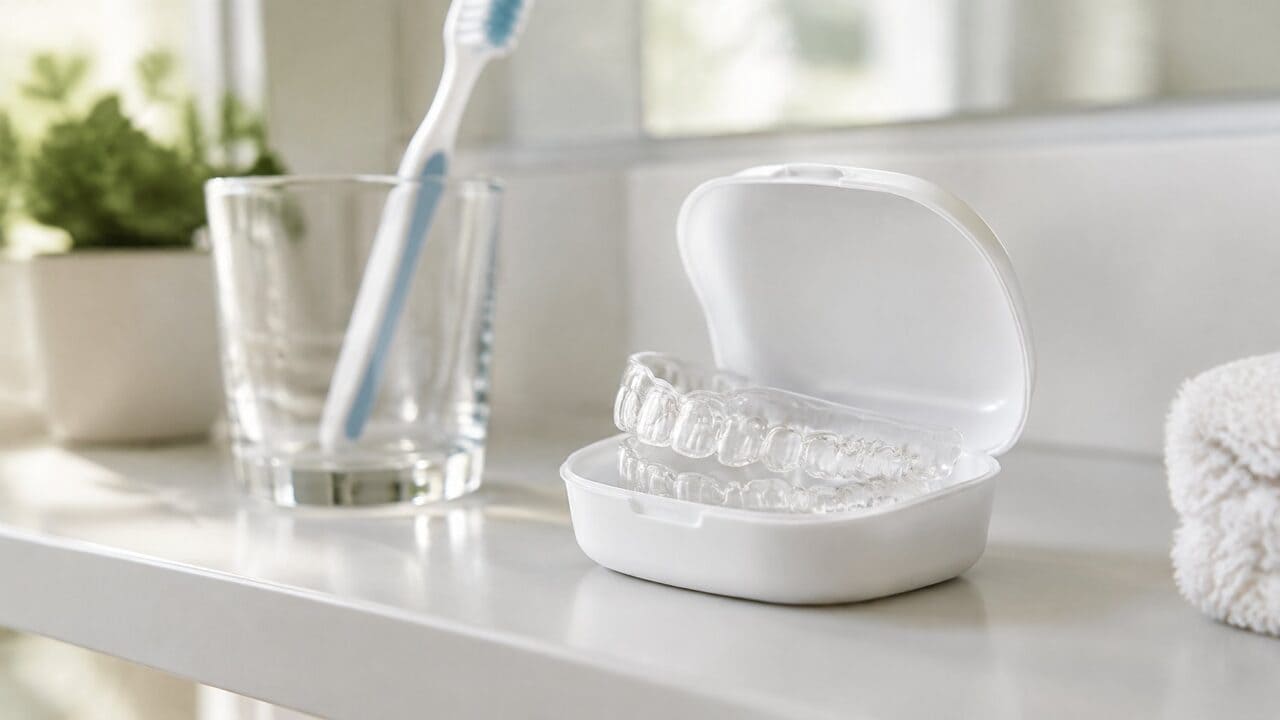
Teeth Grinding at Night: What the Studies Say Actually Helps
You wake up with a sore jaw and a dull headache. Maybe your partner heard a scraping sound in the night, or your dentist pointed at flat spots on your teeth.
Grinding at night is common, and the fix isn’t as simple as buying a guard. Here’s what the studies say, and what’s worth your money.
Key Takeaways
- Guards protect teeth, but the proof is thin. Two systematic reviews found not enough evidence that night guards reduce grinding itself.
- Stress habits can work too. A 66-person trial found sleep hygiene plus muscle relaxation cut grinding about as well as a splint.
- Check your breathing. Grinding with loud snoring and gasping calls for a sleep evaluation, because the link with sleep apnea is still unsettled.
What Is Sleep Bruxism?
Sleep bruxism means grinding or clenching your teeth while you sleep. You usually don’t know you’re doing it, which is why a partner or dentist often spots it first.
Common clues include a tight jaw in the morning, headaches, worn enamel, and sensitive teeth. Our post on snoring and teeth grinding covers how the two habits overlap.
Do Night Guards Stop the Grinding?
They protect your teeth, but they may not stop the habit. A Cochrane review found five trials and no significant difference between splints and controls on the one outcome it could pool.
The authors said there wasn’t enough evidence to call splints effective for sleep bruxism, though they might help with tooth wear. A later 2021 systematic review reached the same cautious conclusion.
That doesn’t make a guard useless. It means you should wear one to protect enamel, not to expect a cure.
What About Mouthpieces That Hold the Jaw Forward?
A mandibular advancement device is a snoring mouthpiece that moves your lower jaw forward. In a randomized trial of 28 people, both that kind of device and a standard splint reduced grinding episodes after three months.
If you also snore, a dentist can tell you whether one device can cover both problems.
For the snoring side, see our MAD versus TRD comparison and our review of the Bruxor dental guard.
Can You Calm the Habit Without a Device?
Maybe. A 2024 trial assigned 66 people with sleep bruxism to either an occlusal device or sleep hygiene plus progressive muscle relaxation.
Both groups had fewer grinding episodes, and perceived stress dropped in both. The authors found no significant difference between the groups and no adverse effects.
So an evening wind-down routine isn’t just a nice extra. It may be a real tool.
Could Sleep Apnea Be Part of the Picture?
Possibly, but the research disagrees. A 2022 scoping review in Sleep found no significant link between grinding and sleep apnea in most adult studies.
A 2024 meta-analysis of 14 studies found the odds of grinding in people with apnea didn’t differ significantly from controls. Another study found grinding episodes fell during pressure-mask therapy.
None of that proves anything either way. It does mean loud snoring, gasping, or heavy daytime sleepiness deserves a real evaluation, and our guide to waking up gasping for air explains why.
What Can You Try Tonight?
These steps are low risk. They won’t replace a dentist’s advice.
- Limit caffeine and alcohol in the evening.
- Build a calm routine, with a warm shower and slow breathing.
- Notice daytime clenching and let your jaw rest with lips together and teeth apart.
- Ask your dentist about a guard that fits well.
If you also snore, start with our overview on how to stop snoring.
When Should You See a Dentist or Doctor?
See a dentist if your teeth are chipping, your jaw clicks or locks, or your face hurts in the morning. See a doctor if grinding comes with loud snoring, gasping, or all-day tiredness.
A sleep test can tell whether your breathing is involved.
Frequently Asked Questions
Your Next Step: Protect Your Teeth, Then Track the Habit
Book a dental check this month and ask about a guard. Add one calming habit to your evening.
Then watch the pattern for a few weeks. If your jaw pain fades, great, and if it doesn’t, you’ll have notes to share.