

Waking Up With a Dry Throat: Causes, Fixes, and When Snoring Is the Culprit
A dry throat first thing in the morning is common, and the cause is often simple: you spent the night breathing through your mouth.
Sometimes it’s a clue to something bigger, because snoring and sleep apnea both leave the throat parched by sunrise.
Key Takeaways
- Most morning dry throats trace back to mouth breathing, and a blocked nose is the usual reason.
- Dry mouth on waking was reported by 31.4% of people with suspected sleep apnea, versus 3.2% of controls in one large study.
- Dry bedroom air, alcohol and some medications can add to it.
- CPAP users get real relief from heated humidification, and a dry throat is a fixable side effect.
- Throat dryness alone doesn’t prove reflux, so don’t assume it.
- See a doctor if it lasts for weeks or comes with loud snoring, gasping or daytime sleepiness.
Why Does My Throat Feel Dry When I Wake Up?
Your throat stays comfortable because saliva and humid nasal air keep the lining wet. At night saliva slows down, so anything that sends dry air over the throat can leave it tight and tacky by morning.
You’re in good company. In a survey of 1,291 community adults, 32.2% reported dry mouth in the morning (Ma 2024).
The useful question isn’t whether it happens. It’s what is making you breathe over a dry throat for hours.
Mouth Breathing Is The Most Common Culprit
Air that skips your nose never gets warmed or humidified. Hours of that dry airflow leaves your throat scratchy.
The usual trigger is a stuffy nose from a cold, allergies or a deviated septum. If you wake up with a dry throat only during allergy season, start with allergies and snoring.
Nasal blockage matters beyond comfort. A 2026 analysis linked nasal obstruction to an apnea-hypopnea index about 13.78 events an hour higher (Alshehri 2026).
Our guides on mouth breathing during sleep and how to stop sleeping with your mouth open go deeper on the mechanics and the fixes.
Snoring And Sleep Apnea Can Dry Out Your Throat Too
Snoring pushes a lot of air through a narrowed, open-mouthed airway. That’s a recipe for dryness.
In a study of 668 people with suspected sleep apnea and 582 controls, dry mouth on waking was reported by 31.4% of the apnea group, 16.4% of simple snorers and just 3.2% of controls (Oksenberg 2006).
It also climbed with severity, from 22.4% in mild apnea to 34.5% in moderate and 40.7% in severe.
A later study found dry mouth on waking in 45% of people with sleep apnea syndrome versus 20.4% of controls (Pico-Orozco 2020).
A dry throat on its own doesn’t diagnose anything. Paired with loud snoring, gasping or daytime sleepiness, it’s a reason to read snoring vs. sleep apnea and ask about a sleep test.
Dry Throat Or Sore Throat? How To Tell
A dry throat feels tight, sticky and thirsty, and it usually eases within an hour of drinking water and getting up. A sore throat hurts when you swallow and sticks around all day.
If your morning throat is truly painful, our post on sore throat and sleep apnea covers that side of the story.
Dry Air, Alcohol, Medications And Other Everyday Triggers
- Dry bedroom air, especially when the heat is running all night.
- Alcohol near bedtime, which relaxes throat muscles and is linked to worse sleep-disordered breathing (Kolla 2018). See how alcohol affects snoring.
- Medicines that reduce saliva, including many allergy and cold products. Ask your pharmacist if a new medicine lines up with the dryness.
- Not drinking enough fluid through the day.

CPAP Dryness Has A Proven Fix
If you use CPAP, a dry throat is one of the most common complaints. A meta-analysis of 9 randomized trials found heated humidification improved dry throat, dry mouth and dry nose, though it didn’t improve how long people used the machine (Hu 2022).
If you wake with a dry mouth even with humidity on, mouth leaks may be the cause. Our CPAP machine guide and CPAP mask types guide explain what to adjust.
Could Reflux Be The Reason?
It’s tempting to blame acid, but throat symptoms alone don’t confirm reflux of the throat. A 2025 consensus statement made that point directly (Yadlapati 2025).
In one study of 2,688 adults with reflux-type throat symptoms, only 8.4% had pathological GERD (Pineda-Ovalle 2026). If you also have heartburn, a sour taste or hoarseness, mention it to your doctor.
Simple Fixes To Try Tonight
- Open your nose first. Saline spray helps, and a nasal strip or nasal dilator can widen the airway.
- Sleep on your side, which often cuts snoring. Here’s the best sleep position for snoring.
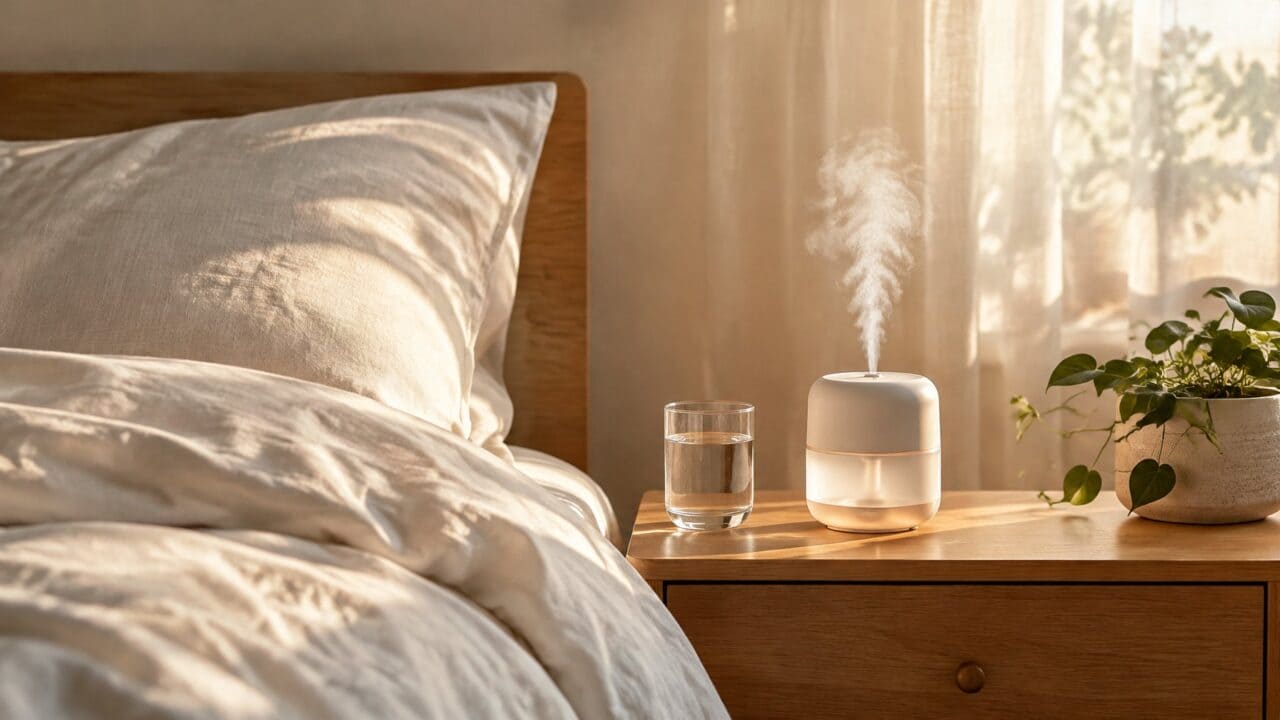
- Add moisture to the room with a clean humidifier, and rinse it regularly.
- Skip alcohol for a few hours before bed.
- Keep water on the nightstand and take small sips if you wake up.
- Be careful with mouth taping. The evidence is limited, and it’s risky if your nose is blocked, so ask your doctor first.
When To See A Doctor
Book a visit if the dryness lasts more than a few weeks despite these fixes. Go sooner if you also have loud snoring, witnessed pauses in breathing, gasping, morning headaches or heavy daytime sleepiness.
Trouble swallowing, blood in your saliva or hoarseness that lingers also deserve a check.
Frequently Asked Questions
Frequently Asked Questions
Your Morning Throat Is Pointing To Something You Can Fix
Start with the simplest suspects, which are a blocked nose, dry air and late drinks. If the dryness hangs on or comes with snoring, you’ve got a clear reason to look into sleep apnea.
Better breathing at night means a more comfortable morning.
Studies Referenced
- Ma 2024, morning dry mouth in community adults
- Oksenberg 2006, dry mouth on waking in sleep apnea
- Pico-Orozco 2020, xerostomia in sleep apnea syndrome
- Alshehri 2026, nasal obstruction and sleep apnea
- Hu 2022, heated humidification meta-analysis
- Kolla 2018, alcohol and sleep-disordered breathing
- Yadlapati 2025, laryngopharyngeal reflux consensus
- Pineda-Ovalle 2026, GERD in people with reflux-type throat symptoms