


How Seasonal Allergies Trigger Snoring and What You Can Do About It
Spring hits, and suddenly you’re sawing logs like a lumberjack. Here’s the kicker: up to 30% of U.S. adults suffer from allergic rhinitis, and most don’t realize their seasonal sniffles are the reason their partner’s threatening to move to the guest room. Managing seasonal allergies isn’t just about stopping the sneezes—it’s about reclaiming quiet, restful nights for everyone in your bedroom.
Your nose knows when pollen counts spike. What it doesn’t tell you is how those microscopic invaders transform your airways into a snoring symphony every single night.
Key Takeaways
- Seasonal allergies cause nasal congestion that forces mouth breathing, directly triggering or worsening snoring
- Histamine release during allergic reactions swells nasal turbinates, narrowing airways and increasing snoring intensity
- Managing seasonal allergies through medication, nasal irrigation, and environmental controls can dramatically reduce snoring
- Untreated allergy-related snoring may progress to obstructive sleep apnea in moderate to severe cases
- Simple interventions like saline rinses before bed and HEPA filters provide immediate relief for many snorers
Why Your Allergies Make You Snore (The Science Part)
Let’s talk about what happens inside your head when pollen attacks.
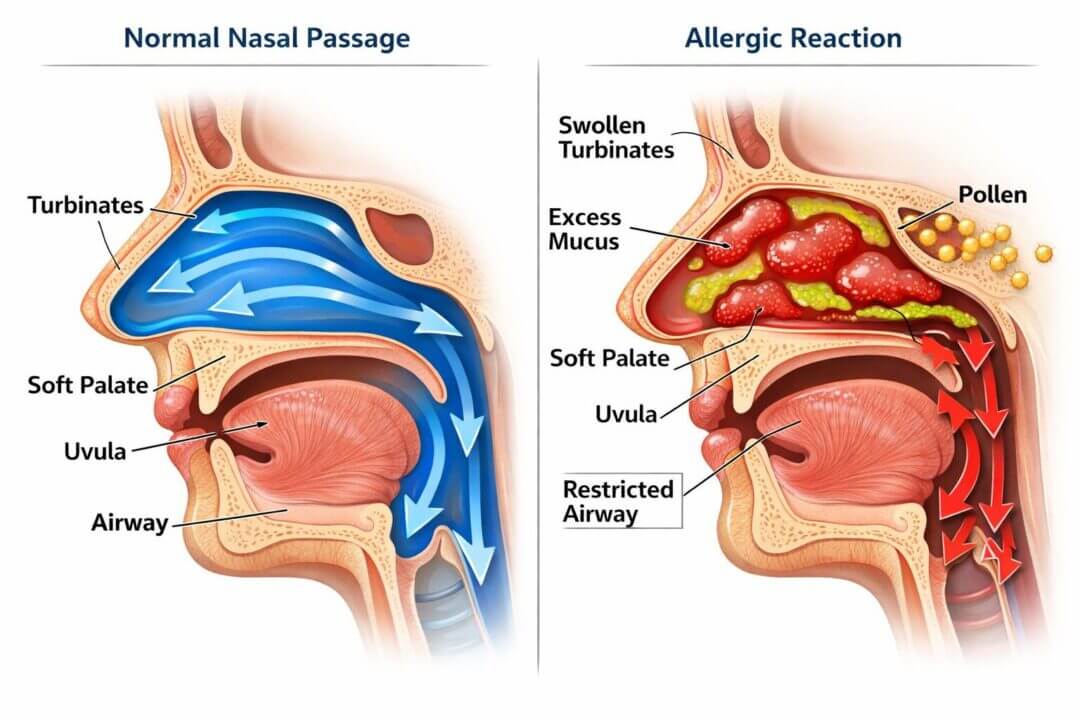
Your immune system sees tree pollen as a threat and releases histamines to fight back. Those histamines cause your nasal turbinates—the spongy structures inside your nose—to swell up like tiny balloons. This swelling narrows your nasal passages, making it harder to breathe through your nose.
When you can’t breathe through your nose, you become a mouth breather. And mouth breathing during sleep? That’s when the real trouble starts.
The Mouth Breathing-Snoring Connection
Your soft palate and uvula—that dangly thing at the back of your throat—start vibrating when air rushes past them through your open mouth. That vibration creates the sound we all know and hate: snoring.
The severity of your allergic rhinitis directly correlates with how badly you snore. Mild allergies might add a few extra decibels to your nighttime soundtrack. Moderate to severe allergies can transform you into a freight train.
Here’s what makes it worse: Seasonal allergens like tree pollen in spring and ragweed in fall create predictable snoring patterns. You might sleep fine in winter, then suddenly your partner’s wearing earplugs come April.
The Inflammation Cascade
Allergies don’t just block your nose—they trigger a whole inflammatory response. Your sinuses swell, mucus production goes into overdrive, and your entire upper airway becomes congested. This creates a perfect storm for snoring.
Dr. Amanda Lee, an ENT specialist, notes that controlling allergies often dramatically improves snoring in patients. I’ve seen this firsthand with readers who email me their success stories after finally addressing their seasonal allergies.
The connection between allergies and sleep quality runs deeper than most people realize.
Managing Seasonal Allergies: Your Anti-Snoring Action Plan
You don’t have to suffer through another spring of sleepless nights. Here’s what actually works.
Medication Strategies That Work
Antihistamines are your first line of defense. Second-generation options like cetirizine or loratadine won’t knock you out like the old-school versions. Take them before bed during allergy season to prevent nighttime congestion.
Nasal corticosteroid sprays reduce inflammation directly where you need it. They take a few days to kick in, so start them before pollen season peaks. Use them consistently—they’re not rescue medications.
Decongestants can help in a pinch, but don’t rely on them long-term. They can actually make congestion worse after a few days (rebound congestion is real and it’s miserable).
The Power of Nasal Irrigation
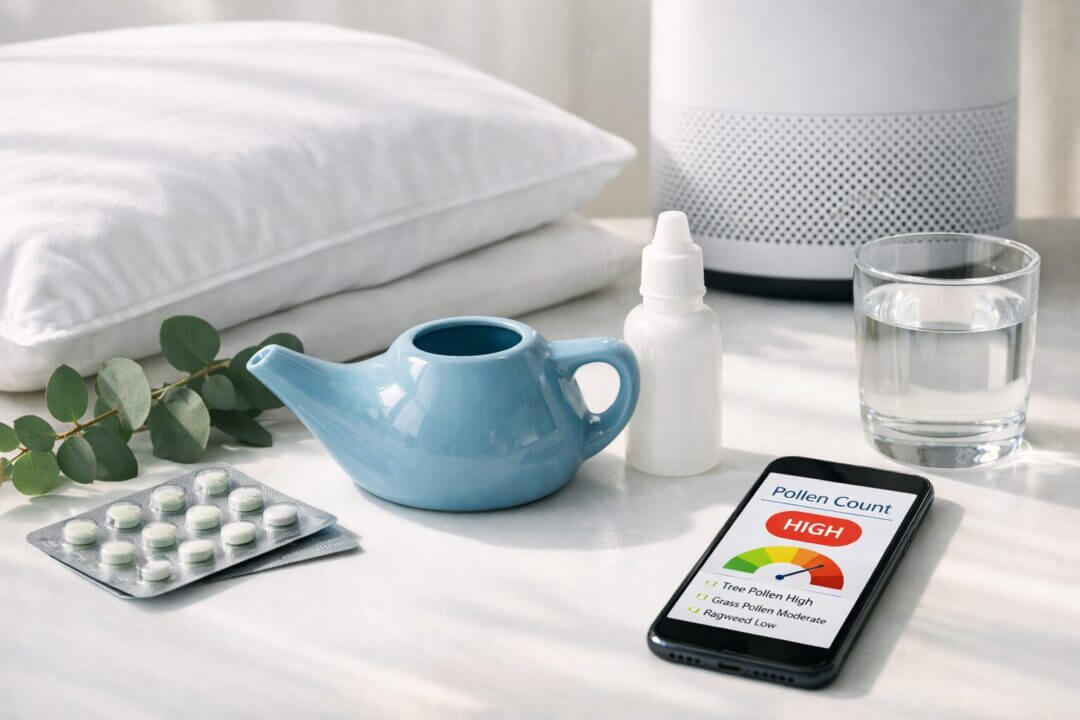
Neti pots and saline rinses aren’t just hippie nonsense—they genuinely work for managing seasonal allergies and reducing snoring.
Rinsing your nasal passages before bed washes out allergens, mucus, and inflammatory particles. Studies show saline irrigation can reduce nasal congestion scores significantly, with some users seeing drops from 5.47 to 2.77 on visual analog scales.
How to do it right:
- Use distilled or previously boiled water (never tap water straight from the faucet)
- Mix in the right amount of salt—too much stings, too little doesn’t help
- Lean over the sink, tilt your head, and let gravity do the work
- Do this 30 minutes before bed for best results
Some people prefer hypertonic saline solutions (higher salt concentration) because they pull more fluid out of swollen tissues. Others find regular saline works fine.
If you’re new to nasal irrigation, internal nasal dilators like the Nozovent or SleepRight dilator can provide immediate relief while you figure out your long-term strategy.
Environmental Controls (Boring But Effective)
HEPA air purifiers in your bedroom filter out pollen and other allergens while you sleep. Run it on high during the day, then turn it to low at night so the noise doesn’t keep you awake.
Keep windows closed during high pollen days. I know fresh air feels great, but you’re literally inviting allergens into your bedroom. Check your local pollen forecast and plan accordingly.
Shower before bed to wash pollen out of your hair and off your skin. Otherwise, you’re rubbing allergens all over your pillow all night long.
Hypoallergenic pillow and mattress covers create a barrier against dust mites and other perennial allergens that make seasonal allergies worse. Wash your bedding weekly in hot water.
When Nasal Strips and Dilators Help
External nasal strips like Breathe Right can provide immediate relief by mechanically opening your nasal passages. They work best for mild congestion and are worth trying before bed.
Internal nasal dilators offer even better airflow improvements—studies show they can increase peak nasal inspiratory flow by 110% compared to 55% for external strips. The MUTE nasal dilator is a popular option that many of my readers swear by.
These devices work best when combined with other allergy management strategies. They’re not magic bullets, but they can make a noticeable difference on high-pollen nights.
The Sleep Apnea Connection You Need to Know
Here’s where things get serious. People with moderate to severe allergic rhinitis are more likely to develop obstructive sleep apnea (OSA).
Warning signs you might have OSA:
- 🚨 Loud, persistent snoring that worsens during allergy season
- 🚨 Gasping or choking sounds during sleep
- 🚨 Extreme daytime fatigue even after a full night’s sleep
- 🚨 Morning headaches
- 🚨 Difficulty concentrating or memory problems
If you’re experiencing these symptoms, especially if they’re new or worsening with seasonal allergies, you need a sleep evaluation. Waking up gasping for breath isn’t normal, and it’s not something to ignore.
Seasonal allergies can reduce the effectiveness of oral appliance therapy for existing sleep apnea. If you’re already using a mandibular advancement device or other anti-snoring mouthpiece, managing your allergies becomes even more critical.
The Progression Timeline
Untreated allergy-induced snoring doesn’t just annoy your partner—it can actually change your airway over time. Chronic inflammation and mouth breathing can lead to:
- Permanent changes in airway muscle tone
- Increased risk of developing OSA
- Cardiovascular stress from repeated oxygen desaturation
- Daytime cognitive impairment and mood issues
The good news? Catching this early and managing seasonal allergies aggressively can prevent progression to more serious sleep-disordered breathing.
Perennial vs. Seasonal: Know Your Enemy
Not all allergies follow the pollen calendar. Perennial allergens like dust mites, pet dander, mold, and cockroach droppings cause year-round problems that are harder to manage.
Seasonal allergens by season:
- Spring: Tree pollen (oak, birch, cedar)
- Summer: Grass pollen
- Fall: Ragweed and other weed pollen
- Winter: Indoor allergens dominate (dust mites, mold)
If your snoring never improves, even in winter, you’re probably dealing with perennial allergens on top of seasonal ones. This requires a more comprehensive approach to managing seasonal allergies and year-round triggers.
Consider allergy testing to identify your specific triggers. Knowing exactly what you’re allergic to helps you target your interventions more effectively.
Advanced Solutions When Basic Strategies Aren’t Enough
Sometimes over-the-counter approaches don’t cut it. That’s when you need to level up.
Prescription Options
Prescription nasal sprays like fluticasone or mometasone offer stronger anti-inflammatory effects than OTC versions. Your doctor might also prescribe leukotriene inhibitors like montelukast, which block a different inflammatory pathway.
Immunotherapy (allergy shots or sublingual tablets) can actually retrain your immune system to stop overreacting to allergens. This takes months to years but can provide lasting relief. If you’re dealing with severe seasonal allergies that wreck your sleep every year, immunotherapy might be worth discussing with an allergist.
Surgical Interventions
For some people, structural issues combine with allergies to create severe snoring. Nasal surgery to correct a deviated septum or reduce enlarged turbinates can make a huge difference when managing seasonal allergies alone isn’t enough.
Procedures like somnoplasty use radiofrequency energy to shrink soft palate tissue. These are typically reserved for cases where conservative management has failed.
The Role of Sleep Position
Don’t underestimate the power of sleeping position in managing allergy-related snoring. Elevating your head 30-45 degrees helps drainage and reduces congestion. Side sleeping keeps your airway more open than back sleeping.
Some people find positional therapy devices helpful, though they take getting used to. The key is finding what works for your body and sticking with it.
Your 30-Day Allergy-Snoring Reset Plan
Ready to take action? Here’s your roadmap for managing seasonal allergies and reclaiming quiet nights.
Week 1: Assessment and Baseline
- Track your snoring with a smartphone app
- Note pollen counts and symptom severity
- Start a sleep diary including partner observations
- Schedule an appointment with your doctor or allergist
Week 2: Environmental Controls
- Install HEPA filter in bedroom
- Wash all bedding in hot water
- Add hypoallergenic pillow covers
- Start showering before bed
- Keep bedroom windows closed
Week 3: Medical Interventions
- Begin daily antihistamine (evening dose)
- Start nasal corticosteroid spray
- Try neti pot or saline rinse before bed
- Test nasal strips or dilators
Week 4: Optimization and Evaluation
- Review sleep diary and snoring app data
- Adjust medications based on response
- Fine-tune environmental controls
- Consider adding air purifier to other rooms
- Follow up with doctor if no improvement
“Controlling allergies often dramatically improves snoring in patients. The connection is undeniable once you understand the mechanism.” — Dr. Amanda Lee, ENT Specialist
When to See a Doctor (Don’t Wait Too Long)
Some situations require professional help. See a doctor if:
- Your snoring is loud enough to be heard through closed doors
- You experience daytime sleepiness that affects work or driving
- Your partner witnesses breathing pauses during sleep
- Morning headaches are frequent
- Over-the-counter allergy management isn’t helping after 2-3 weeks
- You have low oxygen levels when lying down
An ENT specialist or sleep medicine doctor can evaluate whether you need more aggressive treatment. They might recommend a sleep study to rule out OSA or identify other sleep-disordered breathing issues.
Don’t let embarrassment keep you from seeking help. Snoring and sleep apnea are medical conditions, not character flaws. The health impacts of ignoring snoring can be serious and far-reaching.
The Bottom Line on Allergies and Snoring
Managing seasonal allergies is one of the most effective ways to reduce snoring for millions of people. The connection is clear: allergens trigger inflammation, inflammation causes congestion, congestion forces mouth breathing, and mouth breathing creates snoring.
You have more control than you think. Start with the basics—antihistamines, nasal rinses, and environmental controls—and build from there. Most people see significant improvement within 2-4 weeks of consistent allergy management.
Your partner will thank you. Your body will thank you. And you’ll finally understand what it feels like to wake up actually rested during allergy season.
Final Thoughts
Spring doesn’t have to mean sleepless nights and frustrated partners. By understanding how seasonal allergies trigger snoring through nasal congestion and inflammation, you can take targeted action to break the cycle.
Start tonight with these three steps:
- Clear your nasal passages with a saline rinse 30 minutes before bed
- Take an antihistamine at dinner time to prevent nighttime congestion
- Run a HEPA filter in your bedroom while you sleep
If you’ve been managing seasonal allergies for weeks without improvement in your snoring, it’s time to see a doctor. You might be dealing with structural issues, sleep apnea, or perennial allergens that need professional intervention.
Remember: up to 40% of children and 30% of adults suffer from allergic rhinitis, but most never connect their allergies to their snoring. Now you know better. Take action, track your progress, and don’t settle for another season of poor sleep.
Your quieter, more restful nights are waiting on the other side of effective allergy management.