

Treatment for a Blocked Nose at Night: What Works When You Lie Down
If your nose clogs the moment your head hits the pillow, you’re not imagining it. Lying down changes how your nose behaves, and the fix is usually a mix of three or four small moves.
This guide ranks what works, what to avoid, and when a blocked nose is a sign of something your doctor should see.
Key Takeaways
- Lying down measurably raises nasal resistance, so night-time stuffiness is real and common.
- Start with the gentlest tools: saline, a nasal strip or dilator, and a slightly raised head.
- Steroid sprays treat allergy-driven blockage, and adding saline irrigation helped more than a steroid alone in one trial.
- Decongestant sprays work fast but belong on short, labeled courses because of rebound congestion.
- A nose that stays blocked can worsen snoring and sleep apnea, so don’t ignore it.
Why Does My Nose Block Up At Night?
When you move from sitting to lying, the blood vessels in your nasal lining swell. A meta-analysis of 9 studies and 291 people found that lying down raises nasal resistance and cuts nasal airflow (Calvo-Henríquez 2021).
The effect was larger in people who snore or have sleep apnea than in healthy people.
Some people only feel it at night. In a study of people with night-time congestion but a clear nose by day, smokers and people with rhinitis saw the biggest rise in resistance when they lay down (Stroud 1999).
Side sleeping adds a twist, because the lower nostril tends to fill up. In one study, resistance rose from sitting to supine to lateral positions (Tong 2020).
Start With Saline Rinses And Sprays
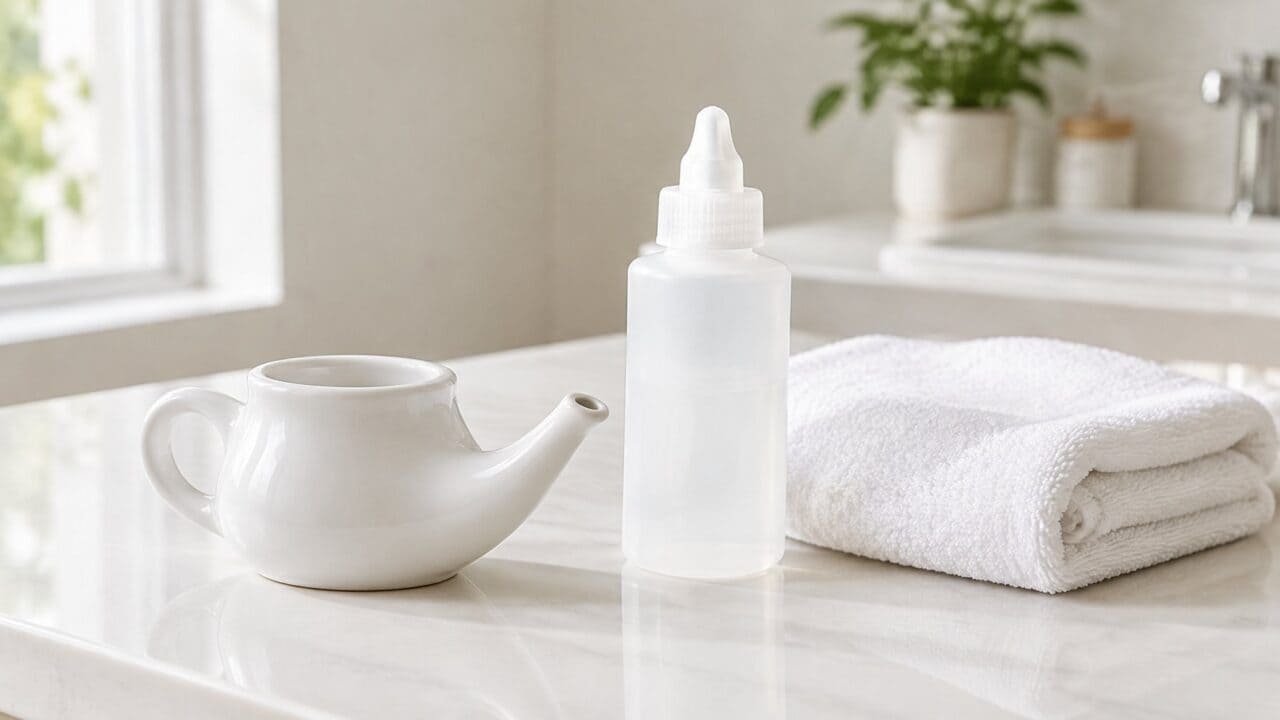
Saline is the low-risk first step, and it pairs well with everything else. In 120 people with allergic rhinitis, adding saline irrigation to a steroid spray improved symptoms, including nasal blockage, more than the spray alone (Chahar 2025).
If you use a neti pot or rinse bottle, the water matters. The CDC says to use store-bought water labeled distilled or sterile, or tap water that’s been boiled for 1 minute and cooled (CDC).
Rinse the device after each use and let it air dry.
Use An External Nasal Strip Or An Internal Dilator
A strip or dilator opens the front of the nose, where most of your airflow resistance sits. Neither treats swelling inside the nose, so they work best for narrow nasal valves and for people who just need a little extra room.
Our nasal strip guide covers what the studies show, and nasal strips vs. dilators vs. sprays helps you pick one. If you want something you wear inside, see nasal dilators for snoring.
Raise Your Head And Pick Your Position
A few extra degrees of incline can make the nose feel less heavy. The best-supported evidence here is about sleep apnea, not stuffiness: raising the head of the bed 30 degrees lowered the apnea-hypopnea index from 22.6 to 16.4 events an hour in one 2026 study, which its authors called hypothesis-generating (Maniaci 2026).
If side sleeping fills one nostril, try switching sides during the night or add a strip. Our post on the best sleep position for snoring explains the tradeoffs.
Treat The Cause: Allergies And Dust
A nose that clogs every night usually has an allergic or irritant trigger. Steroid sprays are the standard treatment for allergic blockage, and they take days of steady use to work, so don’t judge one after a single night.
Start with allergies and snoring and how seasonal allergies trigger snoring. A bedroom air purifier can help too, and washing bedding weekly cuts dust.

Decongestant Sprays: Fast Relief With A Catch
Decongestant sprays such as oxymetazoline shrink swollen tissue quickly, and one dose can ease congestion for up to 12 hours (Druce 2018).
The catch is rebound congestion. The US label limits oxymetazoline to 3 days, and a review found no rebound with up to 7 days of oxymetazoline or 10 days of xylometazoline (Hagen 2025).
Push past that and trouble can start. In one trial, volunteers using oxymetazoline three times a day for 30 days all developed rebound swelling and stuffiness (Graf 1994).
If you’re stuck in the cycle, stopping the spray is the first step, and a steroid spray can speed recovery (Ramey 2016, Ferguson 2001). Check with your doctor or pharmacist before using one for more than the label allows.
What About Snoring And Sleep Apnea?
A blocked nose pushes you toward mouth breathing, and that usually means louder snoring. One 2026 analysis linked nasal obstruction to an AHI about 13.78 events an hour higher (Alshehri 2026).
A study of 88 people with sleep apnea also found that nasal resistance while lying down tracked with oxygen drops overnight (Lan 2021).
Read mouth breathing during sleep and snoring vs. sleep apnea if your congestion comes with loud snoring, and see our CPAP machine guide if you already use one.
When To See A Doctor
See a doctor if one side stays blocked for weeks, if you have facial pain or bloody discharge, or if a cold-like blockage lasts more than about 10 days. Go sooner if you gasp at night or feel exhausted all day.
A structural problem such as a deviated septum or enlarged turbinates needs an exam, because sprays won’t fix it.
Frequently Asked Questions
Frequently Asked Questions
A Clear Nose Is The Easiest Win For Better Sleep
Start with saline and a strip tonight. Add an allergy plan if the trouble comes back, and keep decongestants short.
If your nose still won’t cooperate, you’ve got a clear reason to get it examined.
Studies Referenced
- Calvo-Henríquez 2021, recumbent position and nasal resistance
- Stroud 1999, nocturnal nasal congestion
- Tong 2020, posture and nasal resistance in sleep apnea
- Chahar 2025, saline irrigation with steroid spray
- Maniaci 2026, head-of-bed elevation
- Druce 2018, oxymetazoline duration
- Hagen 2025, topical decongestants review
- Graf 1994, 30-day oxymetazoline
- Ramey 2016, rhinitis medicamentosa
- Ferguson 2001, budesonide and rebound congestion
- Alshehri 2026, nasal obstruction and sleep apnea
- Lan 2021, nasal resistance and hypoxemia
- CDC, how to safely rinse sinuses