

Four Benefits of Air Purifiers to Improve Health and Wellbeing
You can’t see what’s floating in your bedroom air. You can hear what it does to your nose at 3 a.m.
Dust, pollen, pet dander and smoke particles drift into your airways and irritate them. For many people that means a stuffy nose, a rough night, and a partner with an elbow ready.
An air purifier can help with some of that, and it can’t help with the rest. Here are four real benefits, backed by evidence, plus a clear look at the limits.
1. Cleaner air in the room where you sleep
Portable air cleaners trap particles on a filter, and the EPA notes that HEPA filters are a common way to reach a high clean air delivery rate for particles. Filters that catch particles and filters that catch gases are usually separate.
In a six-week, placebo-controlled trial of adults with house dust mite allergy, active purifiers cut bedroom PM2.5 by up to 51.8%. The trial ran two units in each home, one in the living room and one in the bedroom.
2. Less need for allergy medication
The same trial found people in the active group used significantly less allergy medication. Their symptom, visual analog and quality-of-life scores, however, did not differ from the placebo group.
That is an honest, modest result. A purifier may lighten your medication load, but it won’t replace the nasal spray or antihistamine your doctor recommends.
3. A machine sized to your room
Clean air delivery rate, or CADR, estimates how many particles a unit removes at its highest fan speed. A higher CADR can serve a bigger room.
The EPA sizing chart, which assumes 8-foot ceilings, lists about 65 cfm for a 100 square foot room and about 390 cfm for 600 square feet. Measure the bedroom before you shop and buy a unit that clears that number.
4. Help with smoke and cooking odors
For small particles like smoke, the EPA says to choose a unit with a high tobacco-smoke CADR. Odors and gases are a different job, and activated carbon is the filter for it.
Carbon works best in bulk, so thicker filters do better. There is no widely used rating for gas removal, so expect to read reviews and specs closely.
Where to put it and how to run it
If you only have one unit, WebMD suggests putting it in the room where you spend the most time, in an open area. For most of us that is the bedroom.
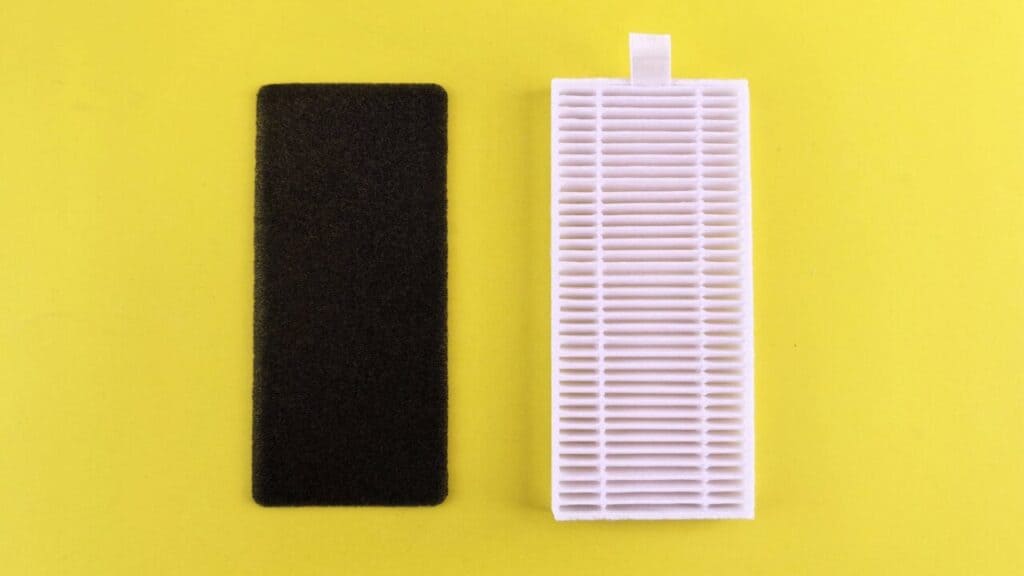
Clean or replace the filter every 6 to 12 months, depending on the filter type and how dirty it gets.
Skip ozone makers and ionizers
WebMD advises avoiding purifiers that generate ozone, as well as those that use ionization or electrostatic precipitation. These can make indoor air worse instead of better.
Stick with a mechanical filter such as HEPA, which WebMD says has been shown to lower indoor fine particulate matter.
Will it help with snoring?
Not directly. None of the sources we reviewed show that an air purifier stops snoring on its own.
What it can do is ease allergy and asthma triggers, and Healthline lists treating allergies to reduce congestion among its snoring tips.
What an air purifier can’t do
A purifier will not cure snoring on its own. We could not find a trial showing that purifiers reduce snoring, so think of one as a way to calm allergy-driven congestion, which can be one of several snoring triggers.
The EPA says the best ways to clean indoor air are to remove pollutant sources and ventilate with clean outdoor air, and that filtration is a supplement. If you snore every night, whether or not you have allergies, a doctor can check for sleep apnea.
Avoid units that deliberately make ozone, which irritates the lungs. The EPA also warns that some ionizers, plasma units and UV devices can emit ozone, so check the CARB list of low-ozone devices before you buy.

One more thing. Salt-aerosol gadgets like the one in our SalinPlus review are not air purifiers, and they don’t filter anything. We haven’t found strong proof that they ease congestion, so don’t swap one in for a HEPA unit.
Your next step
Pick the room that matters most, which is almost always the bedroom. Size a HEPA unit to it, run it every night, and wash the bedding to cut the dust it has to chase.
If you still snore, browse our anti-snoring aids or read 6 things that could be keeping you awake.