


How to Sleep Better with Sleep Apnea: Lifestyle Changes and Natural Strategies
Key Takeaways
Lifestyle changes can ease sleep apnea, but they work best alongside treatment, not instead of it.
- Weight loss: in a meta-analysis, bigger drops in BMI went with bigger drops in apnea severity.
- Exercise: a review of 12 trials found exercise cut apnea events by about 7 per hour on average, even with small changes in weight.
- Sleep position: positional therapy lowers events when sleeping on your back but is less effective than CPAP overall.
- Alcohol, sedatives and smoking: Mayo Clinic lists all three as risk factors.
- Bottom line: get diagnosed, follow your treatment plan and add habits on top.
If you have sleep apnea, you’ve probably heard “just lose weight” a few too many times. Lifestyle habits do matter, but the research gives a more nuanced picture.
Here’s what each change can and can’t do. This is educational and doesn’t replace your doctor’s advice.
Do Lifestyle Changes Replace CPAP?
Not for most people with moderate to severe sleep apnea. NHLBI lists lifestyle changes, CPAP, oral appliances and sometimes surgery, and your doctor picks the mix based on your test results.
Think of habits as a team-up, not a swap. Our guide to the benefits of CPAP therapy covers the research on the machine itself.
Weight Loss and Sleep Apnea
Excess weight is a risk factor for obstructive sleep apnea, according to Mayo Clinic. A meta-analysis of 27 studies in people with obesity and sleep apnea found that weight reduction went with milder apnea, with a 20% drop in BMI linked to a 57% drop in apnea-hypopnea index.
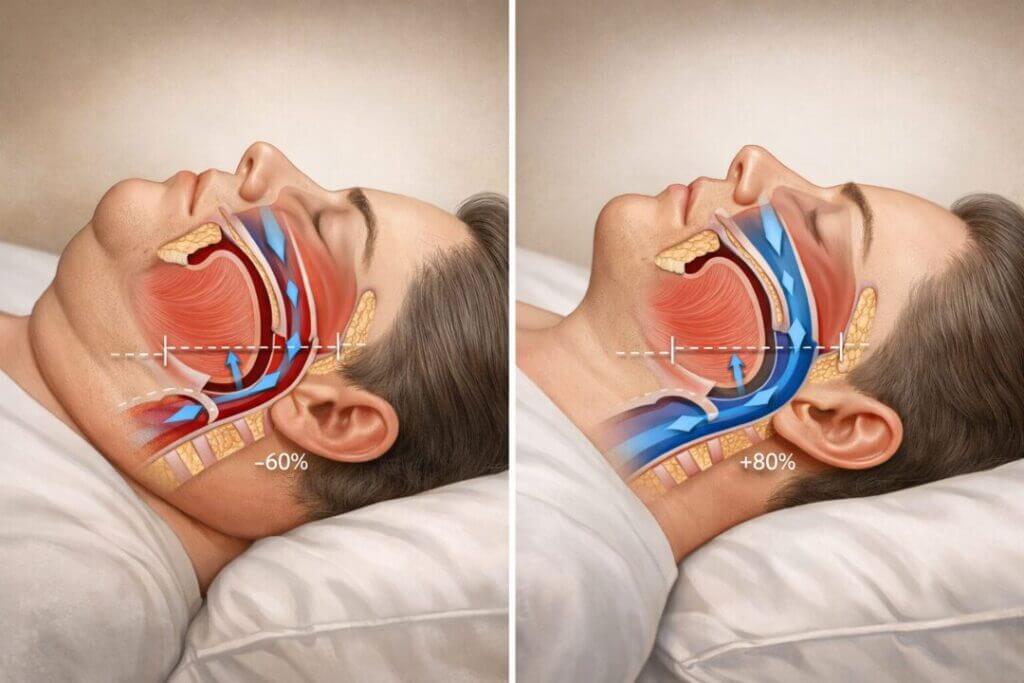
Gains were smaller beyond that point, so you don’t need a perfect weight to benefit. Work with your doctor on a plan that’s safe and sustainable.
- Start small: change one meal at a time rather than crash dieting.
- Track what matters: energy, snoring and your CPAP data, not only the scale.
- Recheck your settings: if you lose a lot of weight, ask your doctor whether your CPAP pressure still fits.
Exercise Helps Even Without Big Weight Loss
A systematic review of 12 randomized trials with 526 patients found exercise training reduced apnea-hypopnea index by about 7 events per hour and lowered daytime sleepiness scores. The weight change was small, about 0.7 BMI points.
In people already using CPAP faithfully, exercise didn’t lower the index further, though fitness improved. Choose activities you enjoy, and check with your doctor before starting a new routine.
Alcohol, Sedatives and Smoking
Mayo Clinic lists alcohol or sedative use and smoking as risk factors for obstructive sleep apnea. Relaxing the throat muscles and irritating the airway are the usual explanations.
- Avoid alcohol close to bedtime.
- Ask your doctor before taking sleep aids or sedatives.
- If you smoke, ask about quitting support.
Sleep Position Matters for Some People
A meta-analysis of 19 randomized trials found positional therapy reduced apnea events in the supine (back) position compared with placebo. Compared with CPAP, though, positional therapy was less effective at lowering the overall index.
It can help people whose apnea is worse on their back. Read our guides to the best sleep positions for sleep apnea and sleep position and sleep apnea.
Habits That Support Better Sleep
- Keep a regular bedtime and wake time.
- Create a short wind-down routine and put screens away before bed.
- Keep the bedroom quiet, dark and comfortable. See our BedJet review if temperature is a problem.
- Treat nasal congestion and allergies, since Mayo Clinic lists congestion as a risk factor.
- Use a heated humidifier if your CPAP dries your mouth, as Mayo Clinic suggests.
Waking with a dry throat? Our deep dive on sore throat and sleep apnea explains why.

When Lifestyle Changes Aren’t Enough
If you’ve made changes and still feel exhausted, snore loudly or wake gasping, tell your doctor. Options include CPAP and oral appliances, so see oral appliances for sleep apnea and CPAP versus oral appliances.
Not diagnosed yet? Read the signs of sleep apnea and what to expect at a sleep center.
Lifestyle Questions About Sleep Apnea
Your Next Step
Pick one change this week, such as an earlier last drink or a side-sleeping pillow, and stick with it. Bring your results to your next doctor visit.
Ready to compare gear? See our CPAP machine guide, or read what sleep apnea is first.
More On the Topic
- Mayo Clinic: Sleep Apnea, Symptoms and Causes
- NHLBI: Sleep Apnea Treatment
- Malhotra et al., Weight Reduction and the Impact on Apnea-Hypopnea Index
- Lin et al., Effects of Aerobic Exercise and Resistance Training on Obstructive Sleep Apnea
- Gao et al., Sleep Positional Therapy, Oral Appliance Therapy and CPAP