

Oxygen Levels During Sleep: What’s Normal, What’s Dangerous, and How to Monitor Yours
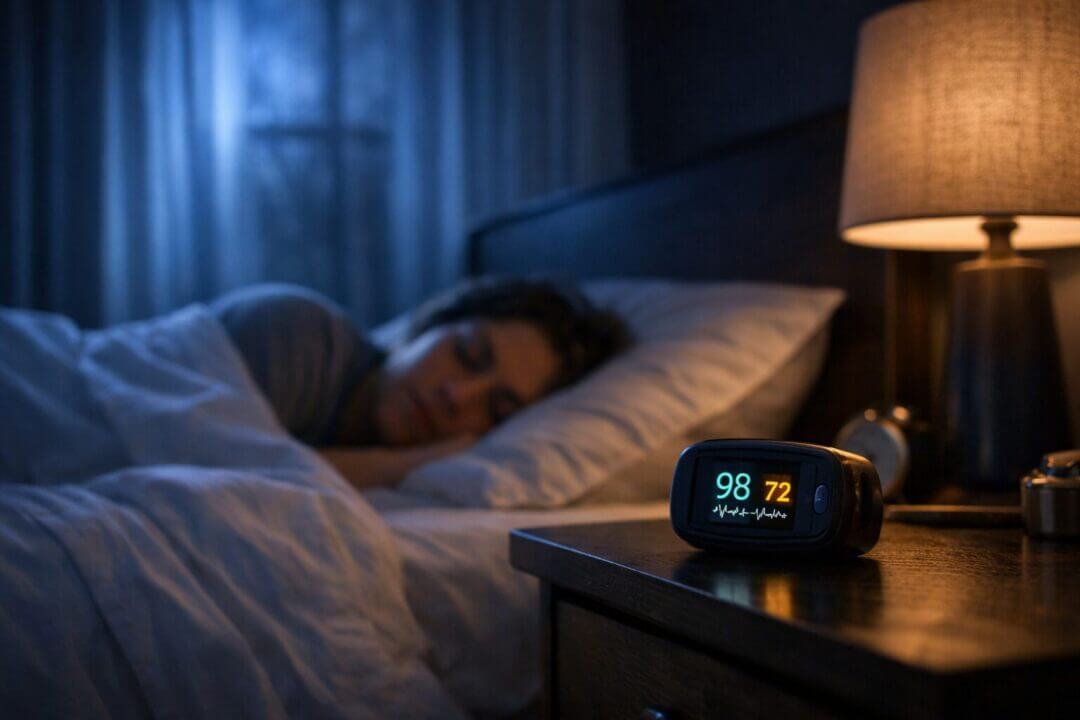
Your body needs oxygen like a car needs gas—without it, everything grinds to a halt. But here’s what most people don’t realize: while you’re sleeping, your oxygen levels can drop low enough to damage your heart, brain, and every other vital organ, all without waking you up.
These days, millions of adults are walking around exhausted, foggy-headed, and at risk for serious health problems because their blood oxygen dips dangerously low every single night.
Low oxygen levels while sleeping aren’t just uncomfortable—they’re a red flag your body waves frantically while you’re unconscious. Your partner might notice you gasping or snoring, but you’re completely unaware that your cells are starving for oxygen.
Key Takeaways:
Normal oxygen saturation (SpO₂) during sleep ranges from 95-100%, with brief dips into the low 90s considered acceptable for healthy adults
Sustained readings below 90% signal hypoxemia, a dangerous condition that requires medical evaluation and can indicate sleep apnea or respiratory disease
Levels at 87% or below for extended periods increase your risk for cardiovascular disease, stroke, cognitive decline, and other serious health complications
Home pulse oximeters and smartwatches can track your overnight oxygen levels, helping you identify patterns that warrant a conversation with your doctor
Treatment options range from lifestyle changes to CPAP therapy, depending on the underlying cause of your oxygen drops
Why Oxygen Levels Matter During Sleep
Every cell in your body runs on oxygen. Your brain burns through about 20% of your body’s oxygen supply just to keep you thinking, dreaming, and breathing. Your heart needs oxygen to pump blood through 60,000 miles of blood vessels.
When you sleep, your body shifts into repair mode—healing tissues, consolidating memories, and flushing out toxins. But this restoration work demands adequate oxygen, and your body’s defenses drop during sleep, making oxygen deprivation more dangerous than when you’re awake.
Think of it this way: if your cells were workers in a factory, oxygen would be their paycheck. Miss a few paychecks and workers get stressed. Miss too many and the whole operation shuts down.
What Is Oxygen Saturation (SpO₂)?
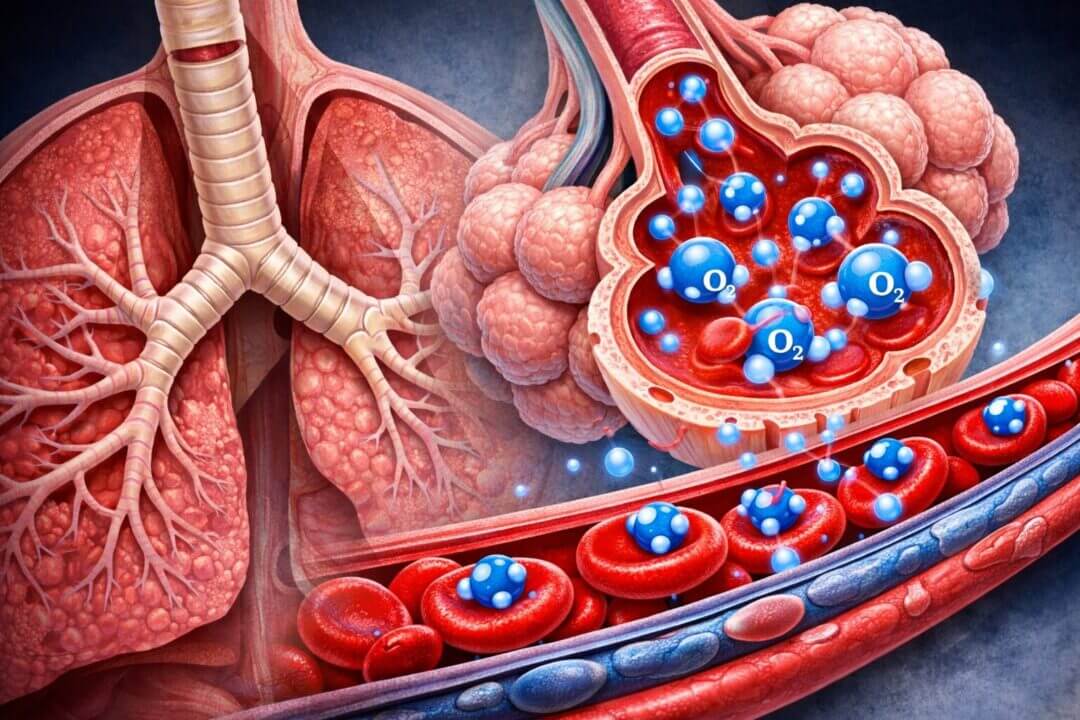
Oxygen saturation measures the percentage of your hemoglobin—the protein in red blood cells—that’s carrying oxygen. When you breathe in, oxygen floods your lungs and latches onto hemoglobin molecules like passengers boarding a bus.
Those loaded buses then travel through your bloodstream, dropping off oxygen wherever it’s needed.
A pulse oximeter measures this by shining light through your fingertip or earlobe. Oxygenated blood absorbs light differently than deoxygenated blood, and the device calculates the ratio. The result shows up as a percentage: if your SpO₂ reads 98%, that means 98% of your hemoglobin is carrying oxygen.
It’s expressed as a percentage because it’s literally a fraction—oxygenated hemoglobin divided by total hemoglobin, times 100.
Normal Oxygen Levels During Sleep
The Standard Healthy Range
For healthy adults, oxygen saturation should stay between 95% and 100% throughout the night. Your body tolerates slight natural dips during deep sleep stages—maybe down to 93% or 94% for brief moments—without any harm.
During REM sleep, your breathing becomes irregular and the muscles supporting your upper airway relax. This can cause minor, temporary drops in oxygen saturation that don’t signal a problem. Your body expects these fluctuations and handles them just fine.
Factors That Affect Your Individual Baseline
Age changes everything. Older adults without respiratory conditions might see readings around 94% without immediate concern, though 95% or higher remains ideal. Your lungs lose some elasticity over time, and that shows up in the numbers.
If you live at high altitude, your baseline will naturally run lower than someone at sea level—there’s simply less oxygen in the air you’re breathing. Athletes with highly efficient cardiovascular systems might maintain near-perfect saturation even during intense physical stress.
And if you have chronic lung disease like COPD, your doctor might set different target ranges—sometimes 88-92%—based on your individual condition.
Understanding what’s behind low oxygen levels when lying down helps you recognize whether your numbers reflect normal variation or something more serious.
When Oxygen Levels Are Dangerously Low
What Does 90% Mean? What About 87%?
Below 90% is where doctors start using the word “hypoxemia”—clinically significant low oxygen. This isn’t a number you want to see consistently during sleep. At 87%, you’ve crossed into concerning territory that warrants immediate evaluation, though it’s not always a medical emergency.
Context matters enormously. A single dip to 87% that lasts thirty seconds is very different from sustained readings at that level for hours.
One brief drop might happen if you rolled onto your back and your airway partially collapsed. Hours at 87% suggests a serious breathing disorder that’s slowly damaging your body.
For more details on specific thresholds, check out our guide on understanding the risks of low oxygen levels while sleeping.
Immediate Effects of Low Oxygen During Sleep
Your brain notices oxygen deprivation first. You might wake up with a pounding headache because your blood vessels dilated overnight trying to deliver more oxygen to your brain.
You feel exhausted despite sleeping eight hours because your sleep was fragmented—your body kept partially waking you to restart breathing.
Daytime fatigue becomes your constant companion. Your memory gets fuzzy, your concentration evaporates, and you might feel irritable or depressed without understanding why.
Many people experience waking up gasping for breath, a terrifying sensation that signals your body’s desperate attempt to restore oxygen levels.
Long-Term Health Risks
Chronic oxygen deprivation during sleep doesn’t just make you tired—it actively damages your body. Your blood pressure climbs because your cardiovascular system works overtime trying to compensate for low oxygen. This sustained hypertension increases your risk for heart attack and stroke.
Your brain suffers too. Research links chronic nighttime hypoxemia to accelerated cognitive decline and increased dementia risk. Mood disorders, including depression and anxiety, correlate strongly with poor sleep quality and oxygen deprivation.
The question “can sleep apnea kill you” isn’t hyperbole—untreated severe oxygen drops during sleep significantly increase mortality risk from cardiovascular events.
Why Oxygen Drops During Sleep
Obstructive Sleep Apnea
This is the heavyweight champion of nighttime oxygen problems. Your airway collapses repeatedly during sleep, blocking airflow for ten seconds or longer. No air means no oxygen, and your saturation plummets. You might stop breathing dozens or even hundreds of times per night.
The pattern is predictable: your oxygen drops, your brain panics and partially wakes you, you gasp and resume breathing, your oxygen recovers, you fall back asleep, and the cycle repeats. All night long. Every night.
Other Medical Causes
COPD, asthma, heart failure, and obesity hypoventilation syndrome all interfere with oxygen delivery during sleep. COPD damages your lungs’ ability to exchange gases efficiently. Asthma causes airway inflammation and constriction.
Heart failure means your heart can’t pump oxygenated blood effectively. Obesity hypoventilation syndrome prevents your lungs from expanding fully.
Each condition has its own fingerprint, but they all lead to the same problem: insufficient oxygen reaching your cells while you sleep.
Positional and Environmental Factors
Lying flat on your back allows gravity to pull your tongue and soft tissues backward, narrowing your airway. This is why sleeping positions matter so much for people prone to oxygen drops.
High altitude presents a different challenge—the air itself contains less oxygen, so even healthy lungs can’t maintain normal saturation levels. If you’ve ever felt winded after climbing stairs in Denver or struggled to sleep well in the mountains, you’ve experienced this firsthand.
How to Monitor Your Oxygen Levels at Home
Pulse Oximeters
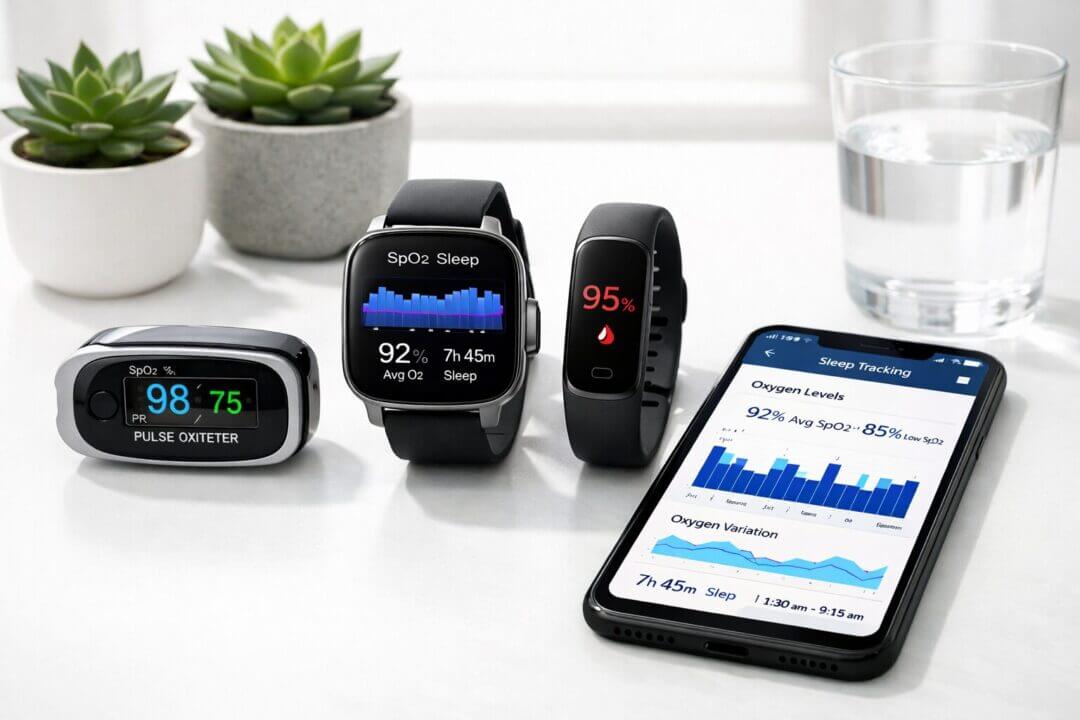
These small devices clip onto your fingertip and display your oxygen saturation and heart rate within seconds. For overnight monitoring, you’ll want a model with recording capability or one that connects to an app on your phone.
To use one effectively, make sure your hands are warm—cold fingers give inaccurate readings. Remove nail polish, which can interfere with the light sensor. Stay still during measurement, as movement creates artifacts in the data.
Interpreting your readings requires looking at patterns, not isolated numbers. One low reading might be a fluke. Consistent drops below 90% multiple times per night signal a problem worth investigating.
Our guide on how to monitor your blood oxygen level while sleeping walks you through the technical details.
Wearables and Smartwatches with SpO₂ Sensors
Modern smartwatches and fitness trackers offer continuous overnight SpO₂ monitoring, creating graphs that show your oxygen levels throughout the night. This gives you a much clearer picture than spot-checking with a fingertip oximeter.
The convenience is unbeatable—you’re already wearing the device, and it automatically tracks your data. But understand the limitations: consumer wearables aren’t as accurate as medical-grade pulse oximeters, especially during movement or if the device doesn’t fit snugly.
They’re excellent screening tools that can alert you to potential problems, but they’re not diagnostic devices.
When to Move Beyond Home Monitoring
If your home monitoring shows consistent oxygen drops, it’s time for professional evaluation. An at-home sleep study uses medical-grade equipment to record your breathing, oxygen levels, heart rate, and body position while you sleep in your own bed.
For complex cases or when home studies are inconclusive, an in-lab polysomnography provides comprehensive data. Technicians monitor you all night, recording brain waves, eye movements, muscle activity, breathing patterns, oxygen levels, and heart rhythm.
How to Improve Your Oxygen Levels During Sleep
The most effective treatment depends on what’s causing your oxygen to drop. If you have obstructive sleep apnea, CPAP therapy delivers pressurized air that keeps your airway open all night. Many people see their oxygen levels normalize immediately after starting CPAP.
Oral appliances work for mild to moderate sleep apnea by repositioning your jaw to prevent airway collapse. These devices look similar to sports mouthguards and can be highly effective for the right candidates.
Sleep position makes a huge difference. Side sleeping prevents your tongue from falling backward and keeps your airway open. Some people see dramatic improvement just by avoiding back sleeping.
Weight loss, if you’re carrying extra pounds, reduces the tissue pressing on your airway and improves lung function. Even a 10% reduction in body weight can significantly improve sleep apnea severity.
Quit smoking—tobacco inflames and swells your airways, making obstruction more likely. Avoid alcohol within three hours of bedtime, as it relaxes throat muscles and worsens airway collapse.
If you have chronic respiratory conditions, work with your doctor to optimize your treatment. Better daytime breathing usually means better nighttime oxygen levels.
For severe cases, supplemental oxygen therapy prescribed by your physician can maintain adequate saturation while you address underlying causes. And breathing exercises that strengthen your respiratory muscles and improve lung capacity can provide modest benefits over time.
For more strategies, explore our article on lifestyle changes to improve sleep apnea symptoms.
Pump It Up
Your oxygen levels during sleep tell a story about your health that you can’t afford to ignore. Normal saturation between 95-100% keeps your brain sharp, your heart healthy, and your body functioning optimally. But when those numbers drop—especially below 90%—you’re playing with fire.
Low oxygen levels while sleeping damage your body silently, night after night, until the consequences become impossible to ignore.
The good news? You have tools to monitor your oxygen at home, and effective treatments exist for virtually every cause of nighttime oxygen drops.
Take action today: If you snore loudly, wake up gasping, or feel exhausted despite adequate sleep time, start tracking your oxygen levels. A simple pulse oximeter costs less than dinner out and might save your life. If your readings consistently fall below 90%, schedule an appointment with your doctor or a sleep specialist.
Your body does its most important repair work while you sleep, but only if it has the oxygen it needs. Don’t let another night go by wondering whether you’re getting enough air. Monitor, investigate, and treat—your future self will thank you.