


Why You Wake Up with a Sore Throat: Snoring, Sleep Apnea, and How to Find Relief
Your throat feels like sandpaper when you wake up, and you haven’t even been sick. Between 50 and 70 percent of people with obstructive sleep apnea wake up with throat pain, and most don’t realize their nighttime breathing patterns are the culprit.
That morning soreness isn’t random. Your body’s been fighting all night—against dry air, against your own breathing, against gravity pulling your tongue backward.
I’ve talked to hundreds of people who thought they just needed more water or better pillows, when really their airways were staging a nightly rebellion.
The connection between sore throat from snoring sleep apnea runs deeper than most people think. Your throat tissue vibrates thousands of times per night when you snore, creating friction that would make any surface raw.
Key Takeaways
Snoring and sleep apnea cause throat soreness through tissue vibration and forced mouth breathing that strips moisture from your throat lining throughout the night
Morning-only throat pain that improves during the day strongly suggests breathing-related causes rather than infection or illness
Between 30-60% of chronic sore throats stem from acid reflux, which worsens when lying flat during sleep
Simple interventions like humidifiers, positional therapy, and staying hydrated can provide immediate relief while you address root causes
Persistent morning throat pain warrants a sleep study to rule out obstructive sleep apnea, which affects your health far beyond just discomfort
The Anatomy Involved
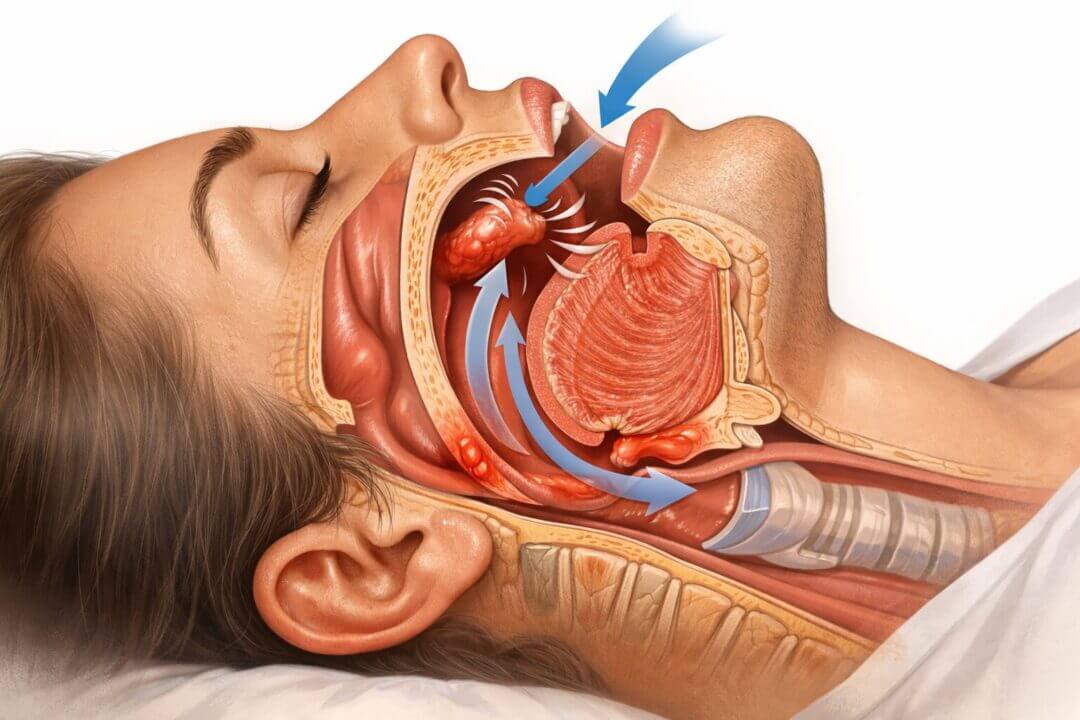
Your throat houses a collection of soft tissues that never really get a break. The pharynx stretches from your nasal cavity down to your esophagus, while the soft palate and uvula dangle at the back like curtains that can’t quite stay open.
Your tonsils sit on either side, lymph tissue guardians that swell at the first sign of trouble.
These structures turn vulnerable the moment you fall asleep. Muscle tone decreases across your entire body during sleep, and your throat tissues relax and collapse inward.
Gravity pulls everything backward when you’re lying down, narrowing the airway and forcing air through a tighter space—which creates turbulence, vibration, and the perfect storm for irritation.
All the Possible Causes
Snoring
The vibration from snoring literally beats up your throat tissue. When air rushes through a partially blocked airway, your soft palate and uvula flutter like flags in a windstorm—sometimes 20,000 times per night. That constant friction inflames the delicate mucous membranes lining your throat.
Mouth breathing during snoring strips away the protective moisture your throat needs. Saliva production drops by up to 40% during sleep anyway, and when you’re breathing through your mouth, you’re essentially running a hair dryer across already-dry tissue. The turbulent airflow pulls moisture out faster than your body can replace it.
Chronic snoring progressively weakens throat muscles over time. The repeated trauma causes tissue to swell and lose elasticity, which ironically makes the airway even more prone to collapse.
It’s a vicious cycle—snoring damages tissue, damaged tissue creates more obstruction, more obstruction leads to louder snoring.
Sleep Apnea
Sleep apnea turns your throat into a battlefield every night. Each time your airway collapses completely, you stop breathing—sometimes for 10, 20, even 60 seconds. When your brain finally jolts you awake enough to gasp for air, you’re sucking oxygen through a bone-dry mouth and irritated throat.
The sore throat from snoring sleep apnea feels different from other causes. It’s accompanied by that cotton-mouth sensation, where your tongue feels stuck to the roof of your mouth. You might also wake with headaches from oxygen deprivation, crushing fatigue despite “sleeping” eight hours, and a partner who reports you sound like you’re choking in your sleep.
Obstructive sleep apnea forces you into mouth breathing because your nose and throat can’t maintain an open airway. Each apnea episode creates negative pressure in your chest as you struggle to inhale against a closed airway, which can actually pull stomach acid upward and compound the throat irritation.
Mouth Breathing and Dry Air
Your nose evolved to filter, warm, and humidify air before it reaches your throat. When nasal congestion from allergies, a deviated septum, or swollen turbinates forces you to breathe through your mouth, you bypass all those protective mechanisms. Cold, dry, unfiltered air hits your throat directly.
Low bedroom humidity amplifies the problem exponentially. During winter months when heaters run constantly, indoor humidity can drop below 20%—drier than most deserts. Your throat tissue needs humidity around 40-50% to maintain its protective mucous layer.
Dehydration before bed sets you up for failure. If you’re not drinking enough water during the day, or if you’re consuming caffeine or alcohol in the evening (both are diuretics), you’re starting the night already behind.
Over 8-10 hours of sleep, your body can’t produce enough saliva to keep your throat moist, especially if you’re mouth breathing.
Post-Nasal Drip and Allergies
Mucus dripping down the back of your throat all night creates constant irritation. Your sinuses produce mucus continuously, but when you’re lying flat, gravity pulls that drainage straight down your throat instead of out through your nose. The mucus contains inflammatory compounds and irritants that your throat tissue reacts to.
Dust mites living in your bedding are often the hidden culprit. These microscopic creatures thrive in mattresses and pillows, and their waste products trigger allergic reactions. You’re literally sleeping with your face pressed against millions of allergen sources for eight hours straight.
Seasonal versus perennial allergens create different patterns. If your sore throat appears only during spring or fall, pollen is likely the trigger.
Year-round morning soreness points toward indoor allergens like pet dander, mold, or those dust mites. The surprising link between snoring and sore throats often involves allergic inflammation narrowing your airway.
GERD and Acid Reflux
Stomach acid reaching your throat during sleep creates a burning, raw sensation that persists into morning. Laryngopharyngeal reflux (LPR) affects 30-60% of people with chronic sore throats, and it often happens without the classic heartburn sensation. You might have silent reflux and not even know it.
Lying flat removes gravity’s help in keeping stomach contents down. Your lower esophageal sphincter—the valve between your stomach and esophagus—relaxes during sleep, making it easier for acid to flow backward. Late-night meals, spicy foods, alcohol, and caffeine all weaken this valve further.
Reflux-related throat soreness comes with telltale signs. You might notice a sour or bitter taste when you wake up, experience hoarseness that improves as the day goes on, or feel like you need to constantly clear your throat. Some people develop a chronic cough that’s actually their body trying to clear acid from their airways.
Infection (Viral or Bacterial)
Sometimes a sore throat really is just a sore throat. Viral infections like the common cold or flu cause inflammation that’s worst in the morning because mucus has pooled in your throat overnight. But this soreness typically worsens throughout the day rather than improving.
Strep throat from Streptococcus bacteria creates rapid-onset pain that’s severe and persistent. You’ll usually see other symptoms—fever above 101°F, swollen lymph nodes in your neck, white patches or pus on your tonsils, and pain when swallowing that doesn’t ease up. This requires antibiotics, not a humidifier.
The key differentiator is pattern and progression. Infection-related sore throats come with systemic symptoms and get worse over time. Breathing-related sore throats are worst upon waking and improve as you move around and your throat rehydrates.
How to Tell What’s Causing Your Sore Throat
Pattern recognition is your best diagnostic tool. If your throat hurts every single morning but feels fine by lunch, you’re almost certainly dealing with a breathing or environmental issue rather than an infection. The improvement happens because you’re rehydrating your throat tissue and breathing normally while awake.
Does your partner report snoring or breathing pauses? This is crucial information you can’t gather yourself.
If someone tells you they’ve heard you gasp, choke, or stop breathing during sleep, sleep apnea is likely the culprit. Many people with severe apnea have no idea because they don’t fully wake during episodes.
Track accompanying symptoms for a week. Note whether you wake with headaches, feel exhausted despite adequate sleep time, have difficulty concentrating during the day, or experience mood changes.
These point toward sleep-disordered breathing rather than simple environmental dryness.
Red flags that warrant immediate medical attention include difficulty swallowing, a lump feeling in your throat that persists, blood in your saliva, severe pain on one side only, or a sore throat lasting more than two weeks. These could indicate serious conditions requiring professional evaluation.
Immediate Relief Remedies
Warm honey and water soothes irritated throat tissue instantly. Mix one tablespoon of raw honey into warm (not hot) water and sip slowly. Honey coats your throat with antimicrobial compounds and helps tissue retain moisture. I keep a jar on my nightstand for those rough mornings.
Saltwater gargles reduce inflammation and clear mucus. Dissolve half a teaspoon of salt in eight ounces of warm water and gargle for 30 seconds, then spit. The salt draws out excess fluid from swollen tissue through osmosis, providing temporary relief.
Herbal teas offer both hydration and therapeutic compounds. Chamomile contains anti-inflammatory properties, while peppermint has menthol that numbs pain receptors. Drink these warm (not hot) about 30 minutes before bed to pre-hydrate your throat.
Apple cider vinegar gargle works for some people, though the science is mixed. Mix one tablespoon of ACV with warm water and gargle briefly. The acidity may help kill bacteria, but don’t overdo it—too much acid can irritate already-sensitive tissue.
Steam inhalation adds moisture directly to your airways. Lean over a bowl of hot water with a towel over your head for 5-10 minutes before bed. Adding eucalyptus oil can help open nasal passages, reducing the likelihood of mouth breathing.
Staying hydrated before bed is non-negotiable. Drink 16 ounces of water in the two hours before sleep, but stop 30 minutes before bed to avoid midnight bathroom trips. Your body needs that fluid reservoir to maintain saliva production overnight.
Addressing the Root Cause
Treating snoring requires a multi-pronged approach. Mandibular advancement devices hold your jaw forward during sleep, preventing your tongue from collapsing backward. Nasal strips open nasal passages to encourage nose breathing. Positional therapy—avoiding back sleeping—reduces airway collapse for many people.
Treating sleep apnea often requires professional intervention. CPAP machines remain the gold standard, delivering continuous positive airway pressure that keeps your airway open.
Oral appliances work for mild to moderate cases. Some people benefit from lifestyle changes that improve sleep apnea symptoms, including weight loss, alcohol reduction, and smoking cessation.
Using a humidifier in your bedroom transforms your sleep environment. Aim for 40-50% humidity, which you can monitor with an inexpensive hygrometer. Cool-mist humidifiers work well and don’t pose burn risks. Clean the unit weekly to prevent mold growth.
Managing allergies and post-nasal drip starts with environmental controls. Wash bedding weekly in hot water (at least 130°F) to kill dust mites. Use allergen-proof mattress and pillow covers. Run a HEPA air purifier in your bedroom. Consider over-the-counter antihistamines or nasal corticosteroid sprays after consulting with your doctor.
Treating GERD involves both lifestyle and dietary changes. Elevate the head of your bed 6-8 inches using blocks under the bed frame (extra pillows don’t work as well). Avoid eating within three hours of bedtime.
Cut back on trigger foods like chocolate, caffeine, alcohol, spicy foods, and acidic items. Antacids provide temporary relief, but persistent reflux needs medical management.
When to see a doctor isn’t always obvious. If you’ve tried environmental modifications and simple steps to stop mouth breathing for two weeks without improvement, it’s time for professional help. A sleep specialist can order a sleep study to diagnose apnea definitively. An ENT can evaluate structural issues like a deviated septum or enlarged tonsils.
The Brass Tacks
Your morning sore throat is your body’s way of telling you something’s wrong with how you’re breathing at night. Whether it’s snoring, sleep apnea, dry air, or reflux, the solution starts with identifying the pattern and addressing the root cause rather than just treating symptoms.
Start tonight with the easy wins—add a humidifier, drink more water, try sleeping in a position that reduces snoring. Track your symptoms for a week and note what improves. If your throat still hurts every morning after two weeks of environmental changes, schedule an appointment with a sleep specialist or ENT.
The health impacts of ignoring snoring and sleep apnea extend far beyond throat discomfort. Untreated sleep apnea increases your risk of heart disease, stroke, diabetes, and cognitive decline. That sore throat is an early warning system—listen to it.
You don’t have to wake up miserable every morning. The solutions exist, from simple lifestyle adjustments to medical devices to professional treatment. Your throat will thank you, your partner will sleep better, and you’ll finally understand what it feels like to wake up refreshed instead of raw.