

Best Natural Remedies for Snoring
You’re awake at 2 a.m., either elbowing the person next to you or nursing a fresh bruise from being elbowed. Either way, you want the noise to stop before you spend money on a gadget.
Here’s the short version. Some natural fixes have real trial data behind them, a few have a little, and a couple of old favorites have none.
About 45% of adults snore occasionally and 25% snore regularly, according to a 2024 systematic review of positional therapy for snoring.
One warning before the list. Snoring may indicate sleep apnea, so these fixes suit ordinary snoring and not a breathing problem you’ve been ignoring.
- Best evidence: daily throat and tongue exercises, and cutting alcohol near bedtime.
- Good evidence, hard to keep up: staying off your back.
- Modest evidence: raising the head of the bed.
- Mixed or thin evidence: nasal strips, breathing exercises and yoga, essential oil sprays.
- No trial found: bedroom humidifiers, phone books under the bed legs.
Get Off Your Back
Gravity is the villain on your back. Your tongue and soft palate sag toward the throat, and the airway narrows.
The old tennis ball trick works as a reminder. In a trial of 55 people with positional sleep apnea, the tennis ball technique cut back sleeping to a median of 0%, and 42.9% reached treatment success against 68% for a vibrating Sleep Position Trainer.
Those were sleep apnea patients, not simple snorers, so treat the numbers as a guide and not a promise.
The catch is sticking with it. Of 50 people who answered a six-month follow-up, only 19 were still using the tennis ball, and another 19 quit without ever learning to stay off their backs, according to a Laryngoscope study of 78 patients.
Those who kept at it reported quieter snoring. Sew a pocket into the back of a pajama shirt, run a two-week test, and ask your partner for the verdict.
A pillow built to turn your head can help too. In a randomized crossover study of 22 snorers, an anti-snoring pillow lowered the measured snoring index (p = 0.03), and partners rated the snoring lower (p < 0.001).
Our anti-snoring pillow guide compares the options.
Raise the Head of Your Bed
Elevation has decent support. In 52 people with sleep apnea, raising the head of the bed just 7.5 degrees cut the apnea-hypopnea index from 15.7 to 10.7 events per hour, and it climbed back when the elevation stopped.
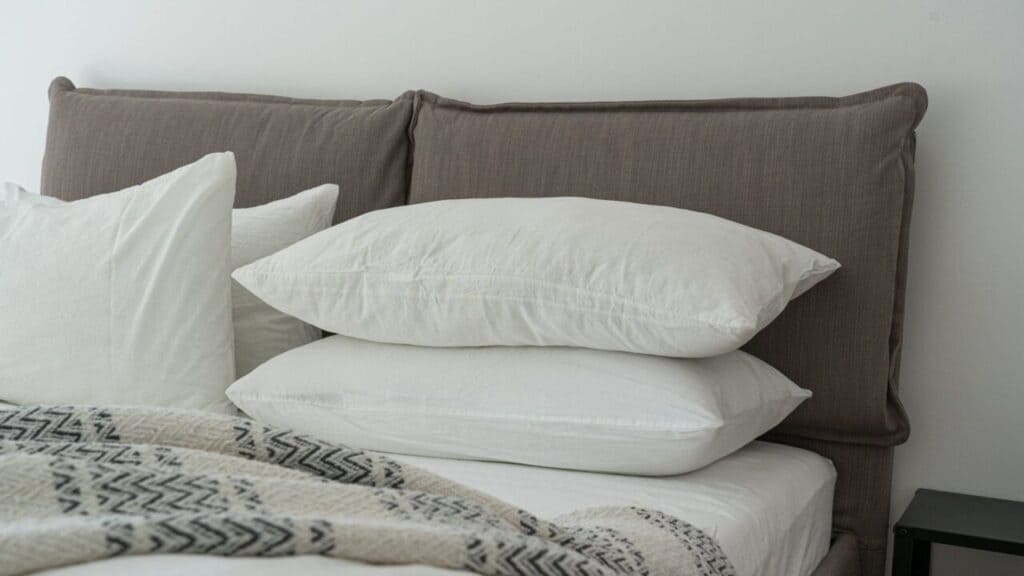
For snorers, a home study of 25 people found that sleeping at a 12-degree incline on an adjustable base cut snoring duration by 7%. That’s a modest drop, not a cure.
Skip phone books and loose blocks under the bed legs. No trial has tested them, and a wobbly stack is a poor bargain at 3 a.m.
A purpose-built bed riser, wedge, or adjustable base is the safer route. Keep the slope gentle, and stop if your neck or back complains.
Train Your Throat Muscles
This is the best-documented natural fix on the list. In a randomized trial of 39 people, three months of daily oropharyngeal exercises lowered the median snore index from 99.5 to 48.2 snores per hour, while the control group, which used nasal strips plus breathing exercises, showed no significant change.
A meta-analysis of nine studies covering 211 adults found that snoring intensity fell by 51% in the 80 patients who rated it on a visual scale. Time spent snoring fell by 31% in the 60 patients who were measured.
The Cochrane review is more cautious. It found moderate-certainty evidence of slightly lower snoring intensity but very uncertain evidence on snoring frequency, and it asked for bigger trials.
Programs mix tongue, soft palate, and throat-wall exercises, and the trials ran daily for weeks to months. A speech-language pathologist or a sleep dentist can teach you a proper routine.
Breathing Exercises and Yoga
Pranayama and yoga breathing sound like they should help. The honest read is that the snoring data are thin.
A 2020 meta-analysis of respiratory muscle therapy in sleep apnea, which pooled oropharyngeal exercises, speech therapy, breathing exercises, and wind instruments, found snoring frequency improved against controls (p = .044). All nine trials carried a high risk of bias, and the therapies were bundled, so you can’t credit breathing exercises alone.
Slow breathing practice carries little downside, so try it if you like it. Just don’t count on it to quiet a loud snorer by itself.
Cut Alcohol Before Bed
Alcohol is a muscle relaxant, and your airway muscles feel it. A meta-analysis of 14 trials with 422 people found that alcohol raised the apnea-hypopnea index by 2.33 events per hour on average, and by 4.20 in snorers.

A second review of 13 studies with 279 people found that alcohol worsened snoring severity and lowered the lowest blood oxygen level by 2.72 percentage points. Our post on how alcohol affects your snoring goes deeper.
Move any drink well away from bedtime. If you take sedatives or sleep medication, ask your prescriber whether they could be adding to the problem, and don’t stop them on your own.
Nasal Strips and a Stuffy Nose
If your nose is blocked, strips and rinses are cheap to try. The evidence is mixed, though.
A meta-analysis of 14 studies found that nasal dilators did not significantly change the apnea-hypopnea index, lowest oxygen saturation, or snoring index in people with sleep apnea. A separate review found that chronic nasal obstruction plays a minor role in sleep apnea but some role in snoring, and that dilators seemed to reduce snoring.
Treat strips as an add-on for a stuffy nose and not a stand-alone fix.
Humidifiers and Essential Oils
We found no trial showing that a bedroom humidifier reduces snoring. If dry air leaves your nose crusty, a humidifier may make the room more comfortable, but don’t expect it to quiet the sound.
Skip the bowl of boiling water under the bed. It’s a burn risk, and nothing suggests it helps.
Essential oils have one trial behind them. A 2004 double-blind study found that an essential oil spray or gargle reduced snoring as reported by bed partners.
It tested sprays and gargles, not diffusers or chest rubs, and we found no trials of those for snoring. Our guide to the essential oils people try for snoring covers what’s on the shelf.
When Natural Fixes Aren’t Enough
See a doctor and ask about a sleep study if you gasp, stop breathing in your sleep, or feel wrecked all day. Natural fixes belong to simple snoring.
If your snoring is simple but stubborn, a device may be the next step. Start with our anti-snoring mouthpiece guide, and for bedding allergies, see our post on natural bedding.
Build Your Two-Week Snoring Test
Pick two fixes, run them for two weeks, and change one thing at a time. That’s the only way to learn what moved the needle.
- Week one: side sleeping plus no alcohol near bedtime.
- Week two: add a gentle incline or start daily throat exercises.
- Ask your partner, or use a snore-recording app, to rate the noise each morning.
- If nothing improves in a month, book the doctor.
More On the Topic
- Oropharyngeal and tongue exercises for snoring: systematic review and meta-analysis (PubMed)
- Cochrane review of myofunctional therapy for sleep apnoea (PubMed)
- Impact of alcohol on breathing during sleep: meta-analysis (PubMed)
- Sleep Position Trainer versus tennis ball technique (PubMed)
- Changing patient position on snoring: systematic review (PubMed)
- The role of the nose in snoring and sleep apnoea (PubMed)