

Baby Snoring: What Parents Need to Know About Infant Sleep Sounds
Last updated: May 18, 2026
Quick Answer: Baby snoring is usually harmless and happens because infants have naturally narrow airways that vibrate during deep sleep breathing. Most babies outgrow snoring as their airways develop and widen. Congestion from colds or allergies also causes temporary snoring. Rarely, persistent snoring signals conditions like sleep apnea or structural issues that need medical evaluation.
Key Takeaways
- Infant airways are naturally narrow, causing vibrations during sleep that sound like snoring
- Most baby snoring resolves on its own as airways grow and mature
- Congestion from colds, allergies, or dry air is the second most common cause
- Safe positioning (back sleeping with head slightly tilted) can reduce snoring
- Humidifiers, saline drops, and allergen removal help congested babies breathe easier
- Persistent snoring with weight loss, frequent spitting up, or breathing pauses needs medical attention
- Conditions like laryngomalacia, deviated septum, or sleep apnea are uncommon but treatable
- Always consult your pediatrician if snoring concerns you or disrupts your baby’s sleep
Why Does My Baby Snore?
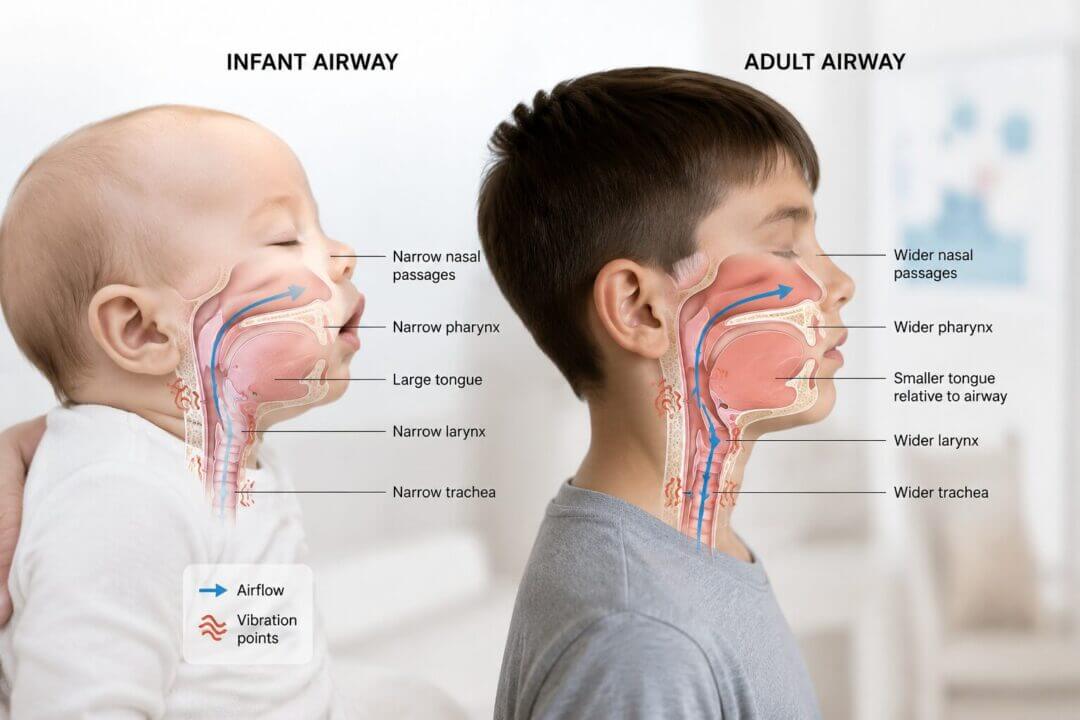
Your baby likely snores because their airways are still developing. Infant air passages are significantly narrower than adult airways, and when your baby breathes deeply during sleep, air moving through these tight spaces creates vibrations in the throat tissues. This produces the snoring sound.
This type of snoring is completely normal and affects many healthy babies. As your child grows over the first year or two, their airways naturally expand and the throat structures mature. The vibrations decrease, and the snoring typically fades away without any intervention.
What makes infant airways prone to snoring:
- Smaller diameter passages mean faster airflow and more turbulence
- Softer, more flexible throat tissues vibrate more easily
- Developing muscle tone in the airway hasn’t fully strengthened yet
- The tongue is proportionally larger relative to the mouth size
If your baby is gaining weight appropriately, feeding well, and sleeping comfortably despite the snoring, this is usually just a temporary phase. However, understanding common causes of snoring helps you distinguish normal development from situations that need attention.
Can Sleep Position Help Reduce Baby Snoring?
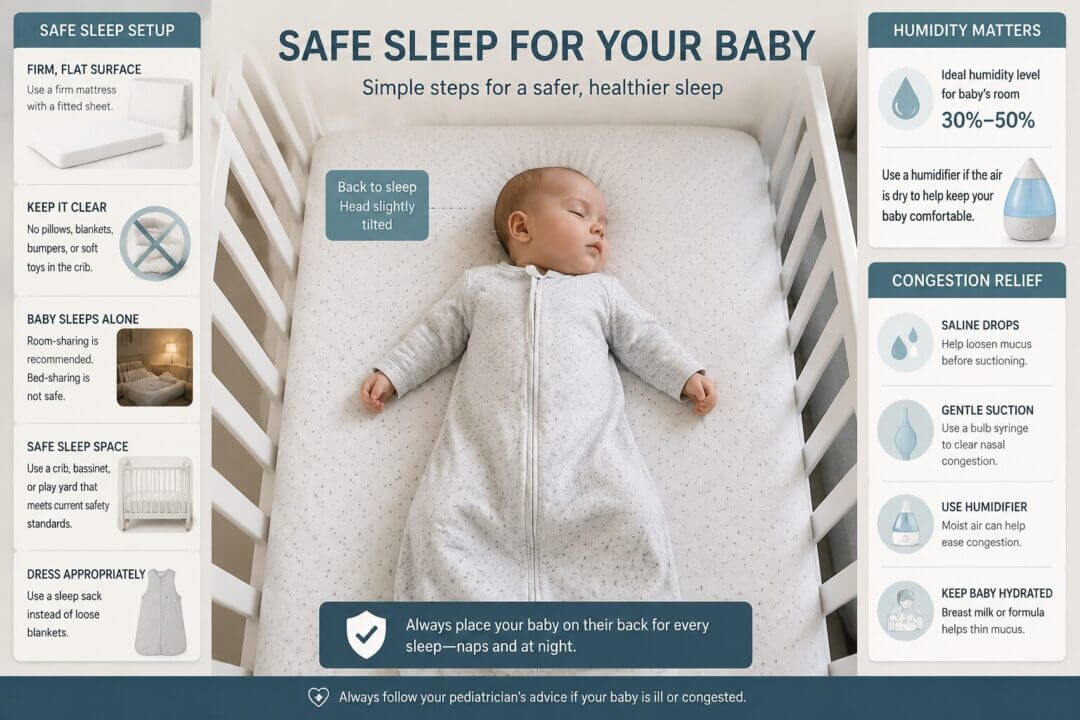
Yes, adjusting head position can help, but always keep your baby on their back. Back sleeping remains the safest position to prevent sudden infant death syndrome (SIDS). Within that safe back-sleeping position, you can gently turn your baby’s head to one side.
Tilting the head to the side opens the airway slightly and reduces vibration in the throat. This small adjustment often decreases snoring without compromising safety.
Safe positioning tips:
- Always place baby on their back to sleep
- Gently turn the head to the left or right side (alternate sides)
- Use a firm, flat mattress with no pillows or soft bedding
- Never elevate the head with pillows or positioners
- Avoid any devices marketed to hold baby in position
Some parents wonder about elevating the head of the crib mattress. While a very slight incline (no more than 10-15 degrees) may help with congestion, discuss this with your pediatrician first. Improper elevation can cause baby to slide down and bunch up against the crib end, creating safety risks.
Is Congestion Causing My Baby to Snore?
Congestion is the second most common reason babies snore. When mucus blocks the nasal passages or throat, air has to squeeze through even narrower spaces, increasing vibration and snoring sounds.
Babies get congested from colds, respiratory infections, allergies, or simply from dry air. Unlike adults, infants can’t blow their noses or clear their throats effectively, so even small amounts of mucus cause noticeable breathing sounds.
Signs your baby is congested:
- Visible nasal discharge or crusty nose
- Difficulty feeding (pulling away from breast or bottle)
- Mouth breathing during the day
- Restless sleep with frequent waking
- Snorting or gurgling sounds while breathing
Congestion-related snoring usually resolves once the cold passes or the allergen is removed. In the meantime, several safe methods help your baby breathe easier.
How Can I Help My Congested Baby Breathe Better?
Three proven approaches relieve infant congestion: humidity, saline rinses, and allergen removal. These methods are safe for babies and don’t require medication.
Add Humidity to the Air
Dry air thickens mucus, making it harder to drain. Humid air thins mucus so it flows more easily out of the airways.
Humidity options:
- Run a cool-mist humidifier in baby’s room (aim for 40-50% humidity)
- Clean the humidifier every three days to prevent mold growth
- Create a steam room by running a hot shower and sitting with baby in the bathroom for 10-15 minutes
- Keep baby hydrated with regular feedings (breast milk or formula provides fluids)
Cool-mist humidifiers are safer than warm-mist versions because they eliminate burn risks. Place the humidifier at least three feet from the crib to prevent dampness on bedding.
Use Saline Drops and Suction
Saline solution loosens dried mucus and helps flush out nasal passages. This makes it easier to remove blockages with gentle suction.
How to use saline safely:
- Lay baby on their back or hold them upright
- Put 1-2 drops of saline solution in each nostril
- Wait 30-60 seconds for the saline to work
- Use a bulb syringe or nasal aspirator to gently suction each nostril
- Clean the aspirator thoroughly after each use
Do this before feedings and before sleep when congestion bothers baby most. Avoid over-suctioning (more than 3-4 times daily) as it can irritate delicate nasal tissues.
Remove Common Allergens
If congestion persists without a cold, environmental allergens may be the culprit. Babies can develop sensitivities to dust, pet dander, pollen, or mold.
Allergen reduction steps:
- Vacuum baby’s room twice weekly with a HEPA filter vacuum
- Wash crib sheets and blankets in hot water weekly
- Keep pets out of baby’s sleeping area
- Use allergen-proof covers on any nearby upholstered furniture
- Avoid strong fragrances, air fresheners, or scented products near baby
- Keep windows closed during high pollen days
If you suspect allergies but can’t identify the trigger, your pediatrician can refer you to a pediatric allergist for testing.
When Should I Worry About Baby Snoring?
Most baby snoring is harmless, but certain patterns or accompanying symptoms warrant medical evaluation. Contact your pediatrician if you notice any of these warning signs.
Red flags that need medical attention:
- Snoring every night that’s loud enough to hear from another room
- Pauses in breathing lasting more than 10 seconds
- Gasping, choking, or struggling to breathe during sleep
- Blue or gray tint to lips or skin while sleeping
- Poor weight gain or failure to thrive
- Excessive daytime sleepiness or difficulty waking
- Frequent spitting up or vomiting (more than normal infant reflux)
- Persistent congestion lasting more than two weeks without improvement
These symptoms may indicate underlying conditions that need diagnosis and treatment. Early intervention prevents complications and helps your baby sleep and grow properly.
What Medical Conditions Cause Baby Snoring?
Several uncommon conditions can cause persistent snoring in infants. While these affect only a small percentage of babies, awareness helps you recognize when professional evaluation is needed.
Laryngomalacia
Laryngomalacia occurs when the cartilage supporting the airway hasn’t fully developed or is too soft. The floppy tissue collapses partially inward during breathing, creating noisy breathing and snoring.
This is the most common congenital airway problem, affecting about 1 in 2,000 babies. Most cases are mild and resolve by 18-24 months as the cartilage firms up. Severe cases may need surgical intervention.
Laryngomalacia signs: High-pitched squeaking when breathing in, worsens when baby is on their back or crying, improves when calm or positioned on stomach (though stomach sleeping isn’t safe for unsupervised sleep).
Deviated Septum
A deviated septum means the wall dividing the nasal passages is off-center, narrowing one side. This forces more air through the open side, creating turbulence and snoring sounds.
Some babies are born with a deviated septum, while others develop it from birth trauma or injury. Mild deviations don’t usually cause problems. Significant deviations that interfere with breathing may require surgical correction, typically delayed until the child is older unless breathing is severely compromised.
Infant Sleep Apnea
Sleep apnea causes brief pauses in breathing during sleep. In babies, this is most common in premature infants whose breathing control centers haven’t fully matured. Full-term babies can develop sleep apnea from structural abnormalities, enlarged tonsils or adenoids, or neurological conditions.
Types of infant sleep apnea:
- Obstructive sleep apnea: Physical blockage prevents airflow despite breathing effort
- Central sleep apnea: Brain doesn’t send proper signals to breathe
- Mixed apnea: Combination of both types
Sleep apnea requires medical diagnosis through a sleep study. Treatment depends on the cause and may include monitoring, positioning therapy, medication, or in rare cases, CPAP therapy or surgery.
Acid Reflux (GERD)
Gastroesophageal reflux disease causes stomach acid to flow back into the throat repeatedly. This irritates and inflames the throat and nasal passages, leading to swelling that narrows airways and causes snoring.
All babies spit up occasionally, but GERD is more severe and persistent. Babies with GERD often arch their backs, refuse feedings, cry excessively, and don’t gain weight appropriately.
GERD treatment options: Smaller, more frequent feedings; keeping baby upright for 30 minutes after eating; thickening formula if recommended by your doctor; medication to reduce stomach acid in severe cases.
Food Sensitivities
Cow’s milk protein allergy affects approximately 2-3% of infants. The immune reaction causes inflammation throughout the body, including the airways. This inflammation can contribute to congestion and snoring.
Other symptoms of milk protein allergy: Eczema or skin rashes, blood in stool, excessive fussiness, vomiting, diarrhea or constipation, poor weight gain.
If your baby is formula-fed, your pediatrician may recommend switching to a hypoallergenic formula. If you’re breastfeeding, eliminating dairy from your diet often resolves the issue within 2-4 weeks.
How Do Doctors Diagnose Snoring Problems in Babies?
Your pediatrician starts with a thorough physical examination and medical history. They’ll ask about snoring frequency, loudness, accompanying symptoms, feeding patterns, and growth.
The exam includes checking your baby’s nose, throat, and airway for obstructions, inflammation, or structural abnormalities. Your doctor will listen to breathing sounds and may observe your baby sleeping if possible.
Diagnostic tests your doctor might order:
- Sleep study (polysomnography): Monitors breathing, oxygen levels, heart rate, and brain activity during sleep
- Flexible laryngoscopy: A thin camera examines the airway structures
- Chest X-ray: Rules out lung or heart problems
- Allergy testing: Identifies environmental or food triggers
- Reflux testing: Measures acid levels in the esophagus
Based on findings, your pediatrician may refer you to specialists such as a pediatric ear, nose, and throat doctor (ENT), pulmonologist (lung specialist), or sleep medicine physician.
What Treatments Are Available for Baby Snoring?
Treatment depends entirely on the underlying cause. For most babies with normal developmental snoring or temporary congestion, no medical treatment is needed beyond home comfort measures.
Treatment approaches by cause:
| Cause | Treatment |
|---|---|
| Narrow airways (developmental) | Time and growth; positioning adjustments |
| Congestion from cold/allergies | Humidity, saline rinses, allergen removal |
| Laryngomalacia (mild) | Monitoring; usually resolves by age 2 |
| Laryngomalacia (severe) | Surgical procedure to open airway |
| Deviated septum (severe) | Surgical correction (usually delayed until older) |
| Sleep apnea | Depends on type: monitoring, positioning, CPAP, or surgery |
| Acid reflux | Feeding changes, positioning, medication |
| Food allergy | Elimination diet or hypoallergenic formula |
Many conditions improve significantly as your baby grows. The first two years bring rapid development in airway size and muscle tone, which naturally resolves many snoring issues.
Can Baby Snoring Affect Development or Health?
Occasional snoring doesn’t harm your baby’s development. However, chronic loud snoring with breathing disruptions can affect oxygen levels during sleep, potentially impacting growth and brain development.
Babies with untreated sleep apnea may experience:
- Slower weight gain and growth
- Increased irritability and behavioral issues
- Difficulty feeding
- Developmental delays in severe cases
- Increased risk of respiratory infections
This is why persistent, loud snoring with other concerning symptoms needs medical evaluation. Early diagnosis and treatment prevent these complications and ensure your baby gets the restorative sleep needed for healthy development.
Most babies with simple developmental snoring or temporary congestion experience no negative effects and develop completely normally.
How Long Does Baby Snoring Last?
For babies with developmental snoring from narrow airways, snoring typically peaks around 3-6 months and gradually improves over the first 1-2 years. By age 2-3, most children have outgrown this type of snoring as their airways mature.
Congestion-related snoring lasts only as long as the cold or allergy exposure. Most infant colds resolve within 7-10 days, though congestion may linger slightly longer.
Snoring from medical conditions varies by diagnosis. Laryngomalacia usually resolves by 18-24 months. Food allergies improve once the trigger is removed. Sleep apnea and structural issues may require ongoing management.
Timeline expectations:
- Normal developmental snoring: Improves gradually over 1-2 years
- Cold-related congestion: Resolves in 1-2 weeks
- Allergy-related congestion: Improves within days of removing allergen
- Laryngomalacia: Usually resolves by 18-24 months
- Treated medical conditions: Varies by condition and treatment
Keep a simple log of your baby’s snoring patterns. Note frequency, loudness, and any changes over time. This information helps your pediatrician assess whether the snoring is improving as expected or needs further evaluation.

Frequently Asked Questions
Related Reading
If you’re dealing with snoring issues in your family, you might find these resources helpful:
Baby snoring is one of those parenting concerns that’s usually harmless but understandably worrying when you’re listening to your little one struggle through the night. Most babies simply need time to grow, and their snoring will fade as their airways develop.
For the small percentage of babies with underlying conditions, early evaluation and treatment ensure healthy development and restful sleep for the whole family. When in doubt, trust your instincts and talk to your pediatrician—they’re there to help you navigate these early months with confidence.