

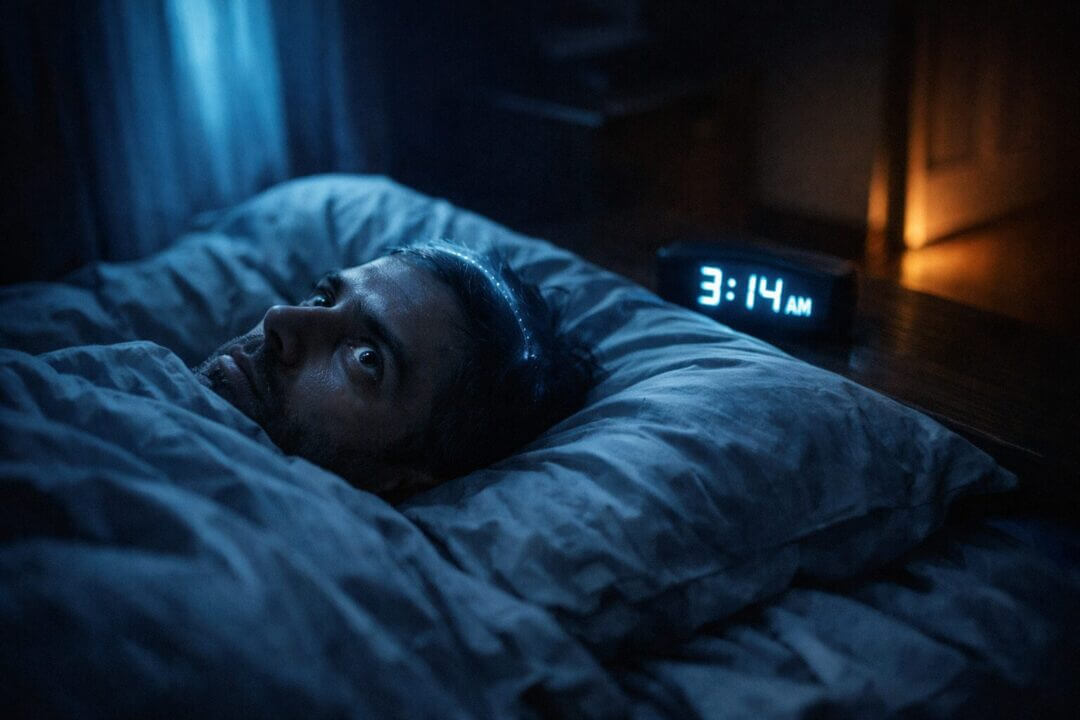
What Is REM Sleep? The Complete Guide to Paradoxical Sleep, Why It Matters, and How to Get More
Sleep moves through you like weather. It rolls in, settles deep, and reorganizes everything you experienced during the day, filing some things away and letting others dissolve. Most people know they sleep. Far fewer know what sleep actually does while it’s happening.
REM sleep, the stage where your brain lights up like a city at midnight while your body lies still as stone, is one of the most important and least understood parts of your night.
You spend roughly a quarter of every night in this state. Your eyes dart. Your heart shifts rhythm. Your mind builds stories so vivid they feel like memory. And when something, say a partner’s snoring or your own airway collapsing on itself, keeps interrupting that stage, the costs stack up fast.
Explore the full picture of REM sleep at SnoringHQ, where sleep professionals and researchers have mapped out what this stage does, why it breaks down, and what you can do to protect it.
Key Takeaways
- REM sleep is the stage where your brain nearly matches waking activity, making it critical for memory, emotional balance, and learning.
- Your body cycles through REM multiple times a night, with the longest and most important stretches arriving in the final hours of sleep.
- Snoring and obstructive sleep apnea are among the most common forces that fragment REM sleep, and treating them can restore what the night was always supposed to give you.
What Is REM Sleep? And Why Is It Called Paradoxical Sleep?
REM sleep earned its name from the rapid eye movement that scientists first noticed in sleeping infants during the 1950s. But the name only tells part of the story. The brain during this stage runs hot. The body, by design, stays completely still. That contradiction earned REM sleep another name entirely: paradoxical sleep.
A Simple Definition Of Rapid Eye Movement Sleep
Rapid eye movement sleep is the fourth stage of the sleep cycle, the one your body reaches after passing through three progressively deeper phases of non-REM sleep. It usually arrives about 60 to 90 minutes after you first fall asleep. Your closed eyelids flutter. Your breathing shifts. Your mind begins to dream.
This is the stage where your brain consolidates memory, sorts emotional experience, and prepares your mind for the next day. It is not passive rest. It is work, done in the dark.
Why The Brain Looks Awake While The Body Stays Still
During REM sleep, electroencephalography recordings, the kind that measure electrical activity in the brain, show wave patterns nearly identical to wakefulness. The brain is running. The body is not. Nearly all voluntary muscles become temporarily paralyzed in a process called REM atonia. Respiration grows irregular and shallow.
The paralysis is protective. Without it, you would physically act out every dream. Your body knows better than to let that happen.
When REM First Appears During The Night
Your first REM period is brief, maybe ten minutes. But with each full sleep cycle, usually 90 to 120 minutes long, the REM stage grows longer. By the time morning presses against the window, your final REM period may stretch 45 minutes or more. This is why cutting sleep short is not just losing time. It means losing the longest, richest dream stages that only appear near the end of the night.
The Four Stages Of The Sleep Cycle: Where REM Fits

Sleep does not arrive all at once. It builds itself in layers, moving from shallow drift to deep recovery before it climbs back up to the vivid, active world of REM. Four stages travel in sequence, each one doing work the others cannot.
Stage 1 And The Drift Into Light Sleep
Stage 1 is the threshold. You are not fully asleep yet. Your muscles twitch sometimes, catching you off guard. Brain activity slows but remains light enough that a sound in the hall can pull you back. This stage lasts only a few minutes. It is the door, not the room.
Stage 2 And The Longer Quiet Middle
Stage 2 is where you spend the most time across a full night. Your heart rate drops. Body temperature falls. Breathing finds a slower rhythm. The brain produces brief bursts of activity called sleep spindles, thought to play a role in memory processing. This is true light sleep, steady and necessary.
Stage 3 Deep Sleep And Slow-Wave Recovery
Stage 3 carries different names: deep sleep, slow-wave sleep, the restorative stage. Your brain slows to its lowest activity of the night. Your body takes the opportunity to repair tissue, reinforce the immune system, and restore physical energy. It is difficult to wake someone from stage 3. Their body is busy.
How Sleep Cycles Repeat Across The Night
A full night of sleep runs four to six of these cycles, each one lasting roughly 90 to 120 minutes. In the early cycles, stage 3 deep sleep dominates. As the night moves forward, deep sleep shrinks and REM sleep expands. This is why a seven-to-nine-hour night is not just about quantity. The architecture of those hours determines what you actually receive.
What Happens In The Brain And Body During REM Sleep
REM sleep is the stage that turns restless eyes and a paralyzed body into something closer to transformation. The brain processes emotion, consolidates what you learned, and reviews experience with a kind of ruthless editorial judgment. The body, meanwhile, holds perfectly still while quietly managing a complex physiological performance.
Brain Activity, EEG, And Near-Waking Patterns
Electroencephalography records the brain’s electrical story, and during REM sleep, that story reads like wakefulness. The waves are fast and mixed, not the long slow rhythms of deep sleep. Specific regions tied to emotion, memory, and visual processing become highly active. The prefrontal cortex, the part responsible for rational decision-making, stays quieter. This may explain why dreams feel so real and yet so strange. Logic steps back. Experience rushes forward.
Muscle Atonia, Breathing Shifts, And Heart Rate Changes
The muscle paralysis of REM sleep, called atonia, runs through nearly every voluntary muscle in your body. Your heart rate becomes irregular. Breathing grows faster and shallower. For most people, this is just biology. For someone with obstructive sleep apnea, these are the conditions under which the airway is most likely to collapse. The muscles that hold the throat open lose tone during REM, making it the most dangerous stage for anyone whose airway is already vulnerable.
Why Dream Recall Is More Likely After REM Awakenings
Dreams happen across all stages of sleep, but REM dreams are more vivid, more emotionally complex, and far more likely to be remembered. When you wake directly from REM sleep, either by alarm or by an apnea event, the dream material is still close to the surface. Sleep researchers have long observed that awakening someone from REM sleep produces rich, detailed dream reports. The same awakening from deep sleep produces almost nothing.
Why REM Sleep Matters For Memory, Mood, And Development
Sleep researcher William Dement spent decades building the case that sleep is not idle time. His work, alongside generations of researchers who followed, established REM sleep as a core engine of mental and emotional health. The functions are specific, and the stakes are real.
Learning, Memory Sorting, And Emotional Processing
The brain quickly became a master filer during REM sleep. Information gathered during the day moves from short-term to long-term storage. Procedural memory, the kind that holds how to ride a bike or perform a surgical stitch, deepens during this stage. Emotional experiences get reviewed and processed, and the sharper emotional edges tend to soften. This is why a problem that feels crushing at 11 PM often feels manageable at 7 AM. REM sleep worked on it.
Disrupted REM sleep is consistently associated with mood instability, difficulty concentrating, and heightened anxiety. The connection is not subtle.
REM Sleep Across The Lifespan
Newborns spend around eight hours a day in REM sleep. Their brains are building themselves at tremendous speed, and REM sleep is the primary fuel for that construction. As you age, your total REM time shrinks. Adults average about 20 to 25 percent of total sleep time in REM. Older adults often see further reductions, which may help explain some of the cognitive and emotional shifts that come with aging.
How Much REM Sleep Do You Need

Most adults need roughly two hours of REM sleep per night. That figure assumes a full seven to nine hours of total sleep. Cut the night short, and your REM time is the first casualty, since those longer REM periods arrive only in the final hours. The math is simple. A six-hour night may deliver less than half the REM that a full eight-hour night would.
When REM Sleep Gets Broken: Snoring, Airway Collapse, And Other Disruptors
Every interruption during REM sleep has a cost. Not the theatrical cost of nightmare imagery or grogginess alone, but a real neurological cost paid in memory, mood, and health over time. Snoring is one of the most common forces that chips away at this stage, night after night, mostly unnoticed.
How Snoring And Obstructive Sleep Apnea Fragment REM
During REM sleep, the muscles of the upper airway relax more than at any other point in the night. For someone with obstructive sleep apnea, this is when the airway is most prone to full collapse. Oxygen drops. The brain forces an awakening to restart breathing. The person may not remember waking, but the REM stage is gone. This can happen dozens of times in a single night.
Snoring without full apnea still causes micro-arousals that pull the sleeper out of REM before each cycle completes. The result is a night that feels long but delivers little of what the brain needed. Mandibular advancement devices, the kind reviewed by sleep specialists at SnoringHQ, work by gently moving the lower jaw forward to keep the airway open through all sleep stages, including the vulnerable REM window.
Other Causes Of Low REM Sleep
Alcohol is one of the most reliable REM suppressants available over a convenience store counter. It may help you fall asleep faster, but it disrupts REM dramatically, particularly in the first half of the night. Certain medications, including some antidepressants and sedatives, alter REM architecture significantly.
Insomnia, narcolepsy, and REM sleep behavior disorder each affect this stage in different ways. Narcolepsy can throw a person directly into REM from wakefulness. REM sleep behavior disorder removes the protective muscle paralysis, causing people to physically act out their dreams, sometimes violently.
REM Rebound And What It Can Mean
When the body is deprived of REM sleep long enough, it compensates. The next opportunity it gets, it prioritizes REM aggressively, producing longer and more vivid dream periods than usual. This is called REM rebound. It often appears after recovering from illness, stopping alcohol use, or finally addressing untreated sleep apnea. The rebound is the body insisting on what was owed.
How To Protect REM Sleep And When To Get Help
Protecting REM sleep is not complicated in theory. In practice, it requires consistency, attention to environment, and occasionally the willingness to ask a doctor for help when the problem is bigger than a bedtime routine can fix.
Sleep Schedule, Circadian Rhythm, And Sleep Hygiene
Your body runs on two overlapping systems. Process S builds sleep pressure throughout the day, the longer you are awake, the more it accumulates. Process C, your circadian rhythm, determines when that pressure releases and when wakefulness returns. REM sleep is tightly governed by the circadian system. Irregular sleep schedules, jet lag, and shift work all push REM out of alignment.
Going to bed and waking at consistent times trains these systems. It is the single most reliable behavioral change for improving sleep quality.
Building A Better Sleep Environment
Light is the enemy of REM. Artificial light at night, from screens, overhead bulbs, and even small indicator lights, suppresses melatonin and disrupts the circadian timing that REM depends on. A cool, dark, and quiet room creates the conditions under which your sleep architecture can run its full course without interference.
Alcohol, cannabis, and heavy meals close to sleep all alter how the night unfolds, compressing or eliminating REM windows.
Sleep Trackers, Sleep Aids, And Their Limits
Consumer sleep trackers can identify patterns over time. If yours consistently shows low REM percentages, that data is worth taking to a doctor. But trackers are not clinical tools. They estimate rather than measure, and they work best as trend spotters rather than diagnostics.
Over-the-counter sleep aids, including antihistamine-based products, often reduce REM sleep rather than protect it. They are not a long-term solution.
When To Seek Medical Evaluation For Snoring Or Suspected Apnea
Loud, frequent snoring is not just a noise problem. It is a sign that the airway is struggling, and that struggle peaks during REM sleep. If your snoring is regular, if your bed partner notices pauses in your breathing, or if you wake most mornings feeling like you barely rested, those are reasons to talk to a physician.
A sleep study can confirm whether obstructive sleep apnea is fragmenting your nights. Effective treatment, whether through a CPAP device or a mandibular advancement device, can restore the REM sleep that airway collapse has been stealing.