

Snoring Memory Loss: Cognitive Decline Research & Solutions
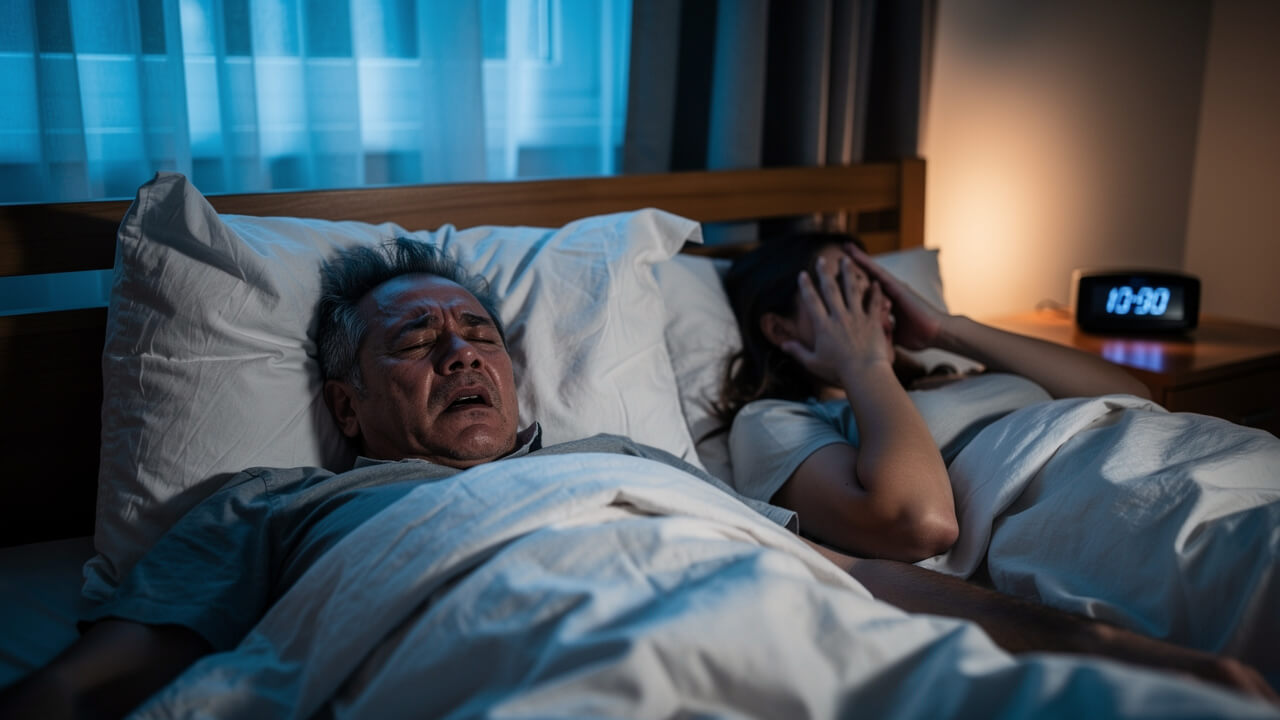
You wake up exhausted despite eight hours in bed. Your partner mentions you were “sawing logs” all night.
You can’t remember where you left your keys—again.
If this sounds familiar, you’re not alone. Many people fear these memory lapses signal something serious, like early dementia.
But what if the real culprit isn’t aging at all? What if it’s something as treatable as snoring?
Here’s the encouraging truth: memory problems caused by snoring-related sleep disruption are often reversible. Your brain isn’t failing you—it’s simply being robbed of the deep, restorative sleep it needs to function properly.
The connection between snoring and brain health is more significant than most people realize. Research shows that when you address the underlying sleep issue, mental clarity can return.
Understanding it is your first step toward protection.
Key Takeaways
Chronic snoring deprives your brain of oxygen and deep sleep, directly damaging memory centers
Memory problems from sleep apnea are often reversible with proper treatment
The glymphatic system requires deep sleep to clear dementia-causing proteins from your brain
Sudden changes in snoring patterns—whether increase or decrease—can signal underlying health issues
Effective, FDA-cleared options exist to protect your cognitive health starting tonight
How Snoring Steals Your Memory: The Science of Sleep Disruption
Snoring isn’t just noise.
It’s your body’s distress signal that something is blocking your airway.
When tissues in your throat relax during sleep, they narrow the passage where air flows.
In cases of obstructive sleep apnea, this obstruction becomes severe enough to repeatedly pause your breathing—sometimes dozens or hundreds of times each night.
Each pause triggers a cascade of events that assault your brain.
Intermittent hypoxia is the medical term for what happens when your blood oxygen levels drop during these breathing pauses.
Your brain is extraordinarily sensitive to oxygen fluctuations.
Unlike other organs that can tolerate brief periods of reduced oxygen, your brain begins suffering cellular damage almost immediately.
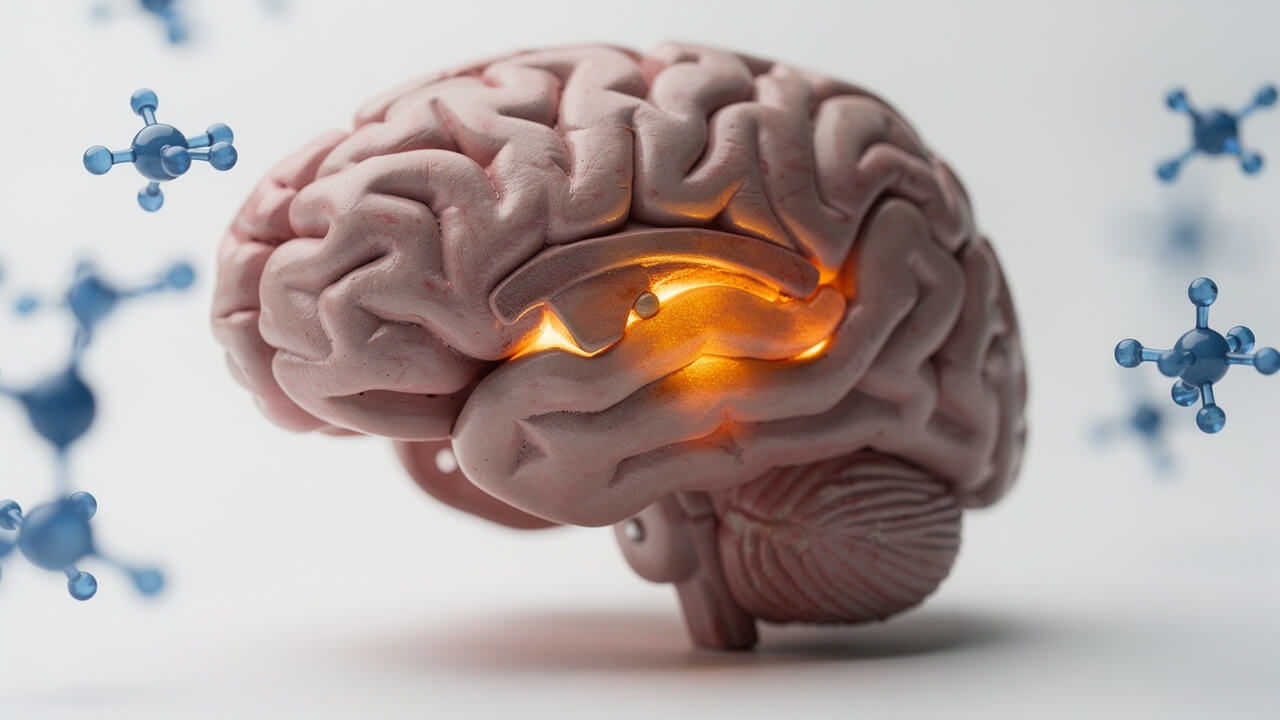
The hippocampus—your brain’s memory center—is particularly vulnerable.
Chronic oxygen deprivation in this region leads to both immediate forgetfulness (where did I put those keys?) and long-term structural changes that show up on brain scans as reduced gray matter density.
Then there’s sleep fragmentation.
To restart your breathing after an obstruction, your brain must trigger what sleep scientists call “micro-awakenings.”
These aren’t the kind of wake-ups you remember.
They’re brief surges of adrenaline and stress hormones that restore muscle tone to your airway.
You might experience hundreds of these emergency responses in a single night without any conscious awareness.
The problem is that these micro-awakenings prevent you from entering or maintaining deep, non-REM sleep—the stage where memory consolidation happens.
During deep sleep, your brain processes and stores the day’s experiences, transferring information from short-term to long-term memory.
When snoring constantly interrupts this process, it’s like trying to save a document on a computer that keeps crashing.
The information simply doesn’t get filed properly.
This explains the “mental fog” that plagues chronic snorers.
You’re not losing your mind.
Your brain is being systematically prevented from doing its nightly maintenance work.
“Sleep is the single most effective thing we can do to reset our brain and body health each day.” — Dr. Matthew Walker, neuroscientist and sleep researcher

The Glymphatic System: Your Brain’s Overnight Cleaning Crew
One of the most critical discoveries in sleep science emerged only in the last decade: the glymphatic system.
Think of it as your brain’s waste disposal service that operates primarily during deep sleep.
While you’re in non-REM sleep, cerebrospinal fluid flows through your brain tissue, flushing out metabolic waste products that accumulated during the day.
Among these waste products are beta-amyloid and tau proteins—the exact toxic buildups that form the plaques and tangles characteristic of Alzheimer’s disease.
Here’s where snoring becomes dangerous for long-term brain health.
Because snoring-induced sleep fragmentation prevents you from reaching and maintaining deep sleep, your glymphatic system can’t complete its cleaning cycle.
Night after night, year after year, these proteins accumulate instead of being cleared away.
This isn’t speculation.
Neuroimaging studies show that people with untreated sleep apnea have higher levels of amyloid deposits in their brains compared to healthy sleepers of the same age.
The connection is clear: chronic snoring doesn’t just make you tired today—it potentially sets the stage for dementia decades from now.
The encouraging flip side is that this pathway is preventable.
When you restore deep sleep by treating snoring, you reactivate your brain’s natural cleaning system.

Warning Signs You Shouldn’t Ignore: When Snoring Signals Cognitive Risk
Not all snoring carries the same risk.
“Simple snoring” involves noise without significant breathing pauses, while obstructive sleep apnea represents a medical emergency happening repeatedly throughout the night.
How do you know which category you’re in?
Observable red flags that distinguish dangerous sleep apnea from simple snoring include:
Gasping or choking sounds during sleep
Witnessed pauses in breathing (often noticed by a bed partner)
Morning headaches caused by carbon dioxide buildup
Dry mouth upon waking from breathing through an open mouth all night
Excessive daytime sleepiness despite spending adequate time in bed
If your partner has ever shaken you awake because you stopped breathing, that’s not normal snoring.
That’s your airway completely collapsing.
Cognitive warning signs are equally important:
Persistent “brain fog” that doesn’t improve with caffeine
Difficulty concentrating on complex tasks that used to be manageable
Slowed reaction times (research shows sleep-deprived individuals have reaction times comparable to those under the influence of alcohol)
Forgetfulness that disrupts daily life (missing appointments, repeating questions, losing items frequently)
Emotional dysregulation including irritability, mood swings, and unexplained anxiety
Many people in their 50s and 60s seek medical evaluation for what they fear is early-onset Alzheimer’s, only to discover their symptoms stem from untreated sleep apnea.
The difference is significant because sleep apnea is treatable.
When you address the underlying airway issue, cognitive symptoms often improve dramatically within weeks to months.
The Obesity Paradox: When Weight Loss Becomes a Warning
Here’s where the snoring-dementia connection gets counterintuitive.
Obesity in midlife is the strongest predictor of snoring because excess neck tissue increases airway collapse.
Higher body mass index correlates with increased risk of both sleep apnea and later dementia.
That part makes sense.
But recent research has uncovered something unexpected.
In older adults, a reduction in snoring can actually signal early Alzheimer’s disease through a phenomenon called “reverse causation.”
As Alzheimer’s begins affecting the hypothalamus—the brain region that regulates metabolism—patients often experience unexplained weight loss.
As they lose weight, the physical cause of their snoring diminishes.
Their snoring decreases, which seems like good news.
But the reduction is actually masking underlying neurological decline.
This is why any sudden, unintended change in long-term snoring patterns warrants professional evaluation.
Whether your snoring is getting worse or mysteriously improving without lifestyle changes, both scenarios deserve medical attention.
The pattern matters as much as the presence of snoring itself.
Protecting Your Brain: Evidence-Based Options That Work
The most encouraging aspect of the snoring-memory connection is that sleep apnea ranks among the most treatable risk factors for cognitive decline.
Effective intervention restores oxygen levels and improves the quality of restorative sleep.
Clinical outcomes show measurable improvements in memory, focus, and mental clarity—often within weeks of starting treatment. Continuous Positive Airway Pressure (CPAP) therapy remains the gold standard. It uses a gentle stream of air delivered through a mask to physically prop your airway open throughout the night.
By maintaining constant airflow, CPAP provides uninterrupted oxygen delivery and allows your brain to cycle through all sleep stages naturally.
Patients often report dramatic improvements in daytime alertness and cognitive function within the first month of consistent use.
Oral appliance therapy offers an effective alternative for mild-to-moderate cases or for those who cannot tolerate CPAP machines. These custom-fitted devices work by holding your lower jaw in a forward position, which prevents your tongue and soft tissues from collapsing into your airway.
At Snoring HQ, we’ve extensively evaluated the leading FDA-cleared mandibular advancement devices (MADs).
Our top-rated picks include:
SnoreRx and SnoreRx Plus — featuring boil-and-bite customization for a precise fit and up to 7mm of micro-adjustability to find your optimal jaw position
VitalSleep — offering different adjustment mechanisms and comfort features to match individual anatomy
ZQuiet — providing a flexible, hinge-like design for natural jaw movement
Zyppah — combining jaw advancement with tongue stabilization
For users who prefer non-jaw-advancing options, tongue retaining devices (TRDs) like the Good Morning Snore Solution use gentle suction to hold the tongue forward, preventing airway obstruction without repositioning the jaw.
Beyond mouthpieces, positional therapy can significantly reduce snoring for those whose obstruction worsens when sleeping on their back.
The Snorecoach smart device monitors your sleep position and delivers gentle vibrations to encourage position changes without fully waking you.
The Nitetronic A1 AI anti-snore pillow uses advanced technology to automatically adjust your head position when snoring is detected.
Snoring HQ’s Approach to Cognitive Protection
Protecting your brain requires more than just silencing the noise. It requires a comprehensive approach to monitoring and maintaining healthy sleep breathing.
At Snoring HQ, we recommend pairing anti-snoring devices with sleep tracking tools to measure your progress objectively.
Apps like SnoreLab, SnoreReport, and the Nitetronic App (which pairs with the Nitetronic A1 AI pillow) record snoring frequency, duration, and intensity throughout the night.
This data allows you to correlate reductions in snoring with improvements in daytime cognitive function.
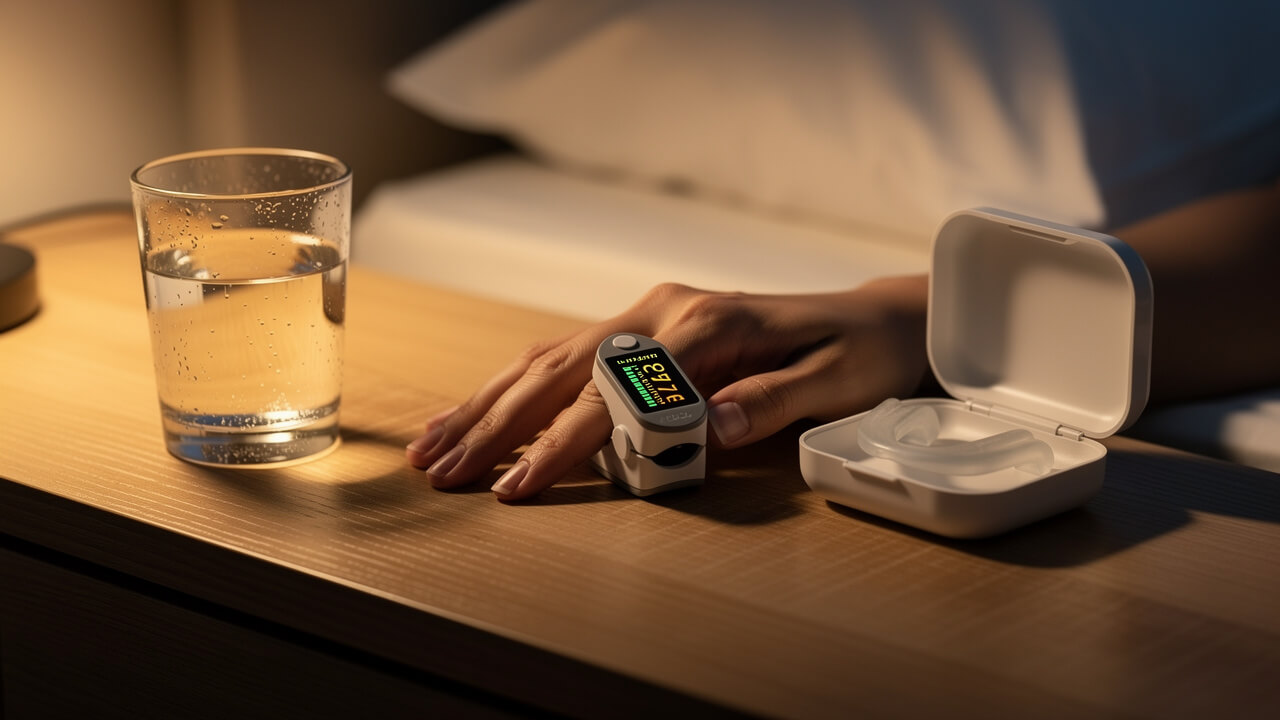
We also advocate for using pulse oximeters to monitor nighttime blood oxygen saturation.
These small devices clip onto your finger and track oxygen levels while you sleep, providing concrete evidence of hypoxia episodes.
When you see your oxygen levels stabilize after starting treatment, you’re witnessing real-time protection of your brain health.
Our curated selection includes devices across multiple price points and comfort profiles because we understand that anatomical fit varies.
What works perfectly for one person might be uncomfortable for another.
That’s why we prioritize manufacturers offering 100% money-back guarantees, allowing you to test options risk-free until you find the device that keeps your airway open comfortably.
We also recognize that snoring affects both partners.
While the snorer faces cognitive risks from oxygen deprivation, their partner suffers “secondary sleep deprivation” from constant noise disruption.
We evaluate high-quality earplugs, white noise machines, and communication strategies to protect both individuals’ brain health during the treatment-finding process.

What Happens When You Finally Treat Your Snoring?
The transformation begins almost immediately, though full cognitive recovery follows a predictable timeline.
Within the first few days of effective treatment, most people notice improved alertness and daytime energy.
The crushing fatigue that made afternoons unbearable starts to lift.
Within two to four weeks, memory consolidation improves as your brain finally gets consistent access to deep sleep stages.
You’ll find yourself remembering conversations, appointments, and where you put your keys with greater ease.
By three months of consistent treatment, measurable improvements appear in executive function—your ability to plan, organize, and execute complex tasks.
Emotional regulation stabilizes as your amygdala and prefrontal cortex receive the restorative sleep they need.
The irritability and mood swings that strained your relationships begin to fade.
The broader health benefits compound your cognitive protection:
Reduced cardiovascular strain
Improved blood pressure control
Better glucose metabolism in diabetics
Decreased stroke risk
Each of these systemic improvements further protects your brain from vascular damage that contributes to dementia.
For couples, the relationship benefits are profound. When both partners achieve uninterrupted rest, shared cognitive decline stops. The resentment that builds from years of sleep deprivation dissolves. Many couples report feeling reconnected after addressing snoring, as if a fog has lifted from their entire household.
Perhaps most importantly, treating snoring provides long-term neuroprotective effects.
By maintaining your brain’s glymphatic cleaning system and preventing decades of protein accumulation, you’re actively slowing or potentially preventing the progression toward vascular dementia and Alzheimer’s disease.
Every night of restored deep sleep is a night your brain can repair and protect itself.
Your Brain Deserves Better Sleep
Memory problems caused by snoring are not inevitable consequences of aging. They’re treatable symptoms of disrupted sleep.
The research is unequivocal: chronic snoring deprives your brain of the oxygen and deep sleep it requires for daily maintenance and long-term health. But here’s the empowering truth—intervention at any stage can provide measurable cognitive benefits.
Every night spent snoring is a night your brain is deprived of its vital repair cycle. But every night of restored, oxygen-rich sleep is a night your brain can consolidate memories, clear toxic proteins, and protect itself against future decline.
The urgency is real, but so is the opportunity.
Seeking professional sleep evaluation, trying validated anti-snoring devices with money-back guarantees, and tracking objective improvements in both snoring and cognitive function are concrete steps you can take today.
Taking control of your snoring is one of the most proactive decisions you can make to help your brain remain sharp and healthy into your senior years. You’re not just protecting your memory—you’re protecting your independence, your relationships, and your quality of life.
Your brain has been sending you signals. It’s time to listen.