

Stop Snoring Devices – Which One is for You?
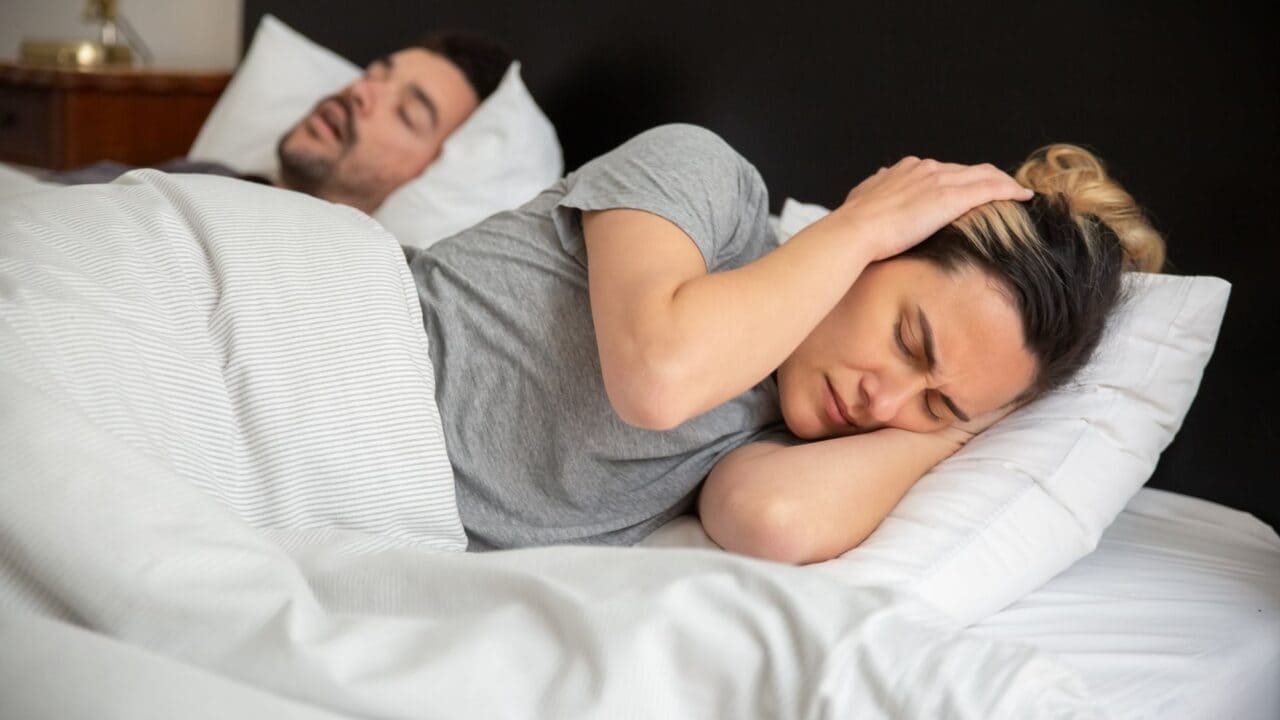
Every snoring product wants to be your friend. It promises quiet nights, a happy partner, and a fix that takes five minutes.
Some of those promises hold up. Others do not, so let’s sort them out with what the research says.
The short answer: oral appliances have guideline backing for snoring, CPAP is the heavy hitter for sleep apnea, and chin straps alone have not held up in testing.
Our favorite is still the SnoreRx mouthpiece, with one condition. Rule out sleep apnea first.
What Is Actually Causing Your Snoring?
Snoring is vibration in the soft tissue of your throat. Find the trigger and you can pick the right fix.
Nasal and sinus trouble. A stuffy nose makes sleep rougher. Rhinitis is common in people with sleep apnea, though a 2017 review in the Journal of Clinical Sleep Medicine found it does not change how severe the apnea is.
Age. You may have heard that your throat narrows as you get older. In a 1995 population study of 294 Australian men aged 40 to 65, age had no relationship with snoring, while obesity did.
Body weight. Extra weight matters. In a 2013 meta-analysis, diet-driven weight loss lowered the apnea-hypopnea index by 14.3 events per hour compared with controls.
It helps, but it is an add-on, not a cure by itself.
Alcohol. That evening drink relaxes your throat muscles. A 2020 meta-analysis found alcohol raised the apnea-hypopnea index by 3.98 events per hour and lowered the lowest oxygen level by 2.72%, and it worsened snoring.
Sleep position. We used to say your back is the best way to sleep. That was wrong for snorers.
Sleeping on your back lets the tongue and soft palate fall toward the airway. A 2017 review found that positional therapy lowers apnea severity in people whose apnea is worse on the back, though CPAP is more effective.
Which Snoring Solution Fits You?
You may have to try more than one thing. Start with the cheap, low-risk fixes and work your way up.
Natural fixes. These cost the least and carry the least risk.
- Lose excess weight. Fat around the neck and throat can add to the problem even if the scale looks normal.
- Change your sleep position. Track the results for a week or two and keep the one that works.
- Try myofunctional therapy. A 2018 meta-analysis of 9 studies and 211 adults found it cut snoring intensity by 51% on a visual scale.
- Switch to dust-mite resistant bedding if allergies keep you up.
A note on two old tips. Singing in the shower is a cute idea, but we found no trial that backs it.
The essential-oil humidifier tip is gone too, since no study we verified supports it.
Mouthpieces. A mouthpiece (oral appliance) holds your jaw or tongue forward so the airway stays open. The AASM and AADSM guideline recommends oral appliances for primary snoring.
For sleep apnea, the same guideline prefers a custom, titratable appliance and follow-up with a dentist. We also dropped our old line that mouthpieces are “proven” across the board, because evidence varies by product.
Some links below are affiliate links. If you buy through them, Snoring HQ may earn a commission at no extra cost to you.
SnoreRx is the one we recommend most, and you can buy it through this link. The upgraded SnoreRx Plus adds more adjustment, and our review explains the difference.
You can also buy SnoreRx Plus directly through our SnoreRx Plus link.
Zyppah and ZQuiet take different approaches to the same job. Read the Zyppah review and ZQuiet review, then buy through Zyppah or ZQuiet.
Prices and stock change often, so check the manufacturer’s page before you buy. Our full mouthpiece reviews list the rest.
Chin straps. We used to say chin straps have a high success rate. They do not.
In a 2014 trial, a chinstrap alone did not improve the apnea-hypopnea index or snoring, while CPAP did. Slipping straps are the other common complaint.
CPAP. CPAP delivers air pressure that keeps your airway from collapsing.
We called it unrivaled, and that overstated things.
A 2020 meta-analysis of 14 trials found CPAP lowered the apnea-hypopnea index by about 7 more events per hour than a mandibular advancement device. A 2018 meta-analysis found people used CPAP about 1.1 hours less per night, and quality-of-life results were similar.
So CPAP is stronger on paper, and a mouthpiece you actually wear can close the gap. See our head-to-head posts on SnoreRx vs CPAP and ZQuiet vs CPAP.
Pillows. Anti-snoring pillows try to position your head so you breathe more freely. In our experience they help, but they are not a one-stop fix.
When Snoring Is Not Just Snoring
Loud snoring can be harmless. It can also be a sign of sleep apnea.
The Australian study above found that a high share of the night spent snoring is not essential for apnea, and it does not prove apnea is present. So a quiet sleeper can still have it, and a loud one may not.
Gasping, choking, or heavy daytime sleepiness are reasons to see a doctor. A sleep test settles the question.
Frequently Asked Questions
Final Thoughts
Snoring has more fixes than ever. It also has more hype than ever.
Find the cause first, start with the simple changes, and test a mouthpiece if those fall short. If you suspect apnea, get checked before you spend a dime.
Browse our tools for a better night of rest for more ideas.