

How to Sleep with a Snoring Partner: 10 Strategies That Actually Work
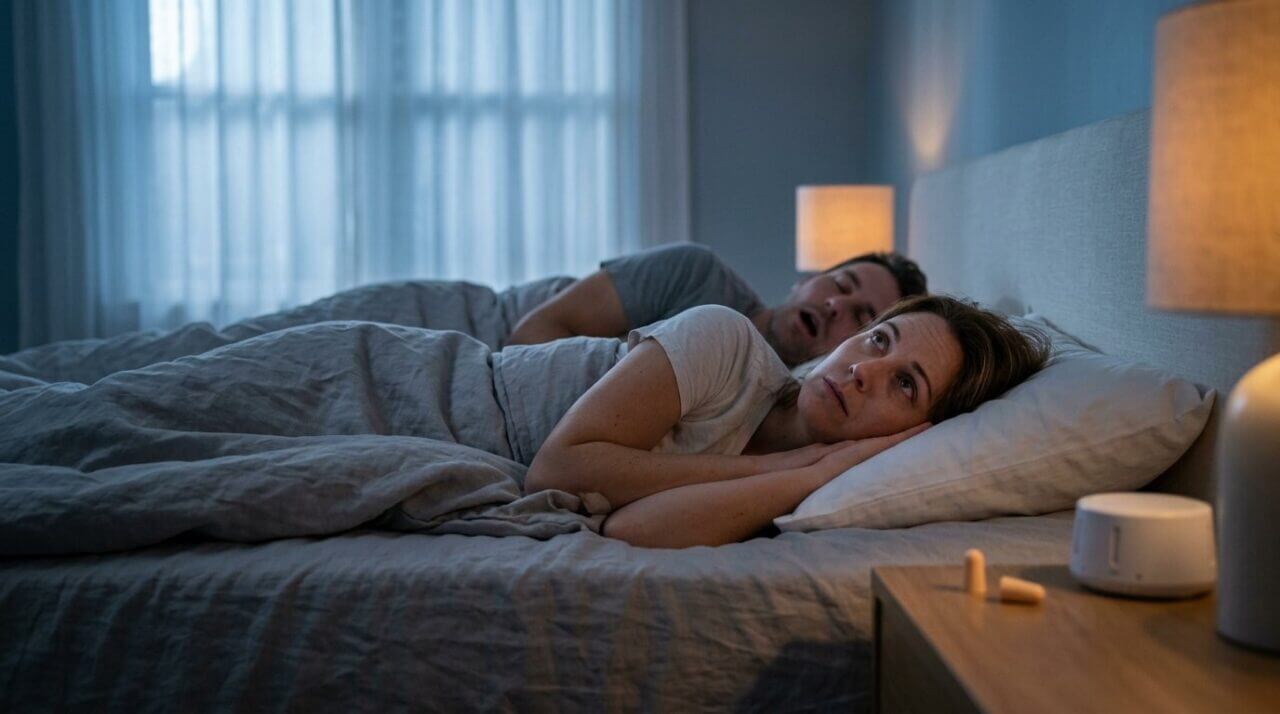
Snoring is loud. It is relentless. It arrives every single night like an uninvited guest who knows exactly where you keep the spare key. If you share a bed with someone who snores, you know the specific exhaustion that comes not just from lost sleep, but from lying there in the dark, listening, waiting, hoping this breath will be quieter than the last one. It never is.
The sleep-deprived partner of a snorer is one of the most overlooked figures in all of sleep medicine. You are not the one with the condition. You are just the one suffering the consequences. That gap between those two facts is where resentment is born.
SnoringHQ has spent years in this exact space, reviewing anti-snoring products and publishing guidance from doctors and sleep medicine professionals, because this problem is real and it deserves real answers. If you are ready to stop just surviving the night and start actually sleeping, browse our reviews and resources to find a path forward that fits your situation.
Key Takeaways
- Chronic sleep disruption from a snoring partner carries serious health consequences for the non-snoring partner, not just the snorer.
- A mix of strategies, some aimed at the snorer and some designed to protect your own sleep, works better than any single fix.
- Loud snoring paired with gasping or breathing pauses is a medical warning sign that needs a doctor’s attention, not just earplugs.
The Real Cost Of Sleeping Next To A Snorer
Sleep deprivation is not a personality quirk. It is a health crisis delivered one broken night at a time. Research shows that bed partners of heavy snorers can be woken up as many as 21 times per hour, which means you are essentially never reaching the deep, restorative stages of sleep your body needs to function. You are just skimming the surface all night long, like a stone that keeps skipping but never sinks.
How Broken Sleep Turns Into Sleep Deprivation
Partners of snorers accumulate what researchers call sleep debt. It compounds. One bad night becomes a week of fog. A week becomes a month of dragging yourself through the day on caffeine and sheer stubbornness. Studies consistently show that people who share a bed with a heavy snorer are two to three times more likely to struggle with falling or staying asleep and significantly more likely to feel drowsy during the day.
What Nightly Disruption Does To Mood, Focus, And Sleep Health
Sleep deprivation reshapes you. Not dramatically, not all at once, but steadily. Your mood narrows. Your patience thins. Your ability to concentrate shrinks down to something barely useful. The research connects chronic poor sleep to higher risks of anxiety, depression, memory problems, weakened immunity, and cardiovascular issues. These are not hypothetical threats. They are the long-term cost of too many nights lying awake in the dark listening to someone else breathe badly.
When Frustration Starts To Bleed Into The Relationship
There is even a name for what happens to the non-snoring partner over time. Some sleep specialists call it spousal arousal syndrome. Your nervous system learns to react to the sound of snoring the way it reacts to a threat. You start waking up before the snoring even fully registers. And then the sleep deprivation starts poisoning the daytime too. You are short with the person you love. You feel guilty for being short. The guilt does not help you sleep. Nothing about this cycle is fair.
Before Anything Else: Have The Conversation

Talking about snoring is harder than it sounds, which is ironic given how loud snoring is. The conversation is tangled up in embarrassment, defensiveness, and the particular vulnerability of being told you make an awful noise while you sleep. Both people need to understand that the goal is not blame. The goal is better sleep for both of you.
Why Many Couples Avoid Talking About Snoring
Most people who snore have no idea how bad it is. They are asleep. They cannot hear themselves. When you bring it up, they may feel attacked, or they may minimize it because they genuinely do not grasp the scale of the disruption. Some partners avoid the conversation entirely because they do not want to make the snorer feel ashamed. So instead, they lie awake building quiet resentment, which is a worse long-term outcome than one uncomfortable conversation.
How To Bring It Up Without Shame Or Blame
Pick a time that is not 3 a.m. and not immediately after a terrible night. Daytime works better. Frame it around your experience, not their behavior. “I’m having a hard time sleeping” lands differently than “You kept me up all night again.” You are describing a shared problem that needs a shared solution. That framing changes the entire dynamic.
What To Do When Your Partner Resists Help
Resistance is common. Some people feel embarrassed. Some worry about what snoring might mean medically. Some simply do not believe it is as bad as you say. Recording the snoring on your phone, even just thirty seconds of it, can be clarifying. Not as a weapon. As evidence that this is a real problem worth solving together. If resistance continues, approach it again. The conversation is worth having more than once.
Strategies To Help The Snorer
Snoring responds to both physical changes and behavioral ones. The most effective approach usually combines a few strategies rather than betting everything on one fix.
Change Position With Side Sleeping And Positional Therapy
Back sleeping is the snorer’s enemy. When you lie on your back, gravity pulls soft tissue toward the throat and narrows the airway. Side sleeping opens things up. The old tennis ball sewn into the back of a sleep shirt is genuinely effective. It is low-tech and slightly absurd, but it works by making back sleeping uncomfortable enough that the body naturally rolls to the side. Specialty pillows and posture alarms are more elegant versions of the same idea.
Open The Nose With Nasal Strips, Nasal Dilators, And Saline Rinse
Nasal congestion forces air through a narrower passage and amplifies snoring. Nasal strips sit across the bridge of the nose and physically pull the nostrils open. Internal nasal dilators work from inside the nostril. A saline rinse before bed can clear out congestion that builds up through the day. These are simple, inexpensive interventions worth trying before anything more complicated.
Use Supportive Bedding Like An Anti-Snoring Pillow Or Wedge Pillow
An anti-snoring pillow is designed to keep the head and neck in a position that maintains better airway alignment. A wedge pillow elevates the upper body, which reduces the gravitational pull on throat tissue. Neither is a cure, but both can reduce snoring meaningfully for people whose snoring is position-dependent.
Consider Mouthpieces And Other Reviewed Anti-Snoring Options
Mandibular advancement devices, known as MADs, gently shift the lower jaw forward during sleep to keep the airway from collapsing. SnoringHQ reviews several of these, including the SnoreRx Plus, which is FDA-cleared, made with medical-grade materials, and BPA-free. For many people whose snoring is caused by soft tissue airway obstruction, a MAD is one of the most effective non-medical interventions available.
Address Triggers Like Nasal Congestion, Alcohol, Smoking, And Weight
Alcohol relaxes the muscles around the airway, making snoring worse. Smoking inflames airway tissue. Excess weight, particularly around the neck, narrows the passage. These are not easy things to change, but they are the ones that address snoring at its root. Cutting alcohol a few hours before bed is one of the fastest ways to see an improvement.
Strategies To Protect Your Own Sleep
While the snorer works on their end, you need your own toolkit. These strategies are not admissions of defeat. They are survival.
Mask The Noise With A White Noise Machine Or White Noise Machines
White noise works by creating a consistent sound environment that your brain is less likely to react to when sudden noises like snoring interrupt the silence. White noise machines are not magic, but studies show they are particularly effective in high-noise environments, which your bedroom almost certainly qualifies as. Position the machine on your side of the bed to maximize the effect.
Block Sound With Earplugs And Sleep-Friendly Audio

Foam earplugs are cheap and often underestimated. At 2 a.m. when the snoring starts, a properly fitted pair can make a genuine difference. Custom-molded earplugs offer a better seal but cost more. Sleep headphones and noise-cancelling earbuds let you layer in calming audio on top of the noise reduction. Ambient music and low-key audio can shift your brain from hypervigilance to something closer to calm.
Adjust Timing, Bed Setup, And Bedroom Distance
Going to bed before the snorer means you may already be in a deeper stage of sleep by the time the noise starts. Your brain is less likely to react as strongly to sound when you are already settled. On the physical side, a king-size bed creates more distance between you. Increasing room softness with rugs and curtains reduces how much the sound bounces around the room.
When Sleeping Separately Can Be A Smart Short-Term Reset
Separate rooms carry more emotional weight than they should. Sometimes sleeping apart for a week while you work through other solutions is simply the kindest thing you can do for your own health and for the relationship. Sleep deprivation makes everything harder. Getting proper rest, even in a different room, restores the patience and goodwill that a shared solution actually requires.
Protecting The Relationship While You Solve The Problem
Sleep deprivation and relationship strain are two problems that feed each other. Addressing both at the same time is the only way to break the cycle. Intimacy, communication, and teamwork are not soft considerations here. They are strategic ones.
How To Prevent Resentment From Becoming The Third Person In Bed
Resentment grows in silence. When you stop talking about the snoring because you feel like you have already said everything, the frustration does not disappear. It just accumulates. Keeping the conversation active, checking in on what is working and what is not, treating this as an ongoing project rather than a closed topic, keeps resentment from calcifying into something harder to fix.
Keeping Closeness And Intimacy If You Need Separate Rooms
Sleeping apart does not have to mean drifting apart. Many couples who use separate rooms to protect their sleep maintain closeness through intentional habits: morning coffee together, a few minutes of conversation before each person goes to their own room, weekend nights in the same bed when the pressure is lower. The structure changes. The connection does not have to.
Building A Team Mindset Around Better Sleep
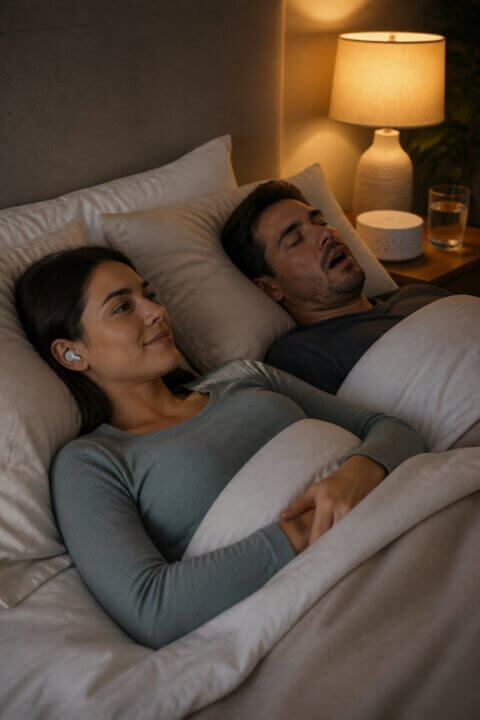
The snorer is not the villain. The snoring is the problem. That distinction is worth repeating to each other regularly. When both partners treat better sleep as a shared goal, the dynamic shifts from one person suffering and one person oblivious to two people working on the same side. That shift does not always happen automatically. Sometimes you have to decide to make it happen.
Warning Signs That Need A Medical Workup
Not all snoring is equal. Some snoring is loud and disruptive but ultimately harmless. Other snoring is a symptom of something that can cause serious cardiovascular and cognitive harm if left untreated.
How To Tell Simple Snoring From Obstructive Sleep Apnea
Simple snoring is noisy but continuous. Obstructive sleep apnea, or OSA, is snoring interrupted by pauses in breathing. The airway collapses completely, the body registers oxygen deprivation, and the person briefly wakes up to breathe before falling back asleep. They usually have no memory of this. It can happen dozens of times per hour.
Symptoms That Point To OSA, Including Gasping And Morning Headaches
The signs to watch for include loud snoring that stops and starts, gasping or choking sounds during sleep, long pauses in breathing that you can observe from across the bed, waking up with morning headaches, excessive daytime sleepiness regardless of how many hours of sleep were logged, and difficulty concentrating during the day. These are not just bad nights. These are red flags.
When To Ask For A Sleep Study And See A Sleep Specialist
If you are observing any of the above symptoms in your partner, a conversation with a doctor is not optional. It is urgent. A sleep study, which can sometimes be done at home, provides the data a sleep specialist needs to make a diagnosis. OSA is a serious condition linked to heart disease, stroke, and metabolic problems.
How CPAP, CPAP Therapy, And Other Treatments Can Help
CPAP therapy remains the gold standard for treating OSA. A CPAP machine delivers continuous air pressure that keeps the airway open throughout the night. It is not always convenient and it takes some adjustment, but for people with OSA, it is genuinely life-changing. Other treatments exist depending on severity, but none of them should be chosen without a proper medical evaluation first.