

Snoring in Women: Why It Is Underdiagnosed, Why It Is Serious, and What to Do About It
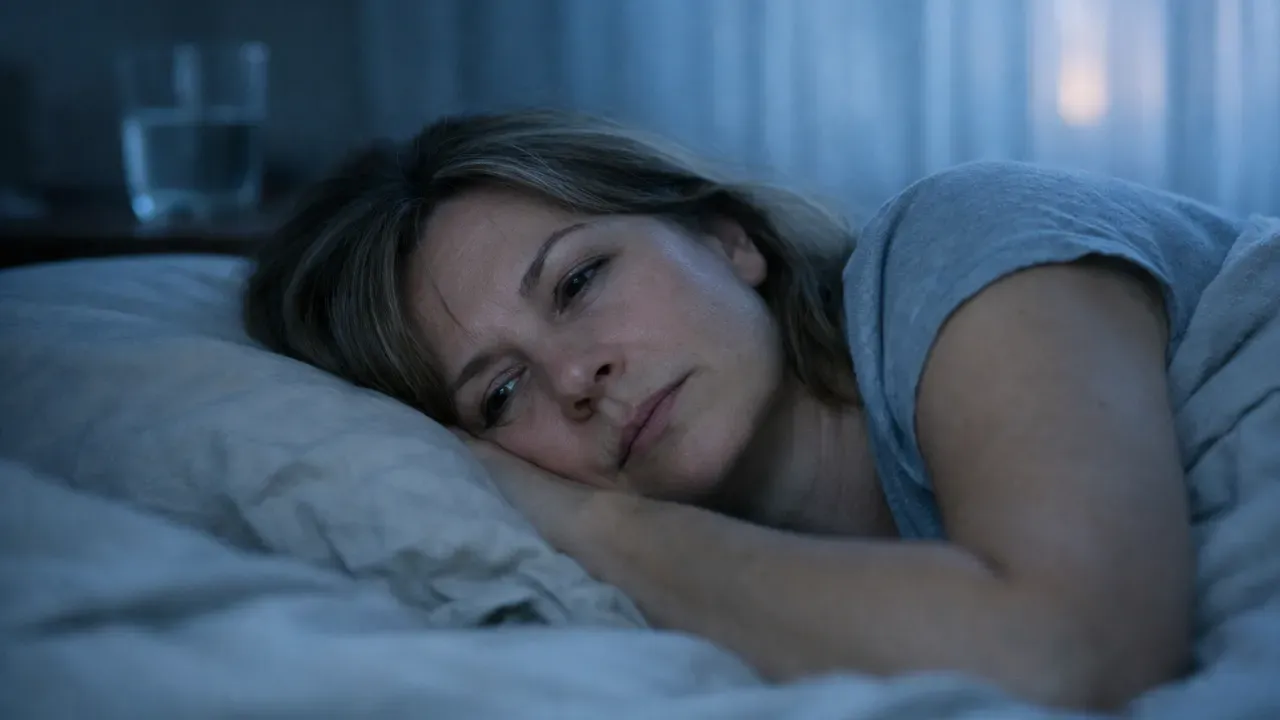
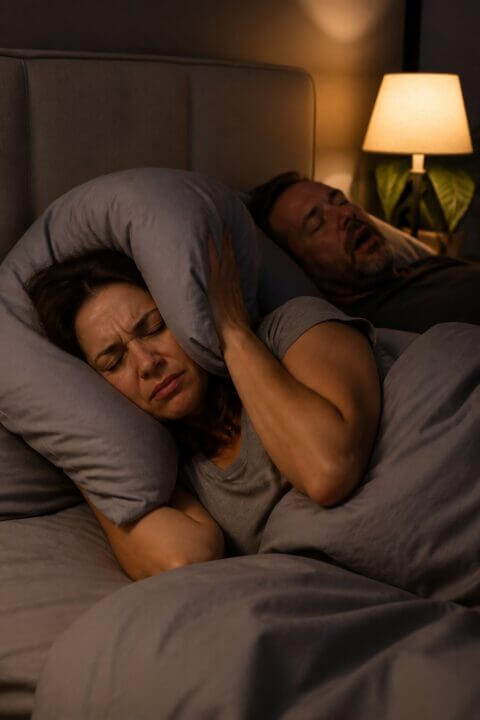
Snoring has a face in this country, and that face has always been male. Ruddy, middle-aged, loud. The jokes write themselves. The cartoon husband rattles the windows while the wife lies awake, miserable and resigned.
That image is so fixed in the culture that it functions almost like a law: men snore, women do not. Except that is not true, and it has never been true, and the cost of believing it has quietly compounded for decades in bedrooms and examination rooms across the country.
About 28 percent of adult women snore regularly. Many more snore occasionally. The numbers are not even close to the stereotype. Yet women are dramatically less likely to be evaluated, diagnosed, or treated.
They are more likely to apologize for their snoring than to report it, more likely to be told they are just tired, more likely to leave a doctor’s office with the wrong answer.
The gap between how many women snore and how many receive real help is not a small gap; it is a canyon, and it has health consequences that are serious and measurable.
Snoring in women deserves the same attention that has always been given to men. If you snore, or if you suspect you might, or if someone in your life keeps telling you that you do, this article is for you.
SnoringHQ has put together reviews and educational resources that can help you sort through the options; reading to the end will give you the language and knowledge to act.
Key Takeaways
- Women snore nearly as often as men, but social stigma and different symptom patterns mean they are far less likely to be diagnosed or treated.
- Hormonal shifts at pregnancy, perimenopause, and menopause directly raise a woman’s risk of snoring and sleep-disordered breathing.
- Untreated snoring and sleep apnea in women carry real cardiovascular, cognitive, and mental health consequences that worsen over time.
The Myth That Keeps Women Undiagnosed
The myth is stubborn because it comes from everywhere at once: from humor, from medicine, from the quiet pressure not to be unladylike. Stigma, research design, and clinical habit have all worked together to keep women undiagnosed and undertreated for a condition that affects millions of them.
Stigma Around Female Snoring
Snoring has been coded as masculine for so long that women who snore often feel a specific kind of shame about it. They minimize it to their partners. They minimize it to their doctors. Some will flatly deny it even when confronted with evidence.
That silence is not vanity; it is a social reflex shaped by generations of messaging about what women’s bodies are supposed to do and sound like. Sleep medicine cannot fix what it never gets to hear about.
How Research Gaps Have Shaped Diagnosis
Sleep research historically enrolled more men than women. The diagnostic criteria that emerged from those studies, specifically the picture of loud snoring followed by witnessed apneas, reflects male biology and male symptom patterns.
Women were measured against a standard that was never built for them. Screening questionnaires still in clinical use today were validated primarily on male populations. The tools themselves have been looking in the wrong direction.
The Clinical Cost Of Dismissing Symptoms
When women do present symptoms, those symptoms often do not match the classic profile. Fatigue, insomnia, morning headaches, and mood changes get attributed to depression, perimenopause, or stress. The breathing problem underneath goes unaddressed.
Research suggests that up to 93 percent of women with obstructive sleep apnea are undiagnosed. That is not a diagnostic miss; that is a systemic failure with real consequences for real people.
Why Women Snore: Specific Causes And Risk Factors
The causes of snoring in women range from universal biology to experiences that are exclusively female. Tissue vibration in a narrowed airway is always the mechanism, but what narrows that airway varies widely across a woman’s life.
How A Narrowed Airway Creates Sound
Every snore is a vibration. Air moves through the throat during sleep, muscles relax, and if the space is narrow enough, the soft palate, uvula, tongue, or surrounding tissues flutter and produce sound.
The narrower the passage, the more turbulent the air, and the louder the result. This happens in men and women alike. The difference lies in what causes the narrowing.
Hormonal Changes During Pregnancy, Menopause, And Other Life Stages
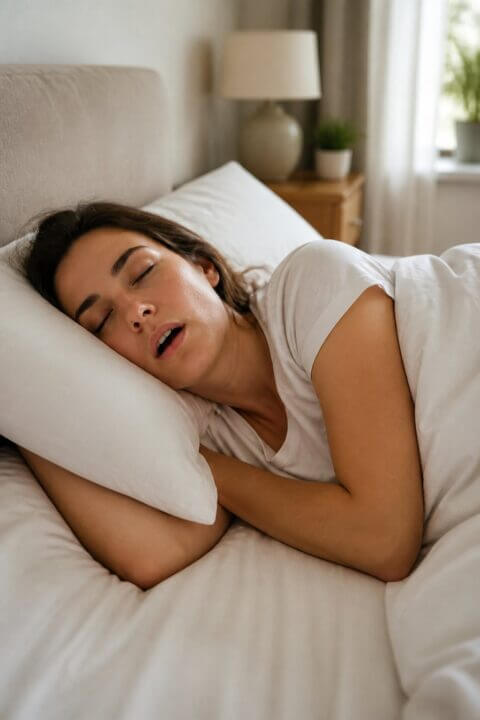
Pregnancy alone accounts for a significant and often underappreciated spike in female snoring. Up to half of pregnant women snore, with rates climbing through the third trimester as weight increases and nasal passages swell from hormonal changes.
After delivery, most of that snoring resolves quickly.
Menopause operates in the opposite direction. Estrogen and progesterone may help maintain muscle tone in the upper airway. As those hormones decline, tissue can become looser and more prone to collapse during sleep. Women who never snored at 35 may snore regularly at 55. This is biology, not coincidence.
Weight Gain And Fat Distribution
Excess weight deposits tissue around the neck and throat that physically presses on the airway. Women tend to carry fat differently than men, but abdominal and cervical fat gain at midlife still raises snoring risk. Even modest weight gain can tip the balance in someone whose airway is already structurally narrow.
Nasal And Throat Anatomy That Raises Risk
A deviated nasal septum, enlarged tonsils, chronic nasal congestion from allergies or sinusitis, and hypothyroidism (more common in women than men) all narrow the passages that air must travel through. Any one of these can be the primary driver of snoring, and several can operate simultaneously.
Lifestyle And Sleep Habits That Make Snoring Worse
Alcohol relaxes the muscles of the upper airway and reliably worsens snoring, even in people who do not snore while sober. Sedating medications, antihistamines, and sleeping on the back all compound the problem.
Smoking irritates and inflames nasal and throat tissues. These are modifiable factors, which is good news, but only if the snoring is acknowledged in the first place.
How Women’s Symptoms Can Look Different
The idea that snoring is always loud and obvious misses how female snoring often actually presents. Women are more likely to experience patterns that are quieter, more varied, or easier to rationalize away as something else entirely.
Why Loudness Is Not The Whole Story
Mild or moderate snoring still disrupts sleep architecture. It still reduces oxygen flow. It still fragments rest in ways that accumulate over weeks and months. A woman who snores softly every night may be more impaired the next day than a man who roars once a week. Volume is not a reliable proxy for severity or health impact.
Intermittent Or Multi-Tonal Snoring
Women are more likely to experience intermittent snoring, meaning it comes and goes across the night, or snoring with varied pitch and tone rather than the steady, industrial rumble associated with men.
This pattern is harder for a bed partner to describe accurately and harder for a clinician to categorize. It also makes self-recognition less likely, because it does not match the cultural picture of what snoring is supposed to sound like.
Daytime Clues That Often Get Overlooked
Daytime fatigue that sleep does not fix. Waking with a headache. Feeling unrested after a full night in bed. Difficulty concentrating, irritability, and mood instability. These are the calling cards of disrupted nighttime breathing in women, and they are also the symptoms most likely to be attributed to something else entirely.
Restless sleep and frequent waking without a clear reason are also worth noting. The nighttime story shows up in the daytime; you just have to know what you are reading.
When Snoring May Signal Obstructive Sleep Apnea
Snoring and sleep apnea are related but not identical. Snoring is a sound. Obstructive sleep apnea is a condition where the airway collapses repeatedly during sleep, stopping breathing briefly each time. Most people with OSA snore, but not everyone who snores has OSA. The distinction matters because the health stakes are very different.
The Difference Between Simple Snoring And OSA
Simple snoring produces sound but does not stop airflow. OSA involves complete or partial airway collapse, measurable drops in blood oxygen, and repeated micro-arousals that pull the brain out of deep sleep.
Someone with OSA may cycle through dozens or hundreds of these events per night without ever fully waking up. They will feel the consequences during the day without always knowing why.
Common Symptoms Of OSA In Women
Women with OSA are more likely to report insomnia, chronic fatigue, morning headaches, depression, and anxiety than to report the witnessed apneas and loud snoring more typical in men. They may experience frequent nighttime urination, difficulty concentrating, and restlessness.
These symptoms overlap heavily with other conditions, which is exactly why OSA in women gets missed so often. An estimated one in five women has sleep apnea, and nine in ten remain undiagnosed.
Why Obstructive Sleep Apnea Is Often Missed
Women are less likely to have a bed partner who reports witnessed breathing pauses, either because they sleep alone, because their events are shorter and subtler, or because their partners simply do not recognize what they are seeing.
Doctors, working from a framework built on male symptom patterns, may not connect the reported symptoms to the airway at all. High blood pressure that does not respond to medication is one clinical signal that sometimes leads finally to a sleep study and a correct diagnosis.
Health Risks Of Untreated Nighttime Breathing Problems
The body keeps score. Every fragmented night, every drop in oxygen, every moment the airway collapses adds a small increment of strain to systems that were not built to absorb it indefinitely. Untreated snoring and sleep-disordered breathing in women carry real, documented risks.
Cardiovascular Strain And Blood Pressure
Chronic snoring and sleep apnea raise blood pressure. Each breathing disruption triggers a small stress response, a surge of cortisol and adrenaline that tightens blood vessels. Repeat that hundreds of times a night for years, and the cardiovascular system begins to show the wear.
Women with untreated OSA have elevated rates of high blood pressure, heart disease, and stroke. The risks compound over time and do not wait for a diagnosis before beginning.
Mental Health And Cognitive Effects
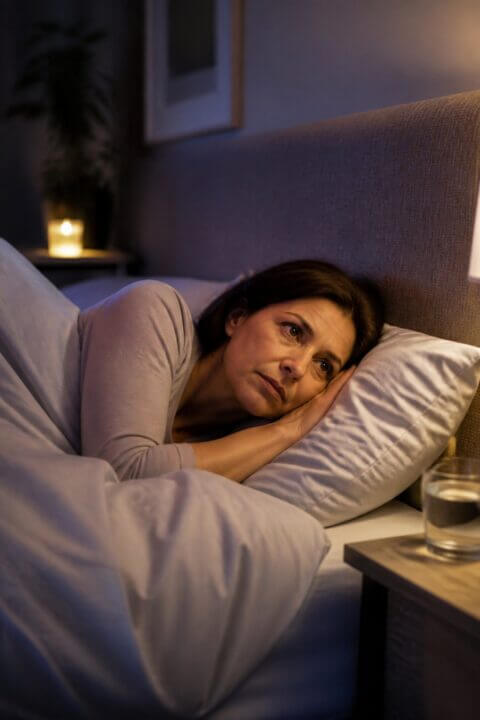
Sleep is when the brain clears waste, consolidates memory, and regulates mood. Disrupt that process chronically and the effects become measurable. Depression and anxiety are more common in women with untreated sleep-disordered breathing, and the relationship likely runs in both directions.
Cognitive fog, memory lapses, and difficulty concentrating often improve significantly once breathing is treated. What looks like a mental health condition sometimes has a mechanical explanation.
Quality Of Life, Relationships, And Daily Function
Daytime fatigue reshapes a life. It limits what you attempt, how you engage with people you love, how present you can be at work or at home. Partners lose sleep too, and relationships absorb the friction. Women often internalize the cost as personal failure rather than a treatable medical problem. That internalization is one more way the condition compounds itself.
What Can Help And When To Seek Care
The range of options for addressing snoring in women runs from simple positional changes tonight to CPAP therapy with a sleep medicine team. Where you start depends on how long this has been happening, how severe the symptoms are, and whether OSA needs to be ruled out first.
Positional And Nasal Strategies At Home
Sleeping on your side instead of your back keeps the tongue and soft palate from falling back into the airway. This single change reduces snoring for many people. A wedge pillow that elevates the upper body can also help.
For snoring driven by nasal congestion, a nightly saline nasal rinse clears the passages without the rebound congestion that decongestant sprays can cause. Nasal strips that hold the nostrils open are a low-cost option worth trying before moving to anything more involved.
Oral Devices And Other Anti-Snoring Tools
A mandibular advancement device, or MAD, gently holds the lower jaw slightly forward during sleep, which physically widens the airway at the back of the throat. Devices like SnoreRx Plus are FDA-cleared, made with medical-grade materials, and adjustable to different jaw positions.
They are a meaningful step up from positional strategies for people whose snoring persists despite sleeping on their side. Many women find these devices easier to use than CPAP and effective enough for snoring that does not involve significant apnea.
When Positive Airway Pressure May Be Needed
If you have been evaluated and diagnosed with OSA, positive airway pressure therapy is the most effective treatment available. A CPAP machine delivers a steady stream of pressurized air through a mask that prevents the airway from collapsing.
Modern machines are quieter and more comfortable than earlier versions. Women sometimes require different pressure settings and mask fits than men, which is another reason to work with a knowledgeable sleep medicine provider rather than just using a spouse’s hand-me-down equipment.
What To Tell A Doctor Or Sleep Specialist
Bring specific information: how long the snoring has been happening, whether it wakes you or your partner, how you feel in the morning, and whether you experience headaches, waking during the night, or unrefreshing sleep. Mention any high blood pressure.
Describe your fatigue in concrete terms. If you have been dismissed before, say that too. Ask directly whether a home sleep test or in-lab sleep study might be appropriate. You are not asking for a favor; you are asking for a standard of care that men receive routinely.
Frequently Asked Questions
Sleep on your side, elevate your head with an extra pillow, and avoid alcohol for at least three to four hours before bed. If nasal congestion is part of the picture, a saline rinse before sleeping can help. These are not permanent solutions, but they can produce real results the same night while you figure out what is actually driving the problem.
Which natural remedies actually help, and which ones are just bedtime stories with better marketing?
Side sleeping, weight management, reducing alcohol, and treating nasal congestion all have genuine evidence behind them. Throat exercises that strengthen the muscles of the upper airway have shown benefit in some studies. Essential oil diffusers, magnetic bracelets, and chin straps with no jaw adjustment mechanism have very limited or no evidence of effectiveness. The simpler and more mechanical the intervention, the more likely it is to do something real.
When does snoring become a warning sign that I should see a doctor, not just a reason to apologize in the morning?
See a doctor if your snoring is accompanied by waking up gasping, morning headaches that are frequent, daytime fatigue that does not improve with more sleep, or if a partner reports that your breathing pauses during the night. High blood pressure that is difficult to control is another signal. Snoring alone in an otherwise healthy person may be manageable at home, but any of these accompanying symptoms pushes it into territory that deserves clinical evaluation.