

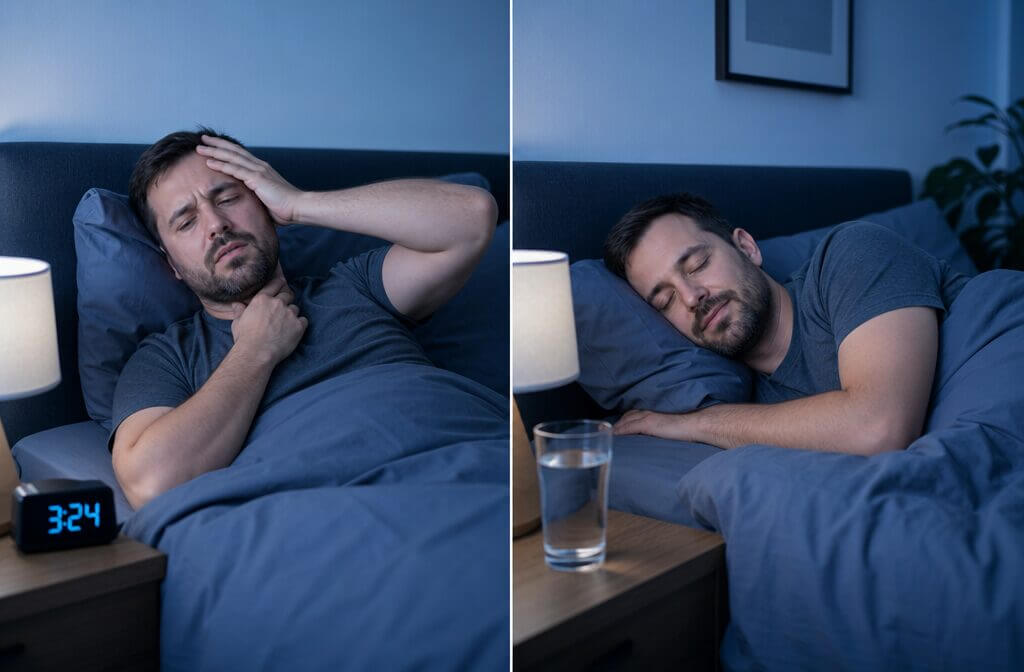
The Impact of Dehydration on Sleep Quality and Snoring
Quick Answer
Last updated: May 20, 2026
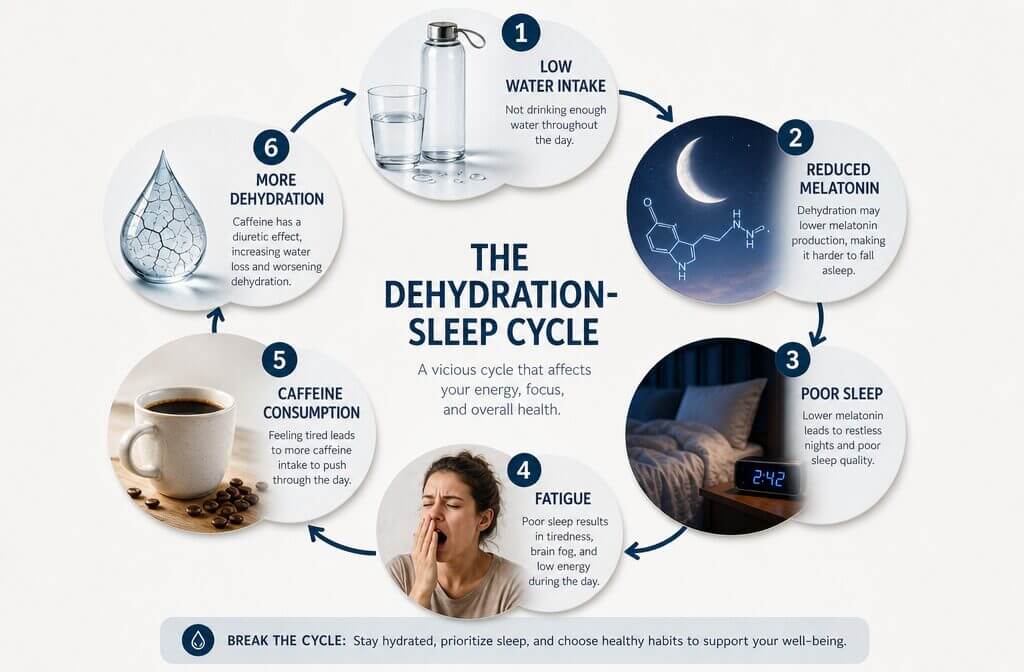
Dehydration directly disrupts sleep by reducing melatonin production, causing physical discomfort like dry mouth and headaches, and worsening snoring through dried nasal passages. An estimated 75% of U.S. adults experience chronic dehydration, creating a vicious cycle where poor sleep leads to caffeine consumption, which further dehydrates the body. Maintaining consistent hydration throughout the day—not just before bed—can significantly improve sleep quality and reduce snoring symptoms.
Key Takeaways
- Dehydration reduces essential amino acids needed for melatonin production, disrupting your natural sleep-wake cycle
- Physical symptoms of dehydration (dry mouth, headaches, muscle cramps) create discomfort that prevents falling and staying asleep
- Dehydrated nasal and throat tissues increase snoring by restricting airways and thickening mucus
- Men should aim for approximately 13 cups of fluid daily, women around 9 cups (including water from food)
- Drinking large amounts of water right before bed backfires by causing nighttime bathroom trips
- Chronic sleep deprivation from dehydration increases risks for heart disease, diabetes, weakened immunity, and cognitive decline
- The caffeine-dehydration cycle worsens both hydration status and sleep quality
- Proper hydration timing matters more than total volume—spread intake throughout the day
Why Does Dehydration Ruin Your Sleep?
The impact of dehydration on sleep happens through multiple biological pathways. When your body lacks adequate water, it cannot produce sufficient melatonin—the hormone that regulates your circadian rhythm and signals when it’s time to sleep.
Dehydration restricts essential amino acids that serve as building blocks for melatonin synthesis. Without enough melatonin, your body struggles to maintain its natural sleep-wake schedule. You may find yourself lying awake despite feeling exhausted, or waking frequently throughout the night.
Beyond hormones, dehydration creates immediate physical discomfort:
- Dry mouth and throat that worsens when lying down
- Headaches or migraines that intensify at night
- Muscle cramps in legs and feet
- Itchy, uncomfortable skin
- Nasal congestion from thickened mucus
These symptoms make it nearly impossible to relax into deep, restorative sleep. You’re left tossing and turning, searching for a comfortable position that doesn’t exist until you address the underlying hydration problem.
How Does Dehydration Cause or Worsen Snoring?
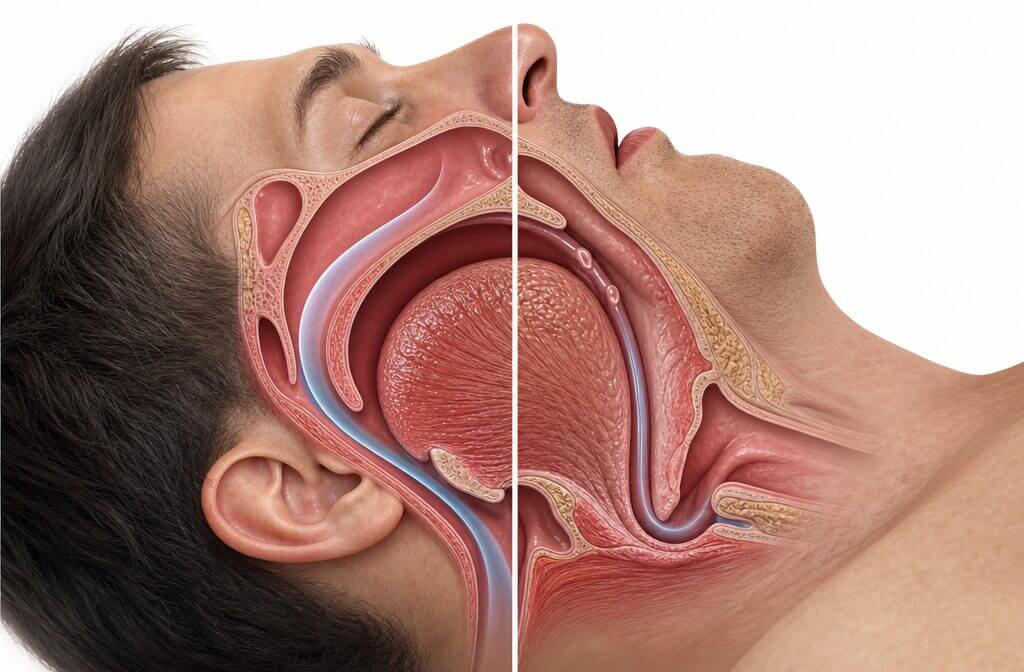
Dehydration directly contributes to snoring by drying out the tissues in your nose and throat. When these passages lack moisture, they become sticky and more likely to vibrate during breathing—the sound we recognize as snoring.
The mechanism works like this: Dehydrated mucous membranes produce thicker, stickier mucus rather than the thin, clear mucus that normally keeps airways lubricated. This thickened mucus partially obstructs airflow, forcing you to breathe harder and creating the turbulent air movement that causes snoring sounds.
Dry nasal passages also lead to mouth breathing during sleep. When you breathe through your mouth, your tongue and soft palate are more likely to collapse backward, further narrowing the airway. This creates a perfect storm for loud, disruptive snoring that affects both you and your partner.
If you or your partner struggles with snoring, addressing hydration is one of the simplest interventions to try before exploring anti-snoring mouthpieces or other devices. Many people notice reduced snoring intensity within days of improving their hydration habits.
What Are the Short-Term Effects of Poor Sleep from Dehydration?
The immediate impact of dehydration-related sleep loss shows up quickly, often within 24-48 hours of inadequate rest. You’ll likely notice these symptoms first:
Cognitive impairments:
- Difficulty concentrating on tasks that normally feel easy
- Short-term memory problems (forgetting where you put your keys, missing appointments)
- Slower reaction times when driving or operating equipment
- Poor decision-making and increased errors at work
Physical symptoms:
- Persistent fatigue despite resting
- Coordination and balance issues
- Increased clumsiness and minor accidents
Emotional changes:
- Irritability and mood swings
- Reduced patience with family, coworkers, or partners
- Decreased motivation and interest in activities
- Lower sex drive
These short-term effects create a feedback loop. You feel tired, so you reach for coffee or energy drinks. These caffeinated beverages provide temporary alertness but dehydrate you further, making the next night’s sleep even worse. The cycle continues, with each day compounding the problem.
What Are the Long-Term Health Risks of Chronic Dehydration and Sleep Loss?
When dehydration and poor sleep become chronic—lasting weeks, months, or years—the health consequences become serious and potentially life-threatening.
Cardiovascular system:
Chronic sleep deprivation increases blood pressure and puts strain on your heart. Your risk for heart disease, heart attack, and stroke rises significantly. Dehydration thickens blood, making it harder for your heart to pump efficiently.
Metabolic dysfunction:
Poor sleep disrupts insulin regulation, increasing your risk for type 2 diabetes. Your body becomes less efficient at processing glucose, and you may experience increased hunger and cravings for high-calorie foods, leading to weight gain.
Immune system weakness:
Sleep is when your body repairs and regenerates. Without adequate rest, your immune system cannot produce sufficient infection-fighting cells. You become more susceptible to colds, flu, and other infections. Recovery from illness takes longer.
Mental health decline:
The connection between sleep deprivation and mental health is well-established. Chronic poor sleep significantly increases your risk for depression and anxiety disorders. Existing mental health conditions worsen with inadequate rest.
Cognitive decline:
Recent research has linked chronic sleep deprivation to increased risk of dementia and Alzheimer’s disease. During sleep, your brain clears out toxic proteins that accumulate during waking hours. Without sufficient sleep, these proteins build up and may contribute to cognitive decline over time.
Accident and injury risk:
Drowsy driving causes thousands of accidents annually. Poor coordination and slower reaction times increase your risk of workplace injuries, falls, and other accidents.
Choose to address hydration and sleep issues now if you’re experiencing any combination of these symptoms regularly. The longer these conditions persist, the harder they become to reverse.
How Much Water Do You Actually Need for Better Sleep?
The standard recommendation is approximately 13 cups (about 3 liters) of total fluids daily for men and 9 cups (about 2.2 liters) for women. This includes water from all sources—beverages and food.
However, these are baseline numbers. Your actual needs vary based on:
Activity level:
Add 1.5 to 2.5 cups of water for every hour of moderate exercise. Intense workouts or hot weather require even more.
Climate and environment:
Hot, humid weather or heated indoor spaces increase fluid loss through perspiration and respiration.
Health conditions:
Fever, vomiting, or diarrhea dramatically increase fluid needs. Pregnancy and breastfeeding also require additional hydration.
Caffeine and alcohol consumption:
Both substances have diuretic effects. For every cup of coffee or alcoholic drink, add an extra glass of water to maintain hydration balance.
Medications:
Some medications increase fluid loss. Check with your pharmacist if you’re unsure whether your medications affect hydration.
A practical way to gauge your hydration status: Check your urine color. Pale yellow indicates good hydration. Dark yellow or amber suggests you need more fluids. (Note: Some vitamins and medications affect urine color, so use this as one indicator among several.)
When Should You Drink Water for Optimal Sleep?
Timing your water intake matters as much as total volume. The goal is maintaining consistent hydration throughout the day without creating nighttime bathroom trips that disrupt sleep.
Morning (upon waking):
Drink 16-20 ounces within 30 minutes of waking. You lose significant fluid overnight through breathing and perspiration. This morning hydration jumpstarts your metabolism and replenishes what you lost.
Throughout the day:
Sip water consistently rather than chugging large amounts at once. Keep a water bottle at your desk, in your car, or wherever you spend time. Aim to finish most of your daily water intake by early evening.
With meals:
Drink a glass of water with each meal. This aids digestion and helps you reach your hydration goals without thinking about it.
Before and after exercise:
Drink 16-20 ounces 2-3 hours before exercise, another 8 ounces 20-30 minutes before, and 16-24 ounces for every pound lost during the workout.
Evening (2-3 hours before bed):
Taper your water intake. Have your last significant drink 2-3 hours before bedtime. You can take small sips if thirsty closer to bedtime, but avoid drinking full glasses.
Avoid this common mistake: Don’t try to “catch up” on hydration right before bed. Chugging water at 10 PM guarantees you’ll wake up multiple times to urinate, defeating the purpose of improving sleep quality.
What Other Factors Work With Hydration to Improve Sleep?
Hydration alone won’t solve all sleep problems, but it works synergistically with other sleep hygiene practices.
Reduce caffeine strategically:
Limit caffeine to morning hours only. Caffeine has a half-life of 5-6 hours, meaning half the amount you consume at 2 PM is still in your system at 8 PM. If you must have afternoon caffeine, follow it immediately with a glass of water.
Create a sleep-friendly environment:
Keep your bedroom cool (60-67°F), dark, and quiet. Consider a quality mattress that supports proper spinal alignment and reduces pressure points that might wake you.
Establish consistent sleep times:
Go to bed and wake up at the same times daily, even on weekends. This reinforces your circadian rhythm and works with your body’s natural melatonin production.
Address snoring directly:
If snoring persists despite improved hydration, explore mandibular advancement devices or consult a sleep specialist. Snoring can indicate sleep apnea, which requires medical treatment.
Monitor alcohol intake:
Alcohol may help you fall asleep initially but disrupts sleep quality in the second half of the night. It also dehydrates you significantly. If you drink alcohol, have at least one glass of water for each alcoholic beverage.
Use a humidifier:
Dry air exacerbates the effects of dehydration on your nasal passages and throat. A bedroom humidifier maintains moisture in the air, reducing snoring and nighttime congestion.
How Can You Tell If Dehydration Is Affecting Your Sleep?
Several signs indicate that dehydration may be the culprit behind your sleep problems.
Physical indicators:
- Waking with a dry mouth or extremely chapped lips
- Morning headaches that improve after drinking water
- Dark, concentrated urine first thing in the morning
- Feeling thirsty when you wake up
- Muscle cramps during the night
Sleep pattern clues:
- Difficulty falling asleep despite feeling tired
- Waking frequently throughout the night
- Feeling unrested even after 7-8 hours in bed
- Increased snoring reported by your partner
- Waking yourself up coughing or gasping
Daytime symptoms:
- Persistent fatigue that coffee doesn’t fix
- Difficulty concentrating by mid-afternoon
- Increased irritability and mood swings
- Craving sugary or caffeinated drinks constantly
Try this simple test: Increase your water intake following the timing guidelines above for one week. Track your sleep quality, energy levels, and any changes in snoring. If you notice improvement, dehydration was likely contributing to your sleep problems.
If symptoms persist despite proper hydration, consult a healthcare provider. You may have sleep apnea, restless leg syndrome, or another condition requiring medical intervention.
What Foods Help With Hydration and Sleep?
You don’t get all your hydration from drinking water. Many foods contribute significantly to your daily fluid intake while also providing nutrients that support sleep.
High-water-content foods (85-95% water):
- Cucumbers, lettuce, celery, radishes
- Watermelon, strawberries, cantaloupe
- Tomatoes, bell peppers, zucchini
- Broths and soups
Foods that support melatonin production:
- Tart cherries (contain natural melatonin)
- Nuts and seeds (provide magnesium and tryptophan)
- Fatty fish like salmon (omega-3s support sleep regulation)
- Whole grains (complex carbs help tryptophan reach the brain)
Foods to avoid before bed:
- Spicy foods (can cause heartburn when lying down)
- High-fat meals (take longer to digest, disrupting sleep)
- Large portions (overeating causes discomfort)
- Sugary snacks (cause blood sugar spikes and crashes)
A light evening snack combining complex carbs and protein—like whole grain crackers with cheese or apple slices with almond butter—can actually improve sleep by preventing hunger from waking you.
Breaking the Caffeine-Dehydration-Poor Sleep Cycle
Many people trapped in poor sleep patterns rely on caffeine to function, not realizing it perpetuates the problem.
How the cycle works:
- Poor sleep from dehydration leaves you exhausted
- You drink coffee or energy drinks for alertness
- Caffeine provides temporary energy but dehydrates you further
- Caffeine’s stimulant effects last 5-6 hours, interfering with that night’s sleep
- You sleep poorly again, starting the cycle over
Breaking free requires a strategic approach:
Week 1 – Establish hydration:
Focus solely on drinking adequate water throughout the day. Don’t change your caffeine habits yet. This builds the foundation.
Week 2 – Shift caffeine timing:
Move all caffeine consumption to before noon. Replace afternoon coffee with herbal tea or water with lemon.
Week 3 – Reduce caffeine amount:
Cut your caffeine intake by one-third. If you normally drink three cups of coffee, reduce to two. Maintain the before-noon timing.
Week 4 – Optimize sleep environment:
With better hydration and reduced caffeine, focus on sleep hygiene: consistent bedtime, cool dark room, no screens for an hour before bed.
Expect some withdrawal symptoms (headaches, fatigue) when reducing caffeine. These typically last 3-5 days. Push through—they’re temporary, and your sleep quality will improve significantly on the other side.
Hydration Strategies for Snorers and Their Partners
If snoring is your primary concern, targeted hydration strategies can make a noticeable difference.
For the snorer:
- Keep water on your nightstand and take a few sips if you wake during the night
- Use a humidifier in the bedroom to prevent nasal passage drying
- Avoid alcohol within 3 hours of bedtime (it relaxes throat muscles and dehydrates)
- Try sleeping on your side rather than your back
- Consider nasal strips or saline spray before bed to keep passages moist
For the partner:
- Encourage hydration habits without nagging (lead by example)
- Track whether snoring intensity changes on days with better hydration
- Suggest trying tongue retaining devices if hydration alone doesn’t solve the problem
- Use white noise or earplugs while your partner works on hydration habits
For parents of snoring children:
Children often don’t recognize or communicate thirst effectively. Ensure your child drinks water with meals and snacks. Limit juice and sugary drinks, which don’t hydrate as effectively. If your child snores regularly despite good hydration, consult a pediatrician—enlarged tonsils or adenoids may be the cause.
Frequently Asked Questions
Related Reading: