


Why Have I Suddenly Started Snoring? Age, Lifestyle, and What You Can Do
Snoring has a way of arriving like an uninvited guest who moves in without asking. One night the bed is quiet. The next, your partner is elbowing you at two in the morning, and you have no idea what changed.
You didn’t do anything different. You just got older, maybe heavier, maybe more stressed. And now the noise follows you into morning.
New snoring, or snoring that suddenly gets worse, almost always has a cause you can identify and often one you can address. It might be weight gain around the neck, a glass of wine before bed, a new allergy medication, or muscles in your throat that have slowly lost their grip. Age alone doesn’t doom you to a noisy night, but it does change the odds.
This article walks through why snoring starts, why it tends to arrive or worsen in your 30s and beyond, and what the sounds in the dark might actually be telling you. SnoringHQ covers many of these anti-snoring solutions in depth, so if something here sounds familiar, you can explore the reviews and guides at your own pace.
Key Takeaways
- Snoring usually has a specific, identifiable cause rather than being a random or inevitable development.
- Age-related changes in muscle tone, hormones, and weight are the most common reasons snoring appears or intensifies.
- Many cases respond well to lifestyle changes or simple devices, but loud snoring with other symptoms may signal something that needs medical attention.
Why Snoring Can Start At Any Age
Snoring is not a disease of the old. It visits children with enlarged tonsils, young adults with deviated septums, pregnant women in their second trimester, and middle-aged people who just added a few pounds to their frame. The American Academy of Sleep Medicine estimates that roughly half of all people snore at some point in their lives.
What Is Snoring
Snoring is the sound made when air passes through a partially narrowed airway and causes the soft tissues of the throat and mouth to vibrate. The sound itself is not the problem. It is a symptom. It means air is moving through a tighter passage than it should be, and something, whether anatomy, muscle tone, congestion, or weight, is reducing the space available.
Why New Snoring Often Feels Sudden
The changes that lead to snoring often build slowly, over months or years. Muscle tone in the throat gradually decreases. A few pounds settle around the neck. Nasal passages narrow from chronic low-grade congestion. None of these shifts feel dramatic on their own. But one night, the combination crosses a threshold, and the snoring begins. It feels sudden because the tipping point is invisible.
Occasional Noise Vs. Chronic Snoring
Occasional snoring, the kind that shows up when you’re sick with a cold or have had too much to drink, is common and usually harmless. Chronic snoring is a different matter. It happens most nights, regardless of illness or alcohol, and it often signals a more consistent structural or physiological issue. Chronic snoring is also the kind most associated with sleep-disordered breathing, including obstructive sleep apnea.
The Primary Mechanism Behind The Noise
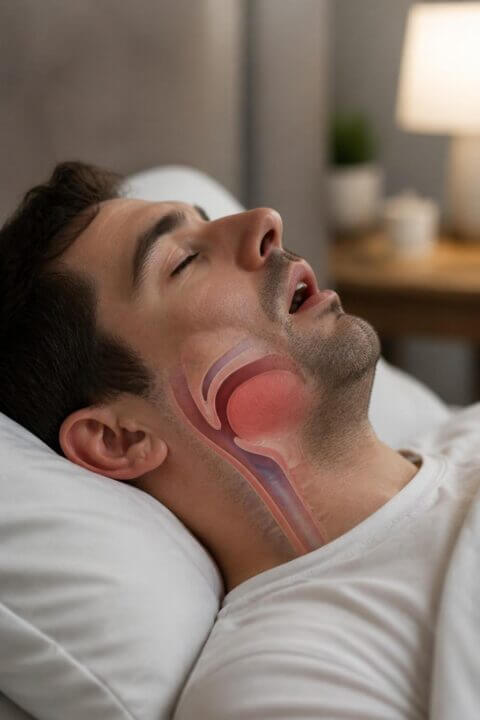
Every snore, regardless of its cause, follows the same basic physics. Air moves fast through a narrow space, tissues flutter, and sound waves carry the noise through the night and into your partner’s sleep.
How Airway Narrowing Creates Vibration
When you fall asleep, the muscles throughout your upper airway relax. That’s normal. But if those muscles relax too much, or if the airway is already structurally narrow, the passage tightens.
Air velocity increases as it pushes through the smaller space, the way water speeds up through a narrow section of pipe. The surrounding tissues begin to vibrate with the turbulence. That vibration is snoring.
Mouth, Tongue, Soft Palate, And Nasal Bottlenecks
The soft palate, the fleshy tissue at the back of the roof of your mouth, is one of the most common sources of snoring vibration. The uvula, that small hanging tissue you can see in a mirror, flutters alongside it.
The tongue can fall backward during sleep, particularly when you sleep on your back, and block the airway from below. Nasal passages that are congested or structurally narrow force more air through the mouth, adding to the turbulence. Any one of these bottlenecks can produce snoring. More than one can make it loud.
Snoring And Sleep-Disordered Breathing
Loud snoring is the most common symptom of obstructive sleep apnea, a condition where the airway doesn’t just narrow but fully collapses repeatedly through the night. Not every snorer has sleep apnea, but the two exist on a spectrum. Sleep-disordered breathing covers a range of conditions where the airway is partially or fully obstructed during sleep, and snoring sits at the milder end of that range.
Why Snoring Gets Worse With Age
The body changes quietly, year by year, and the airway changes with it. Muscle tone drops. Hormones shift. Weight redistributes. Each of these factors nudges the airway closer to the point where nighttime vibration becomes unavoidable.
Declining Muscle Tone
The muscles that hold the airway open during sleep, including those in the soft palate, throat, and tongue, lose strength with age, just like any other muscle. By the time most people reach their 50s and beyond, these tissues are noticeably more lax. They collapse more easily under the weight of relaxed sleep. The result is a narrower passage, more turbulent airflow, and a louder, more consistent snore.
Hormonal Changes
Estrogen and progesterone appear to offer some protective effect against snoring. Research shows that postmenopausal women with lower levels of these hormones are significantly more likely to snore and to show symptoms of obstructive sleep apnea than premenopausal women. In men, declining testosterone is linked to increased fat deposition around the neck and reduced muscle maintenance. The hormonal shifts of midlife quietly shift snoring risk in both directions.
Weight Gain
Extra weight around the neck is one of the most direct contributors to snoring. A neck circumference greater than 17 inches in men or 16 inches in women is associated with increased airway compression during sleep. Fat tissue doesn’t just sit there. It physically crowds the airway. Even modest weight gain concentrated in the neck and jaw area can tip a quiet sleeper into a loud one.
Nasal Passages
Nasal airways tend to become less efficient with age. Septal cartilage can shift. The nasal tip may droop slightly, narrowing the internal valve. Chronic low-level inflammation from allergies or environmental irritants accumulates over years. Any reduction in nasal airflow pushes more breathing through the mouth, which is a far less stable route, and increases the chance of soft tissue vibration.
Medications
Many medications prescribed more frequently with age carry snoring as a side effect. Muscle relaxants, benzodiazepines, certain blood pressure medications, and sleep aids all increase the relaxation of throat musculature beyond what sleep alone produces. If snoring appeared shortly after starting a new prescription, the timing is worth noting and worth discussing with your doctor.
Why The 30s Can Be A Turning Point
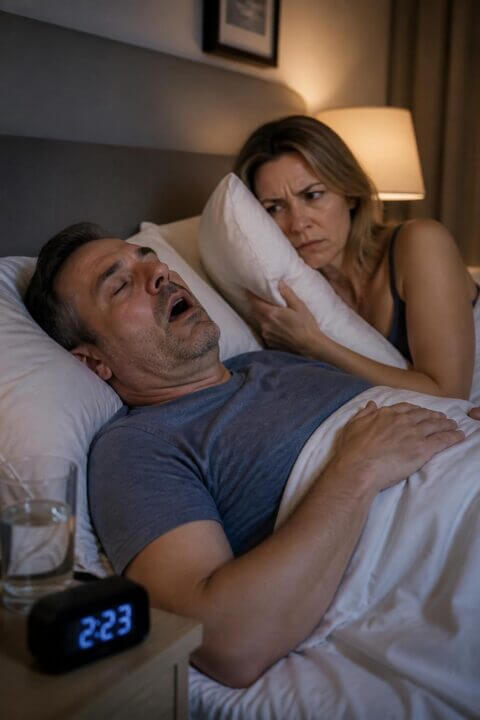
The 30s tend to arrive looking like the 20s but behaving very differently. Metabolism slows, stress accumulates, and habits that never caused problems before suddenly start leaving evidence in the form of extra weight, disrupted sleep, and yes, a new and unwelcome nighttime soundtrack.
Metabolism Slowdown
Metabolic rate begins to decline noticeably in the early 30s. Calories that burned easily at 24 accumulate at 34. Even without a dramatic change in diet, gradual weight gain becomes more likely. And as explained above, weight gain around the neck is one of the clearest pathways to new-onset snoring.
Reduced Physical Activity
Most people in their 30s are busier and less active than they were in their 20s. Careers, children, and competing obligations push regular exercise down the priority list.
Lower physical activity accelerates muscle tone loss throughout the body, including in the throat. It also contributes to weight gain, compounding the snoring risk.
Alcohol Consumption
Drinking patterns often shift in the 30s. Social drinking that used to end at midnight now ends earlier, closer to bedtime. Alcohol is a muscle relaxant. It does to the throat what age does slowly, all at once in a single evening.
Even one or two drinks within a couple of hours of sleep can meaningfully increase snoring intensity.
Increased Stress
Chronic stress disrupts sleep architecture. Stressed sleepers often spend less time in deep, restorative sleep stages and more time in lighter stages where arousal thresholds are lower. Paradoxically, exhaustion from stress can also cause the kind of deep muscular relaxation that allows airway tissues to collapse more readily. Stress and snoring feed each other quietly.
Structural Factors
Some people reach their 30s and discover anatomical realities that were always there but never enough to matter. A mildly deviated septum, slightly enlarged tonsils, or a jaw positioned slightly back can be tolerated in a lean, low-stress 20-something. Add a few pounds, reduce sleep quality, and the structural issue becomes the tipping point that turns quiet nights into noisy ones.
The Antihistamine Paradox
Antihistamines sit in a strange middle ground when it comes to snoring. They can help in one way and hurt in another, sometimes simultaneously.
When Congestion Relief Helps
Nasal congestion is a real snoring trigger. When your nasal passages are swollen shut, your body defaults to mouth breathing, which is far more likely to produce snoring. Non-sedating antihistamines like loratadine or cetirizine can reduce allergy-driven nasal inflammation and open up nasal airflow.
For snorers whose problem is primarily congestion-related, this kind of relief can meaningfully reduce nighttime noise. Nasal strips, which physically widen the nasal passage from the outside, can serve a similar mechanical purpose without any medication at all.
When Sedating Medications Make Snoring Worse
First-generation antihistamines like diphenhydramine (the active ingredient in many over-the-counter sleep aids and older allergy medications) are sedating. They cross into the brain, promote drowsiness, and relax muscles throughout the body, including the airway. This relaxation effect can worsen snoring even as the antihistamine reduces nasal congestion. The two effects work in opposite directions, and in people with existing airway narrowing, the sedation effect often wins.
How To Notice A Medication Link
If you started a new allergy medication and snoring appeared or worsened within a few days, the medication is worth examining. Check whether it is a sedating or non-sedating formula. Consider switching formulations, using a nasal spray as an alternative, or simply timing your dose earlier in the day so the sedating effects wear off before you sleep.
Red Flags And Cause-Based Next Steps
Most snoring is annoying rather than dangerous. But some patterns of snoring carry real medical weight, and the difference matters. The combination of structural, positional, and lifestyle interventions can resolve many cases, but some require professional evaluation.
Signs It May Be Obstructive Sleep Apnea
Obstructive sleep apnea, or OSA, involves repeated episodes during sleep where the airway fully collapses and breathing stops temporarily. The snoring associated with OSA tends to be loud and persistent, interrupted by gaps or gasping sounds.

Sleep apnea symptoms beyond snoring include waking unrefreshed even after a full night, morning headaches, significant daytime sleepiness, difficulty concentrating, and witnessed breathing pauses during sleep where a partner observes you stopping and restarting your breathing. Any of these alongside loud snoring warrants medical evaluation.
When A Sleep Study Makes Sense
A sleep study, or polysomnography, is the gold-standard diagnostic tool for sleep apnea. It measures oxygen levels, airflow, brain activity, and body movement across an entire night of sleep.
Home sleep testing is now widely available for adults who are reasonably healthy and whose primary concern is OSA. If your doctor suspects sleep apnea based on your symptoms, a sleep study is the most direct path to an accurate diagnosis.
Solutions By Cause
Lifestyle: Weight loss, reducing alcohol intake, quitting smoking, and establishing a consistent sleep schedule all reduce snoring risk by addressing the most common contributing factors directly.
Positional: Sleeping on your side instead of your back reduces the gravitational pressure on your airway. Positional therapy, including wedge pillows, body pillows, or vibrating positional devices, can help reinforce side-sleeping habits.
Nasal: Treating congestion with non-sedating antihistamines, saline rinses, or nasal corticosteroid sprays can open nasal passages. Nasal strips provide immediate mechanical widening.
OTC Devices: Mandibular advancement devices available over the counter gently move the lower jaw forward during sleep, which physically opens the space behind the tongue and soft palate.
Hormonal/Structural: Women experiencing new snoring around menopause should discuss hormonal considerations with a physician. Structural issues like a deviated septum may warrant evaluation by an ENT specialist.
Eight Smart Steps To Address New-Onset Snoring
- Sleep on your side and use pillows to stay there.
- Avoid alcohol within three hours of bedtime.
- Review any new medications with your doctor.
- Treat nasal congestion before bed with a saline rinse or strip.
- Reduce neck-area weight if you have gained even a modest amount recently.
- Establish a consistent sleep schedule to prevent the deep muscular collapse of exhaustion-driven sleep.
- Try an over-the-counter mandibular advancement device for a few weeks.
- See a doctor if your partner reports witnessed breathing pauses, or if you wake exhausted regardless of how many hours you slept.
When CPAP Or Oral Appliance Therapy Enters The Picture
If a sleep study confirms obstructive sleep apnea, continuous positive airway pressure therapy is typically the first recommendation. A CPAP machine delivers a steady stream of pressurized air through a mask, holding the airway open throughout the night.
For those who find CPAP difficult to tolerate, oral appliance therapy using a custom mandibular advancement device fitted by a dentist trained in sleep medicine offers a quieter, less cumbersome alternative.
Devices like SnoreRx Plus represent a middle ground, an FDA-cleared, over-the-counter MAD that allows for adjustable jaw advancement without the cost of a custom device, though anyone with confirmed sleep apnea should work with a physician before relying solely on an OTC solution.