

Throat and Tongue Exercises to Stop Snoring: The Complete Myofunctional Guide
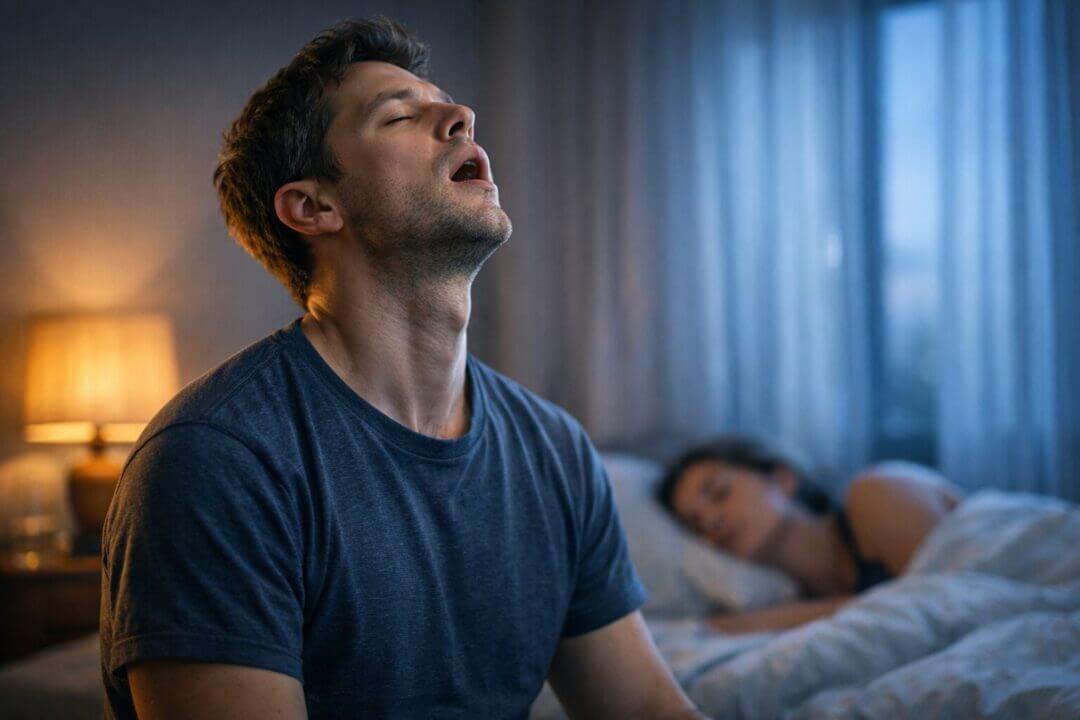
Snoring is a muscle problem. Not a mystery, not a curse, not just “the way some people sleep.” The tissues at the back of your throat, your tongue, your soft palate, they go soft and floppy when you sleep, and when air pushes through that narrowed passage, they flutter.
That flutter is the sound. That sound is the noise keeping your partner awake, keeping you half-rested, turning your bedroom into a place of low-grade tension every single night.
The good news is that muscles can be trained, and the same muscles that vibrate when they are weak can learn to hold their shape when they are strong. That is the whole premise behind throat exercises to stop snoring, and the clinical evidence behind myofunctional therapy, meaning targeted exercises for the mouth, tongue, and throat, has grown steadily over the past decade.
Studies have shown that ten minutes of daily oropharyngeal exercises over three months can reduce snoring intensity meaningfully, in some cases by roughly half.
This guide walks you through every major exercise category: tongue drills, soft palate work, jaw movements, and yoga-based breathing. It explains when to practice, what results to expect, and how these exercises pair with other tools like mandibular advancement devices and nasal strips.
You can also explore resources at SnoringHQ to find products that work alongside the exercises you will build here. Start reading, start practicing, and your throat will start learning.
Key Takeaways
- Weak airway muscles are the direct cause of most snoring, and targeted daily exercises can strengthen them over weeks and months.
- Consistency matters more than intensity; ten to fifteen minutes each morning produces measurable results within three months.
- Exercises work best when combined thoughtfully with other anti-snoring tools for people with moderate symptoms or suspected sleep apnea.
Why Your Throat Muscles Drive So Much Nighttime Noise
The throat is not passive. During the day, the muscles of your soft palate, tongue base, and pharyngeal walls stay toned from constant use: swallowing, talking, chewing, existing. At night, that activity stops, and those same muscles relax. In most people, they relax just enough. In snorers, they relax too much, and that is where the noise begins.
How Airway Collapse Creates Vibration
Think of a garden hose with strong walls. Water flows through cleanly. Now imagine that hose made of something softer, something that pinches inward when the water pressure drops. The flow becomes turbulent. The walls shake. That shaking is exactly what happens in a snorer’s airway. When the tissue loses its structural support, the air rushing through during each breath causes it to flutter and vibrate, producing that low, rhythmic rumble.
Why We Snore When Airway Muscles Are Weak
Weak airway muscles mean the walls of your throat have less ability to resist the suction force created by each breath. The tongue base, which sits right at the back of the airway, can slide backward during sleep and narrow the passage further. Factors like alcohol, sedatives, and severe fatigue accelerate this process by relaxing those muscles even more.
What Myofunctional Therapy Actually Trains
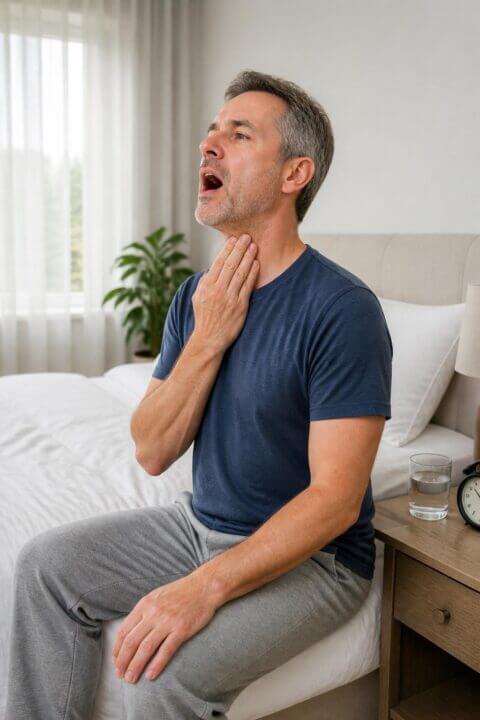
Myofunctional therapy targets the specific muscle groups that hold your airway open: the tongue, the soft palate, the lateral walls of the oropharynx, and the lips and cheeks that contribute to overall oral posture. The goal is not bulk, it is tone. Consistently trained muscles maintain better resting tension, even during sleep, and that tension keeps the airway from collapsing into vibration.
What The Research Says About Snoring Intensity
Multiple peer-reviewed studies have found that structured oropharyngeal exercises reduce both the frequency and the loudness of snoring. One well-cited body of research showed that participants who completed a three-month program of daily mouth and throat exercises reduced snoring intensity by about 51 percent. The exercises also showed benefit for people with mild to moderate obstructive sleep apnea, particularly when used alongside other treatments.
Who Is Most Likely To Benefit
Not every snorer has the same underlying cause, and the exercises in this guide work best when the problem is muscular rather than structural. Knowing which category fits your situation helps you set realistic expectations and decide when to bring in a sleep medicine professional.
Signs Your Snoring May Be Muscle Related
If your snoring is worse when you sleep on your back, louder after a glass of wine, or noticeably worse when you are especially tired, those are signs that muscle tone is a major factor. Mouth breathing during sleep is another signal. When you breathe through your mouth, the tongue drops back toward the airway and the soft palate has less support, exactly the conditions that oropharyngeal exercises are designed to address.
When Sleep Position And Mouth Breathing Matter Most
Back sleeping lets gravity pull the tongue base directly into the airway. Mouth breathing removes the structural advantage of nasal breathing, where the soft palate and tongue naturally position themselves more favorably. If you wake with a dry mouth, or your partner notices your lips are parted while you sleep, mouth breathing is likely amplifying whatever muscle weakness already exists.
Who May Need More Than Exercises
If your snoring sounds like gasping, choking, or hard snorting, or if you experience significant daytime sleepiness, morning headaches, or difficulty concentrating, those are symptoms associated with obstructive sleep apnea, not simple snoring. OSA is a medical condition that requires evaluation by a sleep medicine physician. Exercises can support treatment, but they are not a replacement for a formal sleep study and physician-guided care when sleep apnea is suspected.
When To Practice And How Long Results Take
Consistency is the whole game with snoring exercises. The muscles of the oropharynx respond to training the way any other muscle does: slowly, steadily, and only when you show up regularly. Skipping days resets more than you expect.
Why Morning Practice Is Easier To Maintain
Morning practice ties the exercises to an existing habit, brushing your teeth, making coffee, doing anything you already do without thinking. The throat muscles are rested and responsive after sleep, making the movements feel more deliberate and productive. Evening practice is not wrong, but it is harder to sustain because energy and motivation tend to fall off as the day wears on.
How Often To Do Snoring Exercises
Aim for at least ten minutes of mouth exercises for snoring every single day. Most of the research that shows meaningful results is built on daily practice, not three times a week. Some practitioners recommend splitting the practice into two shorter sessions, morning and midday, which makes it easier to stay consistent without dedicating a long block to it at once.
What To Expect From Week One To Month Three
In the first week, the exercises will feel awkward. Your tongue will tire quickly. That fatigue is the point. By week three or four, the movements become easier and the muscles start holding their new tone even when you are not actively exercising them. By month two, many people report that their partner notices quieter nights. The full benefit of throat exercises for snoring typically shows up around the three-month mark, which is where most clinical studies draw their conclusions.
Tongue And Mouth Movements That Build Better Support
The tongue is the single most important structure in airway-related snoring. It sits right at the top of the throat, and when it loses tone, it falls back and narrows the passage. These exercises train the tongue directly, targeting its length, its vertical push, and its ability to hold position during sleep.
The Tongue Slide
Place the tip of your tongue against the back of your top front teeth. Slowly slide your tongue backward so the tip travels along the roof of your mouth toward your throat. Keep contact with the palate the whole time. Return to the starting position and repeat ten times. This tongue exercise trains the posterior tongue muscles that tend to go slack first.
The Tongue Push Up

Press your entire tongue flat against the roof of your mouth and hold it there. Hold for ten seconds, release, and repeat five times. You will feel the effort mostly in the base of your tongue and the muscles just above your larynx. That is exactly where you want the work to happen.
The Tongue Stretch
Stick your tongue out as far as it will go. Aim the tip toward your chin while tilting your head back to look at the ceiling. Hold the stretch for ten to fifteen seconds. Repeat five times. This tongue stretch lengthens and activates muscles along the underside of the tongue and the floor of the mouth.
The Tongue Push Down
Place the tip of your tongue against your lower front teeth and push the back of your tongue flat against the floor of your mouth. Hold for ten seconds and repeat five times. It is the mirror image of the push-up, and together they train the full vertical range of the tongue’s musculature.
Tongue Press And Tongue Suction
For the tongue press, click your tongue firmly against the roof of your mouth. For tongue suction, press the entire tongue flat to the palate and hold it there, as if creating suction. These two movements together build the tongue’s ability to maintain contact with the palate, which is its correct resting posture and one of the key factors in keeping the airway clear during sleep.
Lip Squeeze And Cheek Suction
Purse your lips tightly together and hold for ten seconds, then release. This is the lip squeeze. For cheek suction, draw your cheeks inward as if sipping through a very narrow straw, hold briefly, and release. Repeat each movement ten times. These mouth exercises train the perioral muscles and improve the structural support around the lips and cheeks that contributes to healthy oral posture overnight.
The Cheek Hook
Hook one finger gently inside your cheek, pulling it outward with light resistance. Then use your cheek muscles to pull it back inward against that resistance. Do ten repetitions on each side. The cheek hook builds the buccinator and related facial muscles that contribute to overall airway stability, especially for people who are chronic mouth breathers.
Throat, Jaw, And Breathing Drills For A Steadier Airway
Tongue work builds the foundation, but the soft palate, jaw, and nasal passages need their own training. These throat exercises address the structures upstream and downstream of the tongue, completing the full circuit of airway support.
Vowel Sounds And Soft Palate Work
Say each vowel, A, E, I, O, U, out loud and slowly, exaggerating the mouth and throat positions each one demands. Repeat each vowel ten to twenty times, then try combinations like “ooo-aah” in sequence. The soft palate lifts and stretches differently for each vowel sound, making this one of the most efficient ways to tone that structure without any special tools. Singing works the same muscles and amplifies the effect.
Side To Side Jaw Movement
Close your mouth and shift your jaw deliberately to the right, hold for five seconds, then shift to the left and hold. Repeat ten times in each direction. This side-to-side jaw movement trains the pterygoid and masseter muscles that help anchor the jaw’s resting position during sleep. A jaw that stays positioned forward, even slightly, keeps the tongue base from sliding back into the airway.
Breathing Through Your Nose
With your mouth closed and jaw relaxed, inhale slowly through your nose. Then close one nostril with a finger and exhale through the other. Alternate nostrils for ten rounds. Breathing through your nose, rather than your mouth, changes the entire geometry of your airway during sleep. Training nasal breathing while you are awake helps reinforce it as a habit when you are not conscious of it.
Nostril Breathing And Balloon Breathing
For alternate nostril breathing, close your right nostril, inhale through the left, then switch and exhale through the right. Reverse and repeat for ten cycles. For balloon breathing, take a deep nasal breath and exhale slowly through pursed lips as if inflating a balloon, creating gentle back pressure. Both drills strengthen the respiratory muscles and encourage nasal airflow patterns that reduce airway turbulence at night.
Simple Singing As Airway Practice
Singing is not a joke exercise. Focused singing, where you deliberately repeat and exaggerate individual vowel and consonant sounds, activates every muscle group involved in airway support simultaneously. Preliminary research has found that regular singing practice reduced snoring in participants. You do not need to sing well. You need to sing repeatedly, with attention to the physical sensations in your throat and soft palate.
How To Build A Full Plan And Know When To Get Checked
A daily sequence does not need to be complicated. Fifteen minutes, done consistently, is more valuable than a forty-five-minute session done twice a week. The goal is to make this feel like brushing your teeth, automatic, brief, and non-negotiable.
A 10 To 15 Minute Daily Sequence
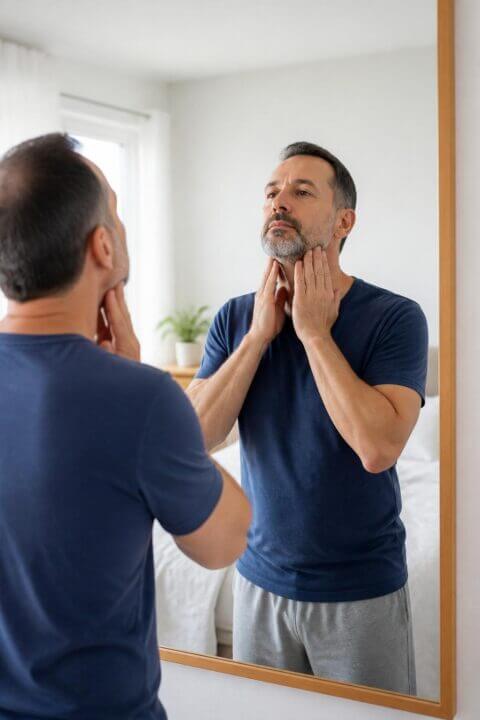
A practical morning sequence looks like this:
- Tongue slide, ten reps
- Tongue push-up, five reps, ten-second holds
- Tongue push-down, five reps, ten-second holds
- Tongue stretch, five reps
- Tongue press and suction, ten reps each
- Cheek hook, ten reps per side
- Vowel sound drills, two minutes
- Side-to-side jaw movement, ten reps per side
- Alternate nostril breathing, ten cycles
- Balloon breathing, five slow exhales
That sequence hits every major muscle group involved in airway support and takes roughly twelve to fifteen minutes at a relaxed pace.
How Exercises Fit With MADs, Nasal Strips, And Pillows
A mandibular advancement device, or MAD, physically holds the lower jaw forward to keep the airway open during sleep. Exercises build the muscle tone that supports that position long-term.
Used together, a MAD provides immediate mechanical benefit while the exercises build the underlying strength that may eventually reduce how much assistance the device needs to do. Nasal strips help maintain nasal airflow, which makes nasal breathing habits easier to sustain.
Anti-snoring pillows keep your head and neck in a position that favors an open airway. Exercises are the only intervention that changes the underlying tissue quality; the other tools manage the symptoms while that deeper change develops.
When A Sleep Study Makes Sense
If you snore loudly and consistently, if you wake up gasping or choking, if your partner has watched you stop breathing during the night, or if you feel exhausted no matter how many hours you sleep, a sleep study is the right next step. Excessive daytime sleepiness, morning headaches, and mood changes are all symptoms associated with obstructive sleep apnea, which is a medical condition that goes well beyond muscle tone.
A sleep medicine physician can order a home sleep test or in-lab polysomnography to determine what is actually happening while you sleep. Exercises can be part of a broader treatment plan, but they are not a substitute for diagnosis.