

The Pillar Procedure: A Minimally Invasive Solution for Chronic Snoring
Quick Answer
The pillar procedure is an FDA-approved, minimally invasive treatment for chronic snoring and mild to moderate obstructive sleep apnea. During a brief office visit, a doctor inserts small polyester implants into your soft palate, which stiffen the tissue over time and reduce the vibrations that cause snoring. Most patients see results within three months, with minimal recovery time and no tissue removal required.
Last updated: May 19, 2026
Key Takeaways
- The pillar procedure works by placing three small polyester implants in the soft palate to reduce tissue vibration
- It’s performed in-office with local anesthetic and takes about 20-30 minutes
- Best suited for people whose snoring originates from soft palate vibration, not nasal obstruction
- Results typically appear within 3 weeks to 3 months after the procedure
- Recovery involves minimal discomfort, usually managed with over-the-counter pain medication
- Not effective for severe obstructive sleep apnea or snoring caused by nasal blockages
- Works best when combined with lifestyle changes and may be paired with anti-snoring devices
- Clinical studies show significant reduction in snoring intensity and daytime fatigue
If you’ve been losing sleep because of your own snoring—or your partner has been nudging you awake night after night—you’re not alone, and your concerns are valid. Snoring isn’t just annoying; it can signal real health issues and strain relationships. You’ve probably tried everything from sleeping on your side to those awkward nose strips, and maybe you’re worried that surgery is your only option left.
Here’s the good news: the pillar procedure offers a middle ground between temporary fixes and invasive surgery. It’s designed for people who need more than a mouthpiece but want to avoid the pain and recovery time of traditional surgery.
What Causes Chronic Snoring?
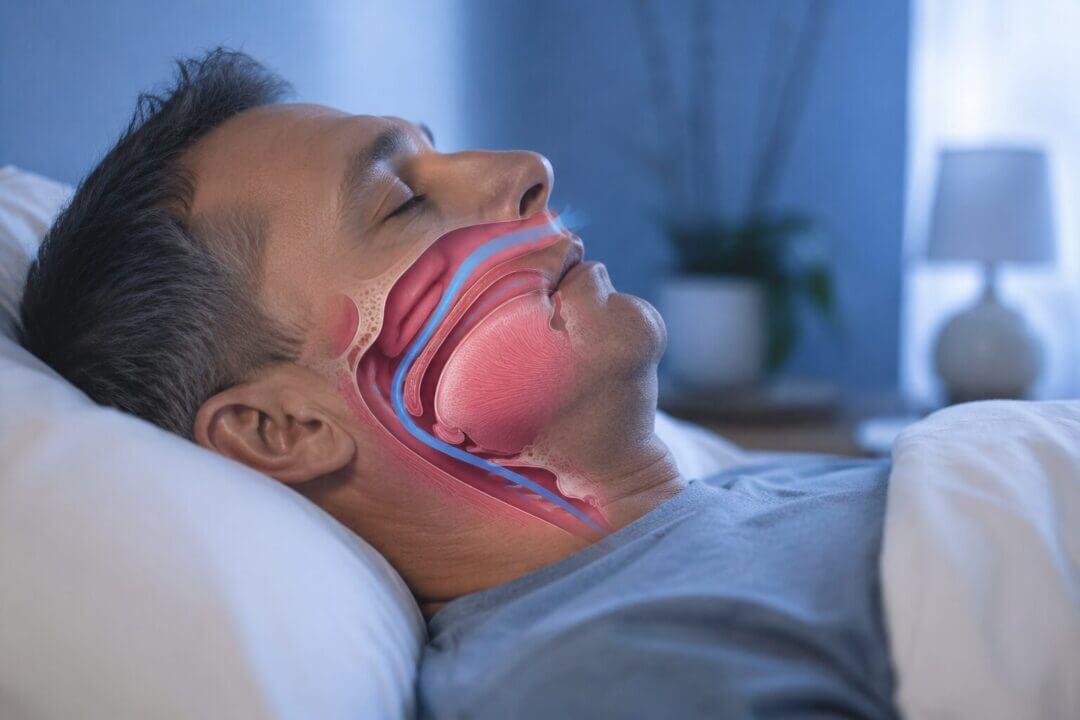
Snoring happens when air can’t move freely through your nose and throat during sleep, causing surrounding tissues to vibrate and produce that familiar rattling sound.
For occasional snorers, the culprits are usually temporary:
- Seasonal allergies or sinus congestion
- Alcohol consumption before bed
- Sleeping position (especially on your back)
- Temporary weight gain
These cases often respond well to simple changes or non-invasive solutions.
Chronic, disruptive snoring typically stems from structural issues:
- Soft palate that’s too long or too flexible
- Enlarged tonsils or adenoids
- Poor muscle tone in the throat and tongue
- Anatomical abnormalities in the airway
- Excess tissue in the throat from being overweight
When snoring becomes habitual and loud, it can progress to obstructive sleep apnea (OSA), where you actually stop breathing repeatedly during the night. This isn’t just about noise—it increases your risk of high blood pressure, heart disease, stroke, and diabetes.

How Does the Pillar Procedure Work?
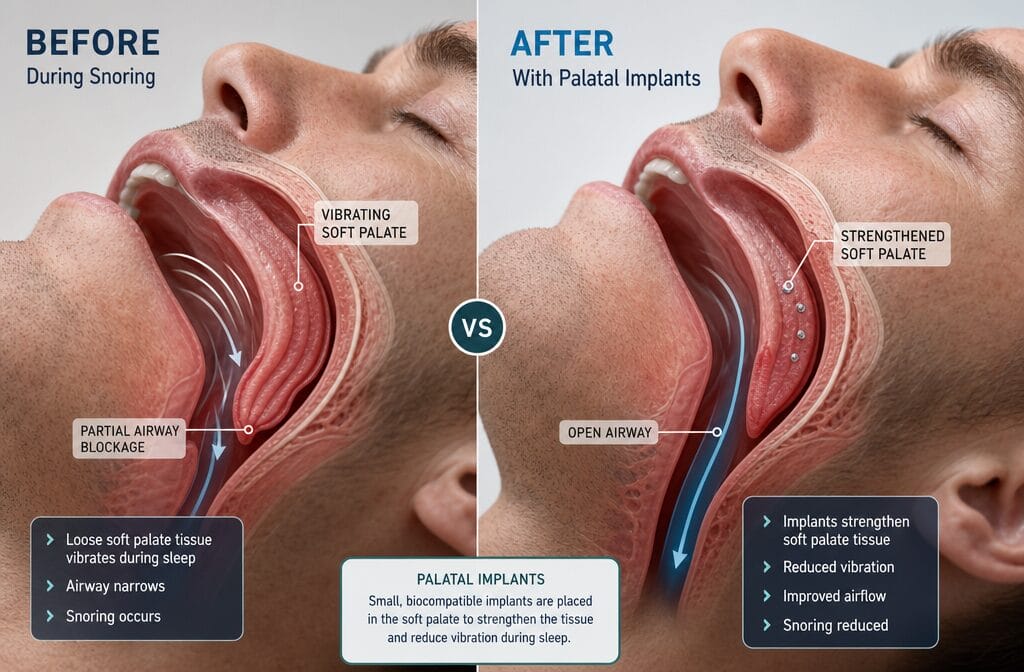
The pillar procedure strengthens your soft palate by inserting three small, woven polyester implants directly into the tissue. Each implant is about the size of a matchstick.
Here’s what happens:
During the procedure:
- Your doctor numbs the soft palate with local anesthetic
- Using a specialized delivery tool, they insert three implants into predetermined positions
- The entire process takes 20-30 minutes
- You’re awake and can go home immediately after
Over the following weeks:
- Your body responds to the implants by forming fibrous tissue around them
- This natural healing process adds structure and stiffness to the soft palate
- The stiffened tissue vibrates less during breathing
- Snoring intensity decreases as the tissue becomes more rigid
The implants remain permanently in place. They don’t dissolve, but they become integrated into your tissue, essentially becoming part of your anatomy.
Who Is a Good Candidate for the Pillar Procedure?
The pillar procedure works specifically for soft palate-related snoring. You might be a good candidate if:
Your snoring originates in the soft palate:
- A sleep specialist has identified your soft palate as the primary source
- You don’t have significant nasal obstruction
- Your tongue position isn’t the main problem
You have mild to moderate obstructive sleep apnea:
- Diagnosed through a sleep study
- Your OSA is primarily palate-related
- You’re looking for alternatives to CPAP therapy
You want to avoid major surgery:
- You’ve tried anti-snoring mouthpieces without success
- You need a more permanent solution than devices
- You want minimal recovery time
You’re not a good candidate if:
- Your snoring comes mainly from nasal blockages
- You have severe obstructive sleep apnea (you’ll likely need CPAP or more extensive surgery)
- You have active infection or inflammation in your throat
- You’re significantly overweight (weight loss should be addressed first)
- Your tonsils are severely enlarged
Common mistake: Assuming the pillar procedure will fix all snoring problems. It only addresses soft palate vibration. If your snoring has multiple causes, you may need a combination approach.
What to Expect: The Procedure Step-by-Step
Before the appointment:
- Your doctor will examine your throat and may perform a sleep study
- You’ll discuss your medical history and current medications
- No fasting or special preparation is typically required
- Plan for someone to drive you home (the local anesthetic can affect you temporarily)
During the procedure:
- You’ll sit in a reclined position, similar to a dental chair
- The doctor applies topical anesthetic spray to your throat
- Local anesthetic is injected into your soft palate (you’ll feel pressure but not pain)
- Once numb, the doctor inserts each implant using a needle-like delivery device
- The insertion points are so small they don’t require stitches
- Total time: 20-30 minutes
Immediately after:
- Mild soreness in your throat (similar to a mild sore throat)
- You can speak and swallow normally
- Most people return to work the next day
- Avoid hard or scratchy foods for a few days
Recovery and Results Timeline
First 24-48 hours:
- Mild to moderate throat discomfort
- Over-the-counter pain relievers (ibuprofen or acetaminophen) are usually sufficient
- Stick to soft foods if chewing feels uncomfortable
- You can resume normal speaking and drinking immediately
First week:
- Discomfort gradually decreases
- You might feel the implants as small bumps (this sensation fades)
- Resume normal diet as comfort allows
- Most people return to all normal activities
Weeks 2-3:
- Some patients begin noticing reduced snoring
- The tissue starts forming around the implants
- Any sensation of the implants typically disappears
Months 1-3:
- Progressive improvement in snoring intensity
- Full results usually appear by month three
- The soft palate becomes noticeably stiffer
Long-term:
- Results are generally permanent
- The implants remain in place indefinitely
- Some patients report continued improvement even after six months
Choose the pillar procedure if you want results that develop gradually and naturally, rather than immediate but potentially more painful surgical outcomes.
Benefits Compared to Traditional Surgery
The pillar procedure offers several advantages over conventional snoring surgeries like uvulopalatopharyngoplasty (UPPP):
Minimally invasive:
- No tissue removal or cutting
- No stitches required
- Performed in-office, not a hospital operating room
- Local anesthetic only (no general anesthesia risks)
Quick recovery:
- Return to work in 1-2 days
- Resume normal eating within days
- No extended healing period
- Minimal pain management needed
Preserves function:
- Doesn’t change your voice
- No impact on swallowing
- Doesn’t affect taste
- No risk of excessive tissue removal
Lower risk profile:
- Minimal bleeding risk
- Very low infection rate
- No anesthesia complications
- Fewer post-operative complications overall
Traditional surgeries can be effective but involve tissue removal, general anesthesia, significant pain, and recovery periods of 2-3 weeks. The pillar procedure trades some of that immediate dramatic change for a gentler, progressive improvement.
Potential Side Effects and Risks
While the pillar procedure is considered safe, some patients experience:
Common (temporary):
- Sore throat for 3-7 days
- Sensation of a foreign body in the throat (usually resolves within weeks)
- Difficulty swallowing for the first few days
- Minor swelling
Uncommon:
- Implant extrusion (the body pushes an implant out—happens in less than 1% of cases)
- Infection at the insertion site
- Persistent sensation of the implants (rare, but some people remain aware of them)
Very rare:
- Allergic reaction to the polyester material
- Ulceration at the implant site
Important: If you experience severe pain, difficulty breathing, or signs of infection (fever, increasing swelling), contact your doctor immediately.
Cost and Insurance Coverage
The pillar procedure typically costs between $1,500 and $3,000, depending on your location and provider.
Insurance considerations:
- Many insurance plans cover the procedure if you have diagnosed obstructive sleep apnea
- Coverage for snoring alone (without OSA diagnosis) is less common
- You’ll likely need documentation from a sleep study
- Pre-authorization is usually required
Before scheduling:
- Check with your insurance about coverage requirements
- Ask if you need a referral from your primary care doctor
- Confirm whether a sleep study is required for approval
- Understand your out-of-pocket costs (deductible, copay, coinsurance)
Some ENT practices offer payment plans if you’re paying out-of-pocket.
Combining the Pillar Procedure with Other Treatments
The pillar procedure works best as part of a comprehensive approach to snoring and sleep apnea:
Lifestyle modifications:
- Weight loss (even 10% of body weight can significantly reduce snoring)
- Avoiding alcohol within 3-4 hours of bedtime
- Sleeping on your side instead of your back
- Treating allergies and nasal congestion
Complementary devices:
- Mandibular advancement devices can address tongue position issues
- Positional therapy devices keep you off your back
- Nasal dilators or strips if you have minor nasal obstruction
For sleep apnea patients:
- CPAP therapy may still be needed for moderate to severe cases
- The pillar procedure can reduce CPAP pressure requirements
- Some patients can transition from CPAP to oral appliances after the procedure
Edge case: If you have both soft palate and nasal issues, your doctor might recommend combining the pillar procedure with nasal surgery (like septoplasty) for optimal results.

Questions to Ask Your Doctor
Before committing to the pillar procedure, have a detailed conversation with your ENT specialist or sleep medicine doctor:
- “What’s causing my snoring?” Get a clear diagnosis. If your snoring isn’t primarily soft palate-related, this procedure won’t help.
- “Do I have sleep apnea?” If you haven’t had a sleep study, you should. The severity of any OSA affects treatment recommendations.
- “What’s your success rate with this procedure?” Ask about their specific experience and patient outcomes.
- “What are my alternatives?” Understand all options, from conservative treatments to more extensive surgeries.
- “What happens if it doesn’t work?” Know your next steps if the procedure doesn’t provide adequate relief.
- “How many of these procedures have you performed?” Experience matters. Look for a doctor who’s done at least 50-100 procedures.
- “Will this completely eliminate my snoring?” Set realistic expectations. Most patients see significant improvement, but not always complete elimination.
Alternatives to Consider
If the pillar procedure isn’t right for you, other options include:
Non-surgical:
- Oral appliances and mouthpieces (effective for many people)
- CPAP therapy (gold standard for moderate to severe OSA)
- Positional therapy
- Weight loss programs
- Myofunctional therapy (exercises to strengthen throat muscles)
Other surgical options:
- Uvulopalatopharyngoplasty (UPPP) – removes excess tissue
- Radiofrequency ablation – shrinks soft palate tissue with heat
- Laser-assisted uvulopalatoplasty (LAUP) – uses laser to reshape palate
- Septoplasty or turbinate reduction – for nasal obstruction
- Tongue base procedures – for tongue-related obstruction
Newer technologies:
- Inspire therapy (implanted nerve stimulator for OSA)
- Hypoglossal nerve stimulation
Each option has different benefits, risks, and suitability depending on your specific anatomy and the severity of your condition.
Frequently Asked Questions
Does the pillar procedure hurt?
Most patients report minimal pain. You’ll feel pressure during the procedure but not sharp pain due to local anesthetic. Afterward, expect a sore throat similar to mild strep throat for 3-7 days, easily managed with over-the-counter pain medication.
How long do the results last?
The pillar procedure provides permanent structural changes to your soft palate. Results are generally long-lasting, though factors like significant weight gain or aging can affect outcomes over many years.
Can the implants be removed if I don’t like them?
Technically yes, but removal is rarely necessary and more complicated than insertion because tissue grows around the implants. Discuss any concerns with your doctor before the procedure.
Will I be able to feel the implants?
Most patients feel them initially as small bumps but this sensation typically fades within a few weeks as you adjust. A small percentage of people remain aware of them long-term.
Can I have an MRI after the pillar procedure?
Yes. The polyester implants are MRI-safe and won’t interfere with imaging.
What if I only have one or two implants instead of three?
The standard protocol uses three implants for optimal stiffening. Using fewer may reduce effectiveness. Your doctor will determine the appropriate number based on your anatomy.
Does the pillar procedure work for sleep apnea?
It’s FDA-approved for mild to moderate obstructive sleep apnea when the soft palate is a contributing factor. It’s not sufficient as a standalone treatment for severe OSA, which typically requires CPAP or more extensive surgery.
How soon can I eat normally after the procedure?
You can eat soft foods immediately. Most people return to a normal diet within 2-3 days as throat discomfort subsides.
Will my voice change?
No. The pillar procedure doesn’t affect vocal cord function or voice quality.
Can I have the procedure if I have a gag reflex?
Yes. The local anesthetic and topical numbing spray reduce gag reflex during the procedure. If you have an extremely sensitive gag reflex, discuss sedation options with your doctor.
Is the pillar procedure still performed in 2026?
Yes, though it’s less commonly discussed than it was a decade ago. Some ENT specialists have shifted toward radiofrequency treatments or other techniques, but the pillar procedure remains an option at many practices, particularly for patients who want to avoid tissue removal.
What’s the success rate?
Clinical studies show that 70-80% of patients experience significant reduction in snoring intensity and improved sleep quality. Success depends heavily on proper patient selection—it works best when soft palate vibration is the primary cause of snoring.
Making Your Decision
The pillar procedure represents a middle ground in the spectrum of snoring treatments. It’s more permanent and effective than devices alone, but less invasive and risky than traditional surgery.
Consider the pillar procedure if:
- You’ve confirmed your snoring originates from soft palate vibration
- You’ve tried conservative measures without adequate relief
- You want to avoid major surgery and lengthy recovery
- You have mild to moderate OSA related to palate issues
- You’re committed to addressing other contributing factors (weight, alcohol, sleep position)
Look for other solutions if:
- Your snoring is primarily nasal or tongue-based
- You have severe obstructive sleep apnea
- You haven’t tried oral appliances or other conservative treatments yet
- You’re significantly overweight and haven’t addressed weight loss
- You’re looking for an immediate, complete cure (results take time)
The most important step is getting an accurate diagnosis. Schedule a consultation with an ENT specialist or sleep medicine doctor who can examine your anatomy, review any sleep study results, and help you understand which treatment approach makes sense for your specific situation.
Snoring and sleep apnea are treatable conditions. Whether the pillar procedure is right for you or not, effective solutions exist—and getting quality sleep is worth the effort to find the right one.
Related Reading
For more information about snoring solutions and sleep health, explore these resources: