

How Smoking Causes Snoring (And Why Quitting Helps)
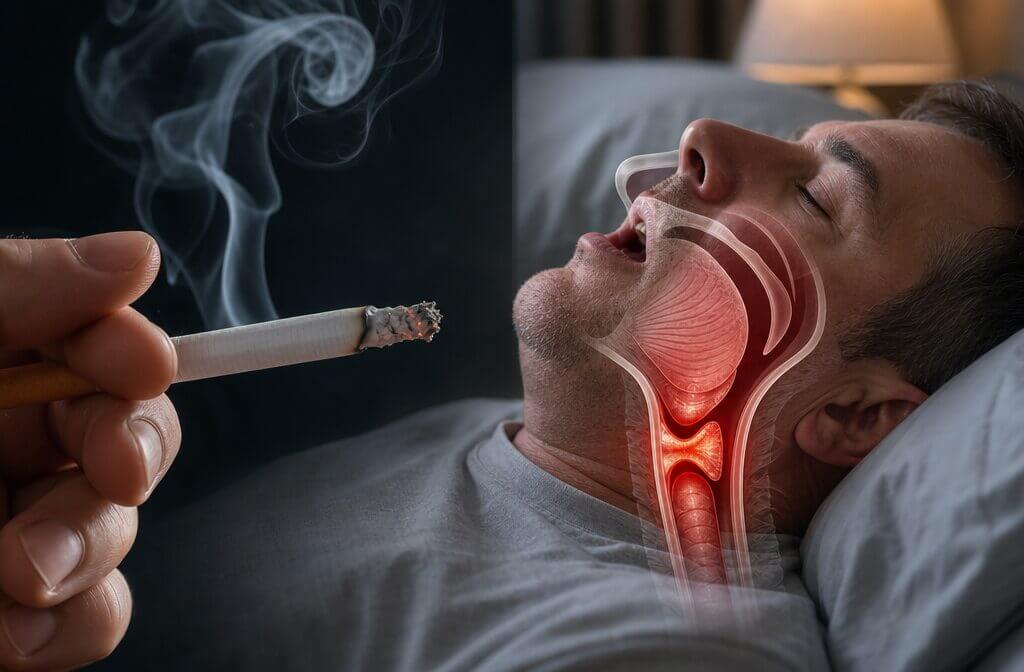
Quick Answer: Smoking directly causes and worsens snoring by irritating airways, increasing mucus production, damaging the respiratory system, and reducing airflow. Cigarette smoke inflames throat and nasal tissues, triggers excess phlegm that blocks airways, and destroys the tiny hair-like structures (cilia) that normally clear secretions. Quitting smoking allows your body to heal these systems, typically improving snoring symptoms within weeks to months as inflammation decreases and lung function recovers.
Last updated: May 20, 2026
Key Takeaways
- Cigarette smoke irritates mucus membranes in your throat and nose, causing swelling that narrows airways and triggers snoring vibrations
- Smoking suppresses a protein called BIK that normally controls mucus production, leading to excessive phlegm that obstructs breathing passages
- Smokers are nearly twice as likely to snore compared to non-smokers, and secondhand smoke exposure also increases snoring risk
- Your body begins healing within 48 hours of quitting: nerve endings regrow, lung function improves, and mucus production normalizes over time
- Anti-snoring mouthpieces can provide immediate relief while your respiratory system recovers from smoking damage
- Even long-term smokers benefit from quitting—the body’s regenerative capacity works regardless of how long you’ve smoked
- Nicotine withdrawal during sleep creates additional sleep disruptions that compound snoring-related sleep problems
Why Smoking Makes You Snore
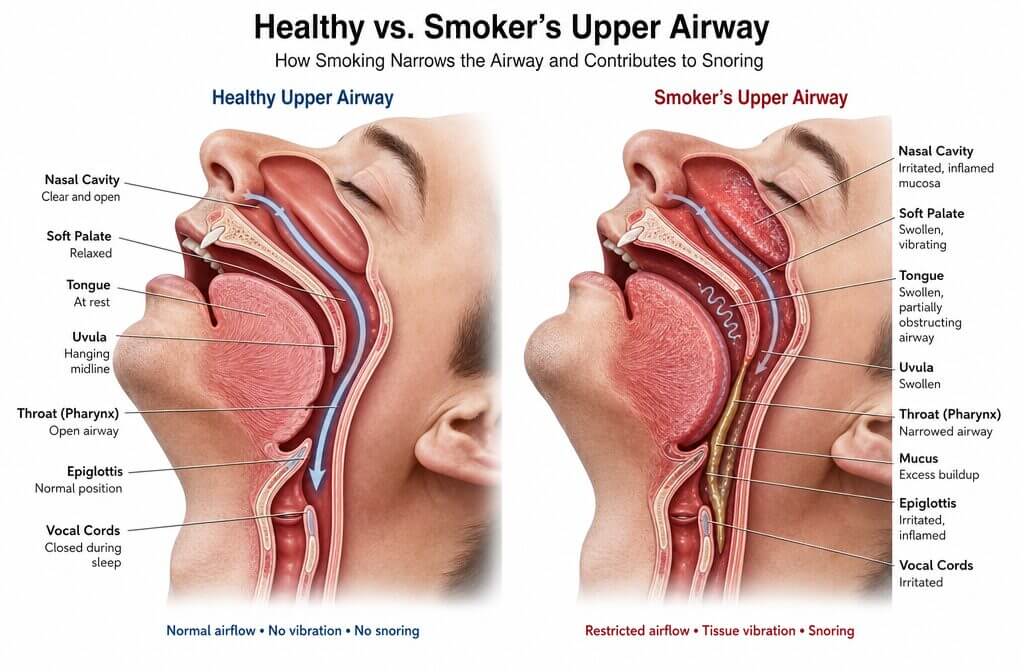
Smoking causes snoring by creating multiple physical obstructions in your airways. When you inhale cigarette smoke, it travels through your nose, throat, and into your lungs—irritating and damaging tissues at every point along that path. This irritation triggers inflammation, excess mucus, and tissue damage that all narrow your breathing passages.
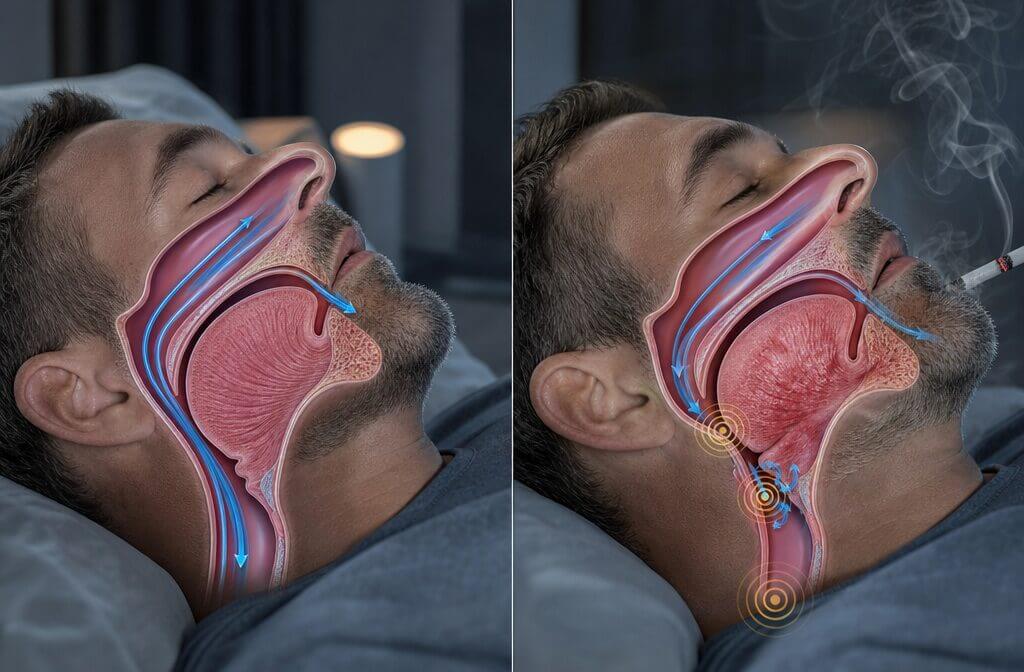
When you sleep, your throat muscles naturally relax. If your airways are already narrowed from smoking damage, the relaxed tissues collapse inward more easily. Air struggles to pass through these restricted passages, causing the soft tissues to vibrate. That vibration is the snoring sound.
The connection between snoring and smoking isn’t subtle. Research consistently shows that current smokers have significantly higher rates of habitual snoring compared to people who have never smoked. The more cigarettes you smoke daily and the longer you’ve smoked, the more severe the airway damage and snoring typically become.
How Cigarette Smoke Damages Your Airways
Inflammation and Swelling
Every time you inhale cigarette smoke, it directly contacts the mucus membranes lining your nasal passages and throat. These delicate tissues react to the smoke’s heat and chemicals by becoming inflamed and swollen—your body’s natural protective response to irritation.
This swelling has immediate consequences:
- Narrowed nasal passages make it harder to breathe through your nose, forcing mouth breathing that increases snoring
- Swollen throat tissues reduce the diameter of your airway, creating turbulent airflow
- Chronic inflammation prevents tissues from returning to normal size between cigarettes
When your windpipe doesn’t stay open wide enough for smooth airflow, air has to force its way through. This creates pressure changes and turbulence that cause soft tissues to flutter and vibrate against each other—the mechanical source of snoring sounds.
Excessive Mucus Production
Smoking dramatically increases mucus production through a specific biological mechanism. Your lungs contain a protein called BIK that acts as a brake on mucus-producing cells, preventing them from creating dangerous amounts of secretions. Chemicals in cigarette smoke suppress this protein, essentially removing the brake.
Without adequate BIK to regulate production, your airways generate excessive mucus. This creates several problems:
- Thick phlegm partially blocks airways, reducing airflow
- Mucus accumulates in the throat overnight when you’re lying down
- Post-nasal drip from excess nasal mucus further obstructs breathing passages
- The body produces even more mucus trying to clear out smoke irritants
This excess mucus doesn’t just contribute to snoring—it also reduces overall lung function and increases your risk of respiratory infections.
Destroyed Cilia
Your airways are lined with tiny hair-like structures called cilia that constantly wave back and forth, moving mucus and debris upward toward your throat where you can swallow it. This “mucociliary escalator” is your respiratory system’s primary cleaning mechanism.
Cigarette smoke paralyzes and eventually destroys these cilia. Without functioning cilia:
- Mucus and secretions settle in your lower airways instead of being cleared
- Debris and irritants accumulate in your lungs
- Congestion worsens because your body can’t effectively clear excess mucus
- Airways become increasingly obstructed over time
The combination of increased mucus production and destroyed cilia creates a perfect storm for airway obstruction and snoring.
Blood Vessel and Lung Tissue Damage
Smoke damages the small blood vessels throughout your lungs, reducing their capacity to transport oxygen. This vascular damage decreases overall lung function, making it harder to breathe efficiently even when you’re awake.
The chemicals in cigarette smoke also directly damage nerve endings in your airway. These damaged nerves can’t properly regulate airway muscle tone, contributing to the collapse of breathing passages during sleep.

Sleep Disruption from Nicotine Withdrawal
If you’re a smoker who snores, you face a double sleep disruption that most people don’t consider. Snoring already fragments your sleep by causing brief arousals throughout the night. But nicotine adds another layer of sleep interference.
Nicotine is a stimulant with a relatively short half-life. When you’re awake, you address nicotine cravings by smoking another cigarette. When you’re asleep, you can’t. Your body experiences mild withdrawal symptoms that trigger micro-arousals—brief moments where your brain partially wakes up, disrupting your sleep cycle.
These nicotine-related arousals happen on top of snoring-related sleep disruptions, meaning smokers who snore often experience severely fragmented, poor-quality sleep. This explains why many smokers report feeling unrested even after spending adequate time in bed.
What Happens When You Quit Smoking
Your body has remarkable healing capacity. The respiratory damage from smoking begins reversing almost immediately after your last cigarette, following a predictable timeline.
The Healing Timeline
Within 48 hours: Nerve endings in your airways begin regenerating. You may notice your sense of smell and taste improving as sensory nerves recover.
Within 72 hours: Lung function measurably improves as bronchial tubes relax and breathing capacity increases. Many people notice breathing feels easier.
Within 2-3 weeks: Circulation improves throughout your body, including the blood vessels in your lungs and airways. Inflammation begins decreasing noticeably.
Within 1-9 months: Cilia regrow in your airways, restoring your respiratory system’s ability to clear mucus and debris. You’ll likely cough more initially as your lungs clear accumulated material, then coughing decreases as airways clean out.
Within 1 year: Excess mucus production normalizes as BIK protein levels recover and mucus-producing cells return to normal function.
Within 5-10 years: Your risk for smoking-related cancers and diseases drops significantly as damaged cells are replaced with healthy ones.
Will Quitting Stop Your Snoring?
Quitting smoking will likely reduce your snoring, but probably won’t eliminate it instantly. The timeline depends on several factors:
- How long you smoked: Longer smoking history means more accumulated damage that takes longer to heal
- How much you smoked: Heavier smokers have more severe airway damage
- Other snoring causes: If you also have anatomical factors (large tonsils, deviated septum, excess weight), those will still contribute to snoring after you quit
- Age and overall health: Younger people and those in better health generally heal faster
Most former smokers notice breathing improvements within weeks, but significant snoring reduction typically takes several months as inflammation decreases, mucus production normalizes, and cilia regrow.
Managing Snoring While Your Body Heals
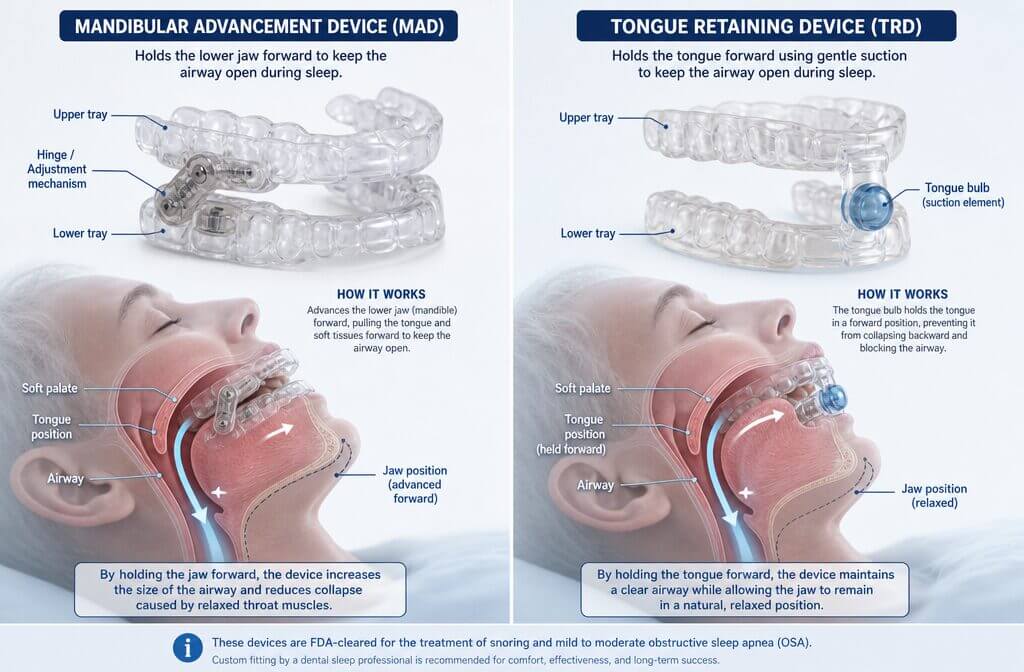
Since quitting smoking doesn’t instantly cure snoring, using anti-snoring devices during the healing process makes sense. These devices provide immediate relief while your respiratory system recovers.
Mandibular Advancement Devices (MADs)
These mouthpieces work by holding your lower jaw slightly forward during sleep, which pulls your tongue forward and opens your airway. Popular options include the SnoreRx and Zyppah devices.
Choose a MAD if:
- You snore primarily through your mouth
- You don’t have significant nasal congestion
- You have healthy teeth and gums that can support the device
- You want an adjustable device you can fine-tune for comfort
Tongue Retaining Devices (TRDs)
These devices hold your tongue forward using gentle suction, preventing it from falling back and blocking your airway during sleep. Understanding the differences between MADs and TRDs helps you choose the right type.
Choose a TRD if:
- You have dental work that makes MADs uncomfortable
- You have TMJ issues or jaw pain
- You primarily snore due to tongue position
- You want a device that doesn’t attach to teeth
Other Sleep Position Strategies
While your airways heal from smoking damage, sleeping position matters:
- Sleep on your side rather than your back to prevent gravity from pulling your tongue backward
- Elevate your head slightly (about 4 inches) to reduce congestion and improve drainage
- Consider mattress firmness—a supportive mattress helps maintain proper spinal alignment that keeps airways open
Why “It’s Too Late” Is Never True
Many long-term smokers believe quitting won’t help because the damage is already done. This is false. Your body begins healing immediately, regardless of how long you’ve smoked.
The regenerative processes—nerve regrowth, cilia regeneration, reduced inflammation, normalized mucus production—happen whether you smoked for 5 years or 50 years. The healing may take longer with more accumulated damage, but it still happens.
Consider these facts:
- Lung function improvement begins within 72 hours for all former smokers
- Cilia regrow within 9 months regardless of previous smoking duration
- Cancer risk drops by 50% within 10 years even for heavy long-term smokers
- Cardiovascular benefits appear within weeks to months for all age groups
The best time to quit was before you started. The second-best time is right now.
Secondhand Smoke and Snoring
If you don’t smoke but live with someone who does, you’re still at increased risk for snoring. Secondhand smoke exposure causes similar airway irritation, inflammation, and mucus production—just to a lesser degree than direct smoking.
Children exposed to secondhand smoke have higher rates of snoring and sleep-disordered breathing. Adults who live with smokers also snore more frequently than those in smoke-free homes.
If your partner smokes and you snore, their smoking may be contributing to your snoring problem. Encouraging them to quit or at least smoke outside can improve your respiratory health and potentially reduce your snoring.
Beyond Snoring: Other Reasons to Quit
While this article focuses on snoring and smoking, quitting delivers dozens of other health benefits that compound over time:
Immediate benefits (within days to weeks):
- Better sense of taste and smell
- Easier breathing during exercise
- Improved circulation
- More energy
Medium-term benefits (within months):
- Reduced coughing and shortness of breath
- Lower blood pressure
- Improved immune function
- Better skin appearance
Long-term benefits (within years):
- Dramatically reduced cancer risk (lung, throat, mouth, esophagus, bladder, pancreas)
- Lower heart disease and stroke risk
- Reduced risk of COPD and emphysema
- Longer life expectancy
The snoring improvement is just one of many positive changes your body experiences when you quit smoking.
Practical Steps to Quit Smoking
Quitting smoking is challenging because nicotine is highly addictive. These strategies improve your success rate:
1. Set a specific quit date within the next two weeks. This gives you time to prepare without procrastinating indefinitely.
2. Identify your triggers. Most smokers have specific situations that trigger cravings—after meals, with coffee, during stress, when drinking alcohol. Plan alternative responses for each trigger.
3. Consider nicotine replacement therapy (NRT). Patches, gum, or lozenges provide nicotine without the harmful smoke, making withdrawal more manageable. Gradually reduce NRT dosage over several weeks.
4. Use prescription medications if needed. Medications like varenicline (Chantix) or bupropion (Zyban) reduce cravings and withdrawal symptoms. Consult your doctor about whether these are appropriate for you.
5. Get support. Tell friends and family you’re quitting. Consider joining a quit-smoking program or calling a quitline. Having accountability and encouragement significantly improves success rates.
6. Address the oral fixation. Many smokers miss the hand-to-mouth habit. Keep healthy snacks, sugar-free gum, or a water bottle handy to occupy your hands and mouth.
7. Manage stress differently. If you smoke to cope with stress, develop alternative stress-management techniques—exercise, deep breathing, meditation, or talking with friends.
8. Expect setbacks. Most successful quitters try several times before quitting permanently. If you slip up, don’t give up entirely. Analyze what triggered the relapse and adjust your strategy.