


Food Sensitivity and Snoring: The Hidden Connection Disrupting Your Sleep
Quick Answer
Food sensitivity and snoring are directly connected through inflammation and mucus production. When you eat foods your body is sensitive to, your immune system triggers an inflammatory response that increases mucus in your nasal passages and throat, blocking airways and worsening snoring. This same inflammation elevates cortisol levels at night, disrupting sleep quality and making it harder for anti-snoring solutions to work effectively.
Last updated: May 20, 2026
Key Takeaways
- Food sensitivities trigger inflammation that increases mucus production, directly worsening snoring and airway obstruction
- Elevated cortisol from food reactions disrupts your natural sleep-wake cycle and prevents deep, restorative sleep
- Common culprits include dairy (lactose), gluten, shellfish, eggs, and food additives—but sensitivities vary by individual
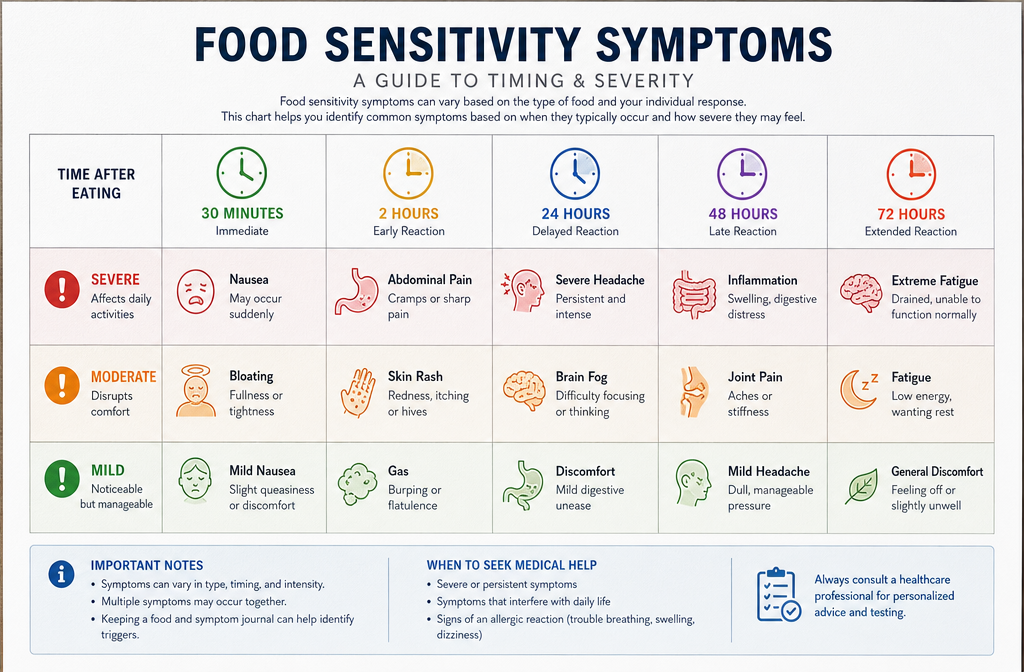
- Symptoms often appear 30 minutes to 24 hours after eating, making identification challenging without a food log
- Digestive symptoms like bloating, gas, and acid reflux from food sensitivities cause nighttime restlessness and frequent bathroom trips
- Blood sugar instability from cortisol spikes leads to midnight hunger and difficulty falling asleep
- Identifying and eliminating trigger foods can significantly reduce snoring severity within 2-4 weeks
- Professional testing (skin tests, blood panels, elimination diets) provides the most reliable diagnosis
Why Food Sensitivity Makes Your Snoring Worse
Most people blame snoring on sleep position, weight, or blocked sinuses from seasonal allergies. The reality? What you ate for dinner might be the real culprit keeping your partner awake.
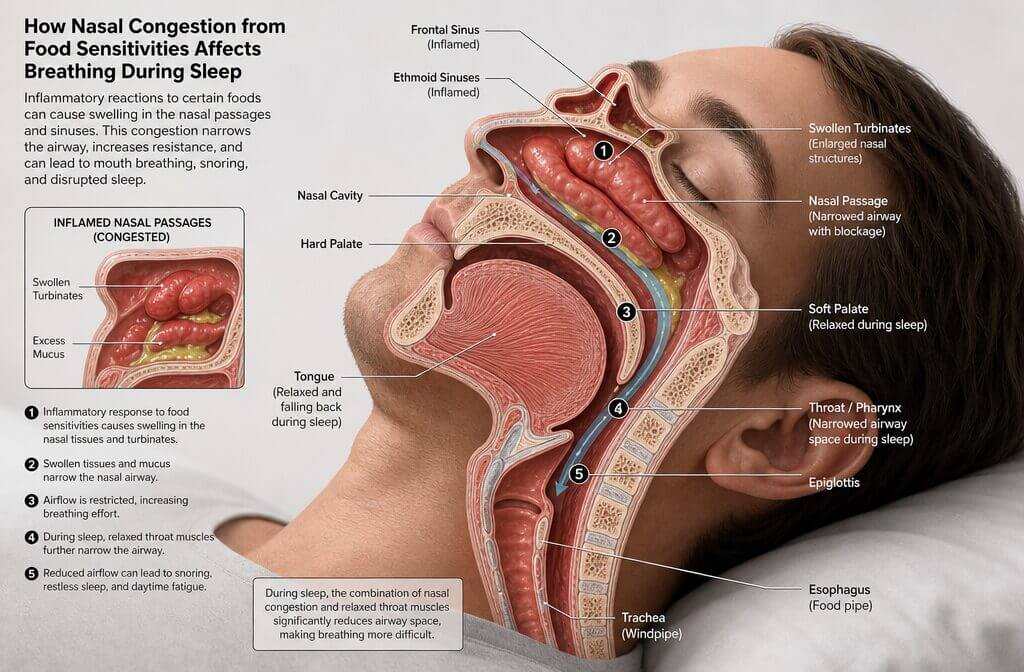
Food sensitivities create a cascade of inflammatory responses throughout your body. When you consume a trigger food, your immune system identifies it as a threat and releases histamines and other inflammatory compounds. This inflammation doesn’t just affect your gut—it impacts your entire respiratory system.
Here’s what happens in your airways:
- Mucus production increases dramatically in your sinuses and throat
- Nasal passages swell and narrow, forcing mouth breathing during sleep
- Throat tissues become inflamed and more likely to vibrate (the sound of snoring)
- Airways are already compromised before you even lie down
For people who already snore, food sensitivities can transform mild snoring into severe, disruptive episodes. If you use anti-snoring mouthpieces, unaddressed food sensitivities can reduce their effectiveness by 40-60% because the devices can’t compensate for severely inflamed and mucus-blocked airways.
How Food Sensitivities Sabotage Your Sleep Quality
Beyond the physical airway obstruction, food sensitivities disrupt sleep through multiple biological pathways that most people never connect to their diet.
The Cortisol Connection
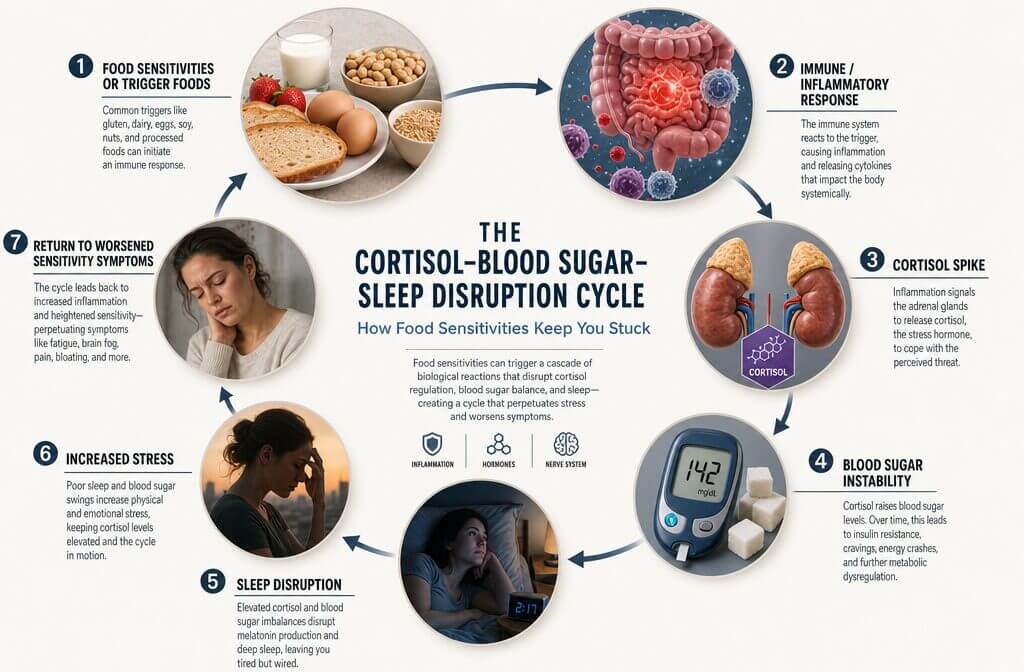
Your adrenal glands produce cortisol—often called the stress hormone—to help your body respond to threats. When you eat foods you’re sensitive to, your body interprets this as a threat and ramps up cortisol production, especially at night when cortisol should naturally be at its lowest.
Elevated nighttime cortisol causes:
- Increased blood pressure when you should be relaxing
- Heightened central nervous system activity that prevents deep sleep
- Difficulty transitioning from wakefulness to sleep
- Frequent nighttime awakenings
- Morning grogginess despite spending 7-8 hours in bed
This cortisol spike typically occurs 2-6 hours after eating a trigger food. If you eat dinner at 7 PM, your cortisol might peak right when you’re trying to fall asleep at 10 or 11 PM.
Blood Sugar Instability
Cortisol directly regulates blood sugar levels. When cortisol production increases from food sensitivities, your body struggles to maintain stable glucose levels throughout the night.
Signs of blood sugar disruption include:
- Waking up ravenously hungry at 2 or 3 AM
- Feeling the need to snack before bed despite eating dinner
- Night sweats or feeling shaky during the night
- Difficulty falling back asleep after waking
- Craving carbohydrates or sugar late at night
Increasing protein intake at dinner and reducing carbohydrates in the evening helps stabilize blood sugar. Choose lean meats, fish, eggs, or plant-based proteins, and save starchy carbs for earlier in the day.
Digestive Distress That Keeps You Awake
The most obvious symptoms of food sensitivity affect your digestive system, and these symptoms directly interfere with sleep quality.
Common nighttime digestive issues:
- Acid reflux that worsens when lying down
- Bloating that makes it uncomfortable to find a sleeping position
- Gas and cramping that cause frequent position changes
- Urgent bathroom trips that fragment your sleep
- Constipation-related discomfort
These symptoms create a vicious cycle. Poor sleep weakens your immune system, making you more reactive to trigger foods. Increased food reactions worsen sleep quality. The cycle continues until you identify and eliminate the problematic foods.
Common Food Sensitivities That Trigger Snoring
While your body can develop sensitivity to virtually any food, certain foods are more commonly problematic for sleep and snoring.
Dairy Products (Lactose and Casein)
Dairy is the most frequent culprit for snoring-related food sensitivities. Lactose intolerance affects approximately 65% of the global population to varying degrees, though many people have mild symptoms they’ve learned to ignore.
Why dairy worsens snoring:
- Increases mucus thickness and production in the throat and sinuses
- Causes post-nasal drip that irritates airways during sleep
- Triggers inflammation in the soft palate and uvula
- Creates a coating sensation in the throat that promotes mouth breathing
Try eliminating all dairy for 2-3 weeks and monitor your snoring intensity. Many people report dramatic improvements within 5-7 days.
Gluten-Containing Grains
Gluten sensitivity (distinct from celiac disease) affects an estimated 6-10% of the population. Even without celiac disease, gluten can trigger significant inflammatory responses.
Gluten-related sleep disruption:
- Systemic inflammation that affects respiratory tissues
- Digestive discomfort that prevents comfortable sleep positions
- Brain fog and fatigue that paradoxically makes falling asleep harder
- Joint pain that causes nighttime restlessness
Gluten is found in wheat, barley, rye, and many processed foods. Check labels carefully—gluten hides in unexpected places like soy sauce, salad dressings, and processed meats.
Shellfish, Fish, and Eggs
These protein sources are among the most common food allergens. Reactions range from mild sensitivity to severe allergic responses.
Symptoms specific to protein allergies:
- Throat swelling that directly narrows airways
- Skin reactions that cause itching and restlessness
- Rapid onset (within 30 minutes) of symptoms
- Potential for severe reactions requiring medical attention
If you suspect shellfish, fish, or egg sensitivity, work with an allergist. These allergies can be serious and require professional management.
Food Additives and Preservatives
Artificial colors, preservatives, and flavor enhancers often fly under the radar but can significantly impact sleep quality.
Common problematic additives:
- MSG (monosodium glutamate) – causes headaches and sleep disruption
- Sulfites (in wine, dried fruits, processed foods) – triggers respiratory symptoms
- Artificial food dyes (especially Red 40, Yellow 5) – linked to hyperactivity and sleep problems
- Sodium benzoate – can cause inflammation and histamine release
These additives are prevalent in processed foods, restaurant meals, and packaged snacks. Switching to whole, unprocessed foods for 2-3 weeks can help you identify if additives are contributing to your snoring and sleep problems.
Warning Signs You Have an Undiagnosed Food Sensitivity
Food sensitivities often develop gradually, making them easy to dismiss as “normal” discomfort or aging. Here are specific signs that warrant investigation.
Chronic Migraines or Headaches
Doctors often refer to food sensitivities as “migraine triggers” when headaches are the primary symptom. The challenge is timing—headaches can appear anywhere from 20 minutes to 24 hours after eating a trigger food.
Track these patterns:
- Headaches that consistently occur on specific days of the week (suggesting repeated exposure to a trigger food)
- Migraines that start in the afternoon or evening after meals
- Headaches accompanied by sinus pressure or congestion
- Pain that worsens when lying down
Immediate Fatigue After Eating
Feeling sleepy after a large meal is normal. Feeling exhausted, foggy, or unable to concentrate within 15-30 minutes of eating suggests blood sugar dysregulation from food sensitivity.
Additional symptoms to watch for:
- Yawning uncontrollably after meals
- Difficulty focusing or “brain fog”
- Anxiety or jitteriness after eating
- Heart palpitations or racing heart
- Dizziness or lightheadedness
This post-meal fatigue often occurs with high-carbohydrate meals, but if it happens consistently regardless of meal composition, food sensitivity is likely.
Persistent Digestive Issues
Occasional bloating or gas is normal. Daily or near-daily digestive discomfort signals a problem.
Red flags include:
- Bloating that makes your clothes feel tight after most meals
- Gas that occurs within 1-2 hours of eating
- Alternating constipation and diarrhea
- Acid reflux more than twice per week
- Stomach pain or cramping after specific meals
If increasing fiber and water intake doesn’t resolve constipation within 2 weeks, food sensitivity is a likely contributor.
Joint or Muscle Pain After Eating
This symptom surprises most people, but inflammatory responses from food sensitivities commonly manifest as musculoskeletal pain.
Typical presentation:
- Stiffness or achiness that appears 30 minutes to 2 hours after eating
- Joint pain that seems to “migrate” between different joints
- Muscle soreness without exercise
- Increased pain in pre-existing arthritis or old injuries
The pain results from inflammatory compounds circulating through your bloodstream and accumulating in joint tissues.
Skin Reactions and Irritation
Your skin is your body’s largest organ and often reflects internal inflammation.
Watch for:
- Hives or raised, itchy welts
- Eczema flare-ups after certain meals
- Facial flushing or redness
- Itchy skin without visible rash
- Swelling of lips, face, or tongue (seek immediate medical attention for severe swelling)
Skin reactions can be delayed by several hours, making them tricky to connect to specific foods without careful tracking.
How to Identify Your Food Sensitivities
Pinpointing specific trigger foods requires systematic observation and, often, professional testing.
Keep a Detailed Food and Symptom Log
For 2-3 weeks, record everything you eat and any symptoms you experience, including timing.
What to track:
- Exact foods and beverages consumed (including portion sizes)
- Time of consumption
- Symptoms experienced (type, severity, timing)
- Sleep quality (hours slept, number of awakenings, snoring severity if known)
- Bowel movements (frequency, consistency)
- Energy levels throughout the day
Use a smartphone app or simple notebook. The key is consistency—track every meal and snack, even if you don’t notice immediate symptoms.
Try an Elimination Diet
An elimination diet removes the most common trigger foods for 3-4 weeks, then systematically reintroduces them one at a time.
Standard elimination protocol:
- Elimination phase (3-4 weeks): Remove dairy, gluten, eggs, soy, corn, shellfish, tree nuts, and peanuts
- Baseline assessment: Note improvements in snoring, sleep quality, and other symptoms
- Reintroduction phase (1-2 weeks per food): Add back one food group, eating it 2-3 times over 3 days
- Observation period: Wait 3-4 days between reintroductions to watch for reactions
- Documentation: Record any symptom return with each reintroduced food
This method is highly effective but requires discipline and planning. Consider working with a nutritionist to ensure you maintain adequate nutrition during elimination.
Professional Testing Options
Medical testing provides more definitive answers than self-assessment alone.
Available tests include:
- Skin prick tests: Allergist applies small amounts of allergens to your skin; reactions appear within 15-20 minutes. Best for immediate allergies (IgE-mediated).
- Blood tests (IgG, IgE panels): Measure antibody responses to various foods. IgE tests detect true allergies; IgG tests are more controversial but may identify sensitivities.
- Elimination diet under medical supervision: Some allergists prefer this method over blood tests for identifying sensitivities (as opposed to true allergies).
- Hydrogen breath test: Specifically for lactose intolerance and other carbohydrate malabsorption issues.
No single test is perfect. Many allergists recommend combining testing methods with an elimination diet for the most accurate results.
When to See a Doctor Immediately
Some symptoms require urgent medical attention rather than self-diagnosis.
Seek immediate care for:
- Difficulty breathing or swallowing
- Severe swelling of the face, lips, or tongue
- Anaphylactic reactions (rapid onset of multiple symptoms including breathing difficulty, rapid pulse, dizziness)
- Severe abdominal pain
- Bloody stools or vomit
- Symptoms that significantly worsen over time
These symptoms may indicate a true food allergy (IgE-mediated) rather than sensitivity, and can be life-threatening.
Living with Food Sensitivities: Practical Management Strategies
Once you’ve identified your trigger foods, managing them becomes part of your daily routine.
Reading Labels Effectively
Food manufacturers aren’t always transparent about ingredients. Learn to identify hidden sources of your trigger foods.
Label-reading tips:
- Check the “Contains” statement for major allergens (milk, eggs, fish, shellfish, tree nuts, peanuts, wheat, soybeans)
- Look for alternative names (casein and whey are dairy; semolina and durum are wheat)
- Watch for “may contain” warnings if you’re highly sensitive
- Be aware that “natural flavors” can hide various ingredients
- Check non-food items too (medications, supplements, lip balm)
When in doubt, contact the manufacturer directly. Most have customer service lines specifically for allergen questions.
Dining Out Safely
Restaurant meals present challenges because you can’t control ingredients or preparation methods.
Strategies for eating out:
- Call ahead and explain your sensitivities; ask if the kitchen can accommodate you
- Choose simple preparations (grilled, steamed, roasted) over sauces and complex dishes
- Ask about ingredients in sauces, marinades, and seasonings
- Request that your food be prepared on clean surfaces with clean utensils
- Carry a restaurant card listing your sensitivities in clear terms
- Don’t be afraid to speak up—your health is more important than convenience
Some cuisines are easier to navigate than others. Mediterranean, Japanese, and Mexican restaurants often have simpler ingredient lists than French or Italian establishments with cream-based sauces.
Working with a Nutritionist
A registered dietitian or nutritionist specializing in food sensitivities can help you maintain balanced nutrition while avoiding trigger foods.
What a nutritionist provides:
- Meal planning that ensures adequate protein, vitamins, and minerals
- Substitution strategies for eliminated foods
- Recipe modifications for favorite dishes
- Guidance on reading labels and identifying hidden ingredients
- Support during elimination and reintroduction phases
- Monitoring for nutritional deficiencies
This professional support is especially important if you’re eliminating multiple food groups or managing sensitivities in children.
Optimizing Your Sleep Environment
While addressing food sensitivities, optimize other aspects of your sleep setup to maximize improvements.
Additional sleep strategies:
- Elevate your head 4-6 inches to reduce mucus accumulation in airways
- Use a humidifier to keep airways moist and reduce irritation
- Consider a quality mattress that supports proper spinal alignment
- Try anti-snoring devices once inflammation decreases
- Maintain a consistent sleep schedule to support cortisol regulation
- Keep your bedroom cool (65-68°F) to promote deeper sleep
These environmental factors work synergistically with dietary changes to improve both snoring and overall sleep quality.
Timeline: When to Expect Improvements
Understanding the timeline helps you stay motivated during the elimination process.
Typical improvement schedule:
- Days 1-3: Withdrawal symptoms possible (headaches, fatigue, irritability) as your body adjusts
- Days 4-7: Initial improvements in digestive symptoms; slight reduction in mucus production
- Week 2: Noticeable decrease in bloating and gas; energy levels begin stabilizing
- Weeks 3-4: Significant reduction in snoring intensity; improved sleep quality; reduced nighttime awakenings
- Weeks 4-6: Inflammation substantially decreased; maximum benefit from dietary changes
- Ongoing: Continued improvements as your body heals from chronic inflammation
Individual timelines vary based on the severity of your sensitivities, how long you’ve been exposed to trigger foods, and your overall health status.
Food Sensitivity vs. Food Allergy: Understanding the Difference
These terms are often used interchangeably, but they describe different immune responses with different implications.
Food Allergy (IgE-Mediated)
A true food allergy involves your immune system producing IgE antibodies in response to a specific food protein.
Characteristics:
- Rapid onset (minutes to 2 hours after exposure)
- Potentially severe or life-threatening reactions
- Consistent reactions with each exposure
- Detectable through skin prick or IgE blood tests
- Requires strict avoidance and often emergency medication (epinephrine)
Common food allergies include peanuts, tree nuts, shellfish, fish, milk, eggs, wheat, and soy.
Food Sensitivity (Non-IgE-Mediated)
Food sensitivities involve different immune mechanisms or non-immune reactions.
Characteristics:
- Delayed onset (30 minutes to 48 hours after exposure)
- Generally not life-threatening but significantly impact quality of life
- Reactions may vary in severity depending on amount consumed
- Harder to diagnose with standard allergy tests
- May improve with gut healing or temporary elimination
Food sensitivities often involve the digestive system, inflammation, and metabolic responses rather than classic allergic reactions.
Why the Distinction Matters for Snoring
Both allergies and sensitivities can worsen snoring, but through different mechanisms. True allergies cause more immediate and severe airway swelling, while sensitivities create chronic, low-grade inflammation that accumulates over time. For snoring sufferers, sensitivities are actually more common culprits because they’re subtle enough to go unnoticed until symptoms become severe.
Frequently Asked Questions
Taking Action: Your Next Steps
If you suspect food sensitivity is contributing to your snoring and poor sleep quality, start with these concrete actions:
- Begin a food and symptom log today. Track everything for at least 2 weeks before making changes.
- Try eliminating dairy first. As the most common snoring-related trigger, removing dairy for 2-3 weeks often produces noticeable improvements.
- Schedule an appointment with your doctor or an allergist. Professional guidance ensures you’re addressing the right issues and not missing other health concerns.
- Optimize your sleep environment while addressing dietary factors. Small changes like elevating your head or using a humidifier complement dietary improvements.
- Be patient with the process. Identifying trigger foods takes time, but the improvements in sleep quality, energy levels, and overall health make the effort worthwhile.
Remember, you’re not alone in this journey. Millions of people struggle with undiagnosed food sensitivities that disrupt their sleep and worsen snoring. By taking systematic steps to identify and eliminate trigger foods, you’re addressing a root cause rather than just managing symptoms—and that makes all the difference for long-term sleep quality.
For more information on addressing snoring through multiple approaches, visit SnoringHQ for comprehensive guides and product reviews.
Sources:
Information in this article is based on established medical understanding of food sensitivities, immune responses, and sleep physiology. For personalized medical advice, consult with a healthcare provider or board-certified allergist.